Single-Phase Pipe Hydraulics and Pipe Sizing
Key Takeaways
Predicting optimum pipe diameter for single-phase pipe hydraulics and pipe sizing in industrial piping systems
Original Description
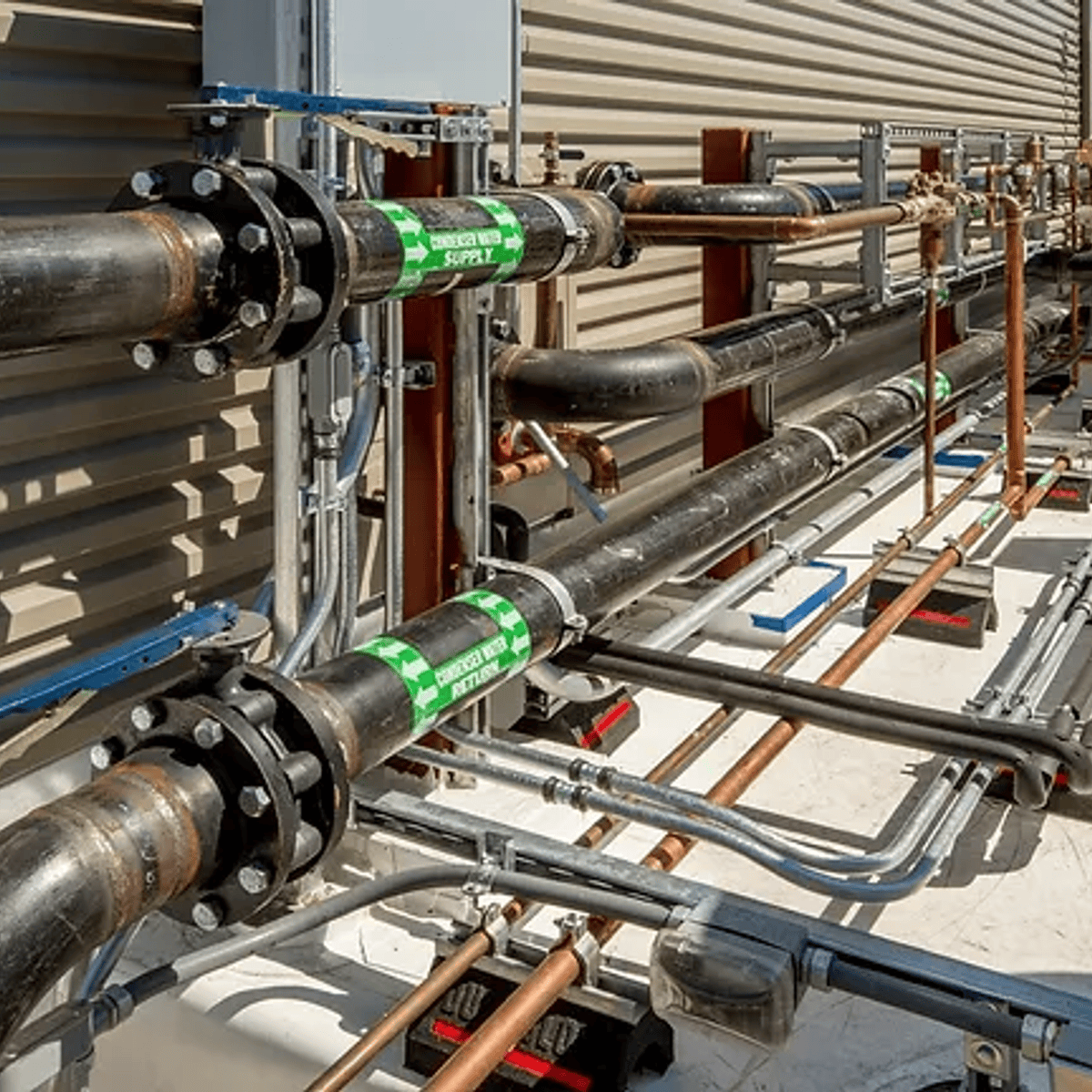
This particular course entitled “Single-Phase Pipe Hydraulics & Pipe Sizing” under the specialization entitled “Design of Industrial Piping Systems” is mainly aimed at predicting the optimum pipe diameter of the piping system to meet the given process requirement when it is subjected to a single-phase fluid flow. Here, the piping system is either a single-path piping system or a multiple-path piping system. To achieve the single-point objective, i.e., the Sizing of the Ping System, essential concepts of single-phase fluid flow through pipes are covered, essential mathematical expressions are derived to understand the intricacy of the single-phase phenomena, and the importance of each term in governing equations is explained.
To begin with, the key role of the pipe in transporting the fluid from the source to the destination is explained by citing numerous applications. The pipes may be subjected to single-phase fluid flow or multi-phase flow. This course is dedicated to single-phase hydraulics. In most practical situations, process flow conditions such as fluid flow rate and operating conditions are the input to determine the pipe diameter. However, the pressure drop is a constraint. To meet the pressure drop constraint for the given process flow conditions, the designer must be thorough with the dynamics of single-phase fluid flow in straight pipes, pipe fittings, valves, etc. Sigle-phase fluid flow phenomena are well established and hence the pressure drop in a piping system can be predicted accurately.
In single-phase fluid flow, irrespective of the type of the fluid, i.e., gas or liquid, the flow resistance factor, known as friction factor depends on the Reynolds Number along with other important parameters. Indeed, the Reynolds Number decides the type of flow regime, i.e., laminar or turbulent. The pressure drop is directly proportional to the length of the pipe and the square of the fluid velocity or mass flux, and interestingly, the pressure drop is inve
AI explanation not available for this lesson yet
This lesson is still being prepared for the AI tutor. In the meantime, explore lessons that are ready.
Browse explainer-ready lessons →
More on: Reading ML Papers
View skill →








Related Reads
📰
📰
📰
📰
Research Publications, Patents & Innovation Output at Quantum University
Medium · Machine Learning
Every Researcher Should Start Managing Research Intelligence Assets™
Medium · AI
AC comment and our reply disappeared on OpenReview [D]
Reddit r/MachineLearning
Every Researcher Needs a Research Intelligence Report™
Medium · AI
🎓
Tutor Explanation

 DeepCamp AI