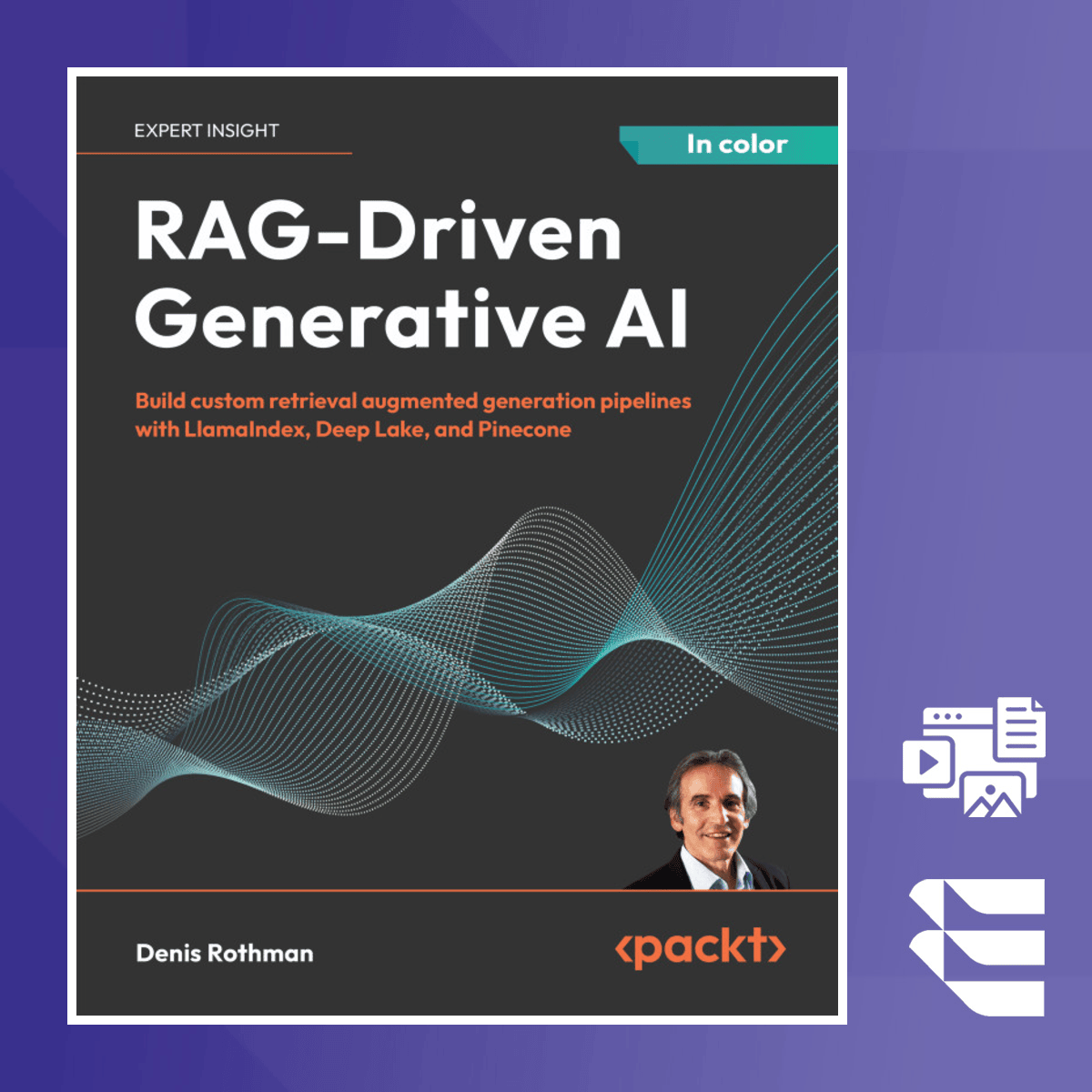
RAG-Driven Generative AI
Key Takeaways
Builds a RAG pipeline using LlamaIndex, Deep Lake, and Pinecone to optimize generative AI systems
Original Description
This course introduces the powerful concept of Retrieval-Augmented Generation (RAG), a technique used to optimize the performance, accuracy, and cost of generative AI systems. Focused on building AI pipelines with LlamaIndex, Deep Lake, and Pinecone, this course will equip you with the skills to create robust AI models capable of handling complex datasets and delivering traceable, context-aware outputs.
You will explore how to scale RAG pipelines, implement strategies to minimize hallucinations, and improve response accuracy across multimodal AI systems. By the end of the course, you will have hands-on experience optimizing these systems for real-world applications, empowering you to enhance decision-making and operational efficiency.
What sets this course apart is its unique combination of theory and practical implementation. By working with cutting-edge tools like LlamaIndex and Pinecone, you'll understand how to balance cost, performance, and accuracy, while gaining insight into the broader context of AI pipelines and decision-making.
This course is ideal for data scientists, AI engineers, and MLOps professionals who are looking to expand their expertise in RAG and generative AI. A basic understanding of machine learning concepts is recommended, as the course builds on these foundations to explore more advanced techniques.
AI explanation not available for this lesson yet
This lesson is still being prepared for the AI tutor. In the meantime, explore lessons that are ready.
Browse explainer-ready lessons →
More on: RAG Basics
View skill →

![Build a RAG Agent in n8n | Vector DB Pinecone + WhatsApp + Gmail [2026]](https://i.ytimg.com/vi/4eJsZBgwFJ4/mqdefault.jpg)





Related Reads
📰
📰
📰
📰
Beyond “Toy” RAG (Part 2): Building a Compliant Data Engineering Pipeline with PySpark & pgvector
Medium · RAG
RAG Is Easy Until the Questions Stop Being Easy
Medium · Machine Learning
Does RAG Need Better Retrieval — or Better Relationships?
Dev.to AI
When Does Graph RAG Actually Add Value? A Hands-On Experiment
Towards Data Science
🎓
Tutor Explanation
 DeepCamp AI