Queue - Data Structures & Algorithms Tutorials In Python #8
Key Takeaways
The video demonstrates the implementation of a Queue data structure in Python, utilizing the collections module and deque class, to solve the producer-consumer problem and achieve loose coupling in a system.
Full Transcript
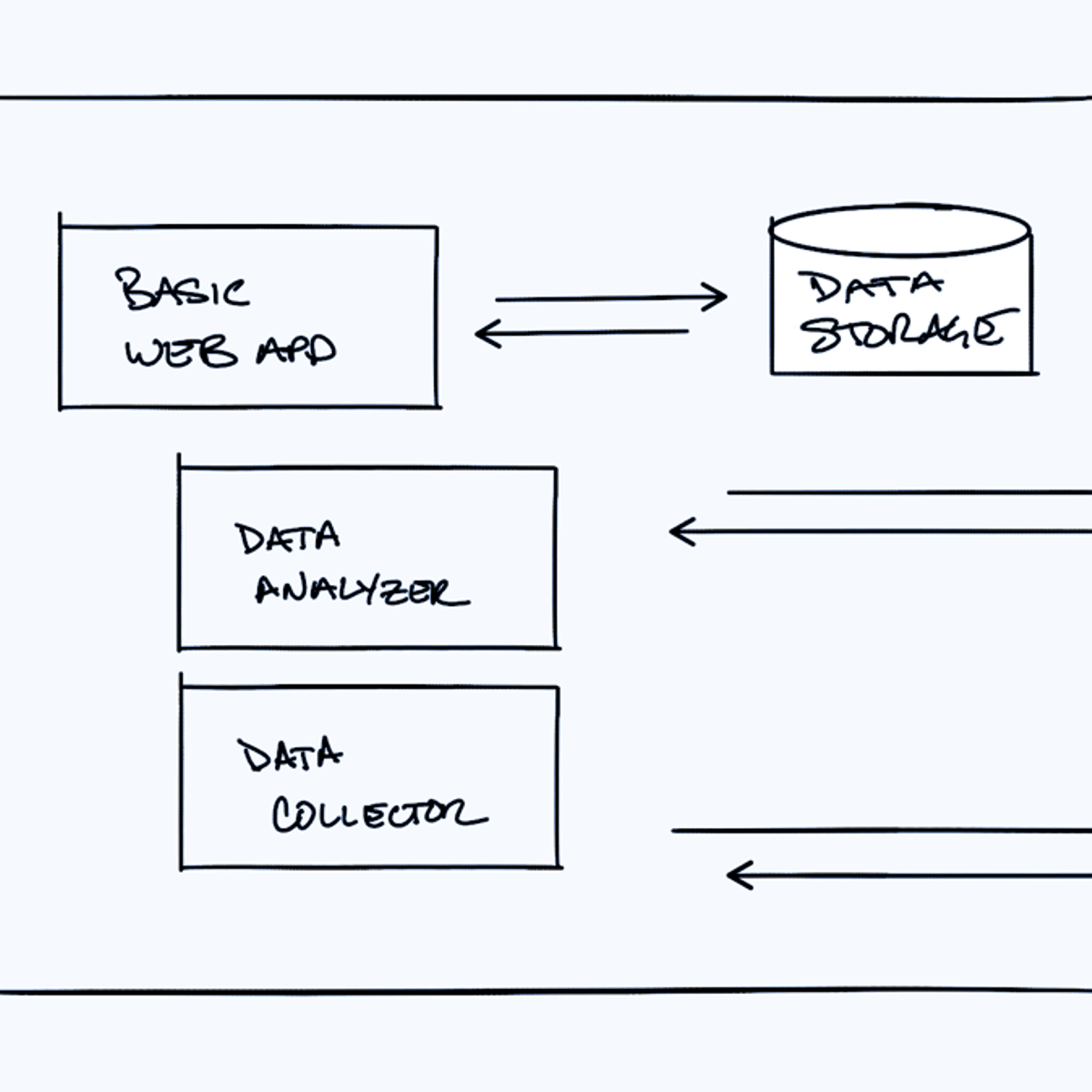
we are going to discuss queue data structure in this tutorial and here is the list of topics along with their time line so if you want to skip ahead feel free you might have used portals such as yahoo finance or money control.com or to track down the stock prices now the way these portals get stock prices is from stock exchanges such as New York Stock Exchange and if you look at the technical architecture the engineering things team sitting at New York Stock Exchange will be supplying the prices let's say these are the prices for a walmart stock at 11 o'clock one minute the price was 131 and then at 2 minute the price was 132 point well they supply these prices continuously to portal like Yahoo Finance and they will display various charts and information now going deeper into technical architecture one way to solve this problem would be the engineering team at Yahoo Finance will develop an HTTP server which can accept the HTTP POST request coming in from New York Stock Exchange so the engineering team sitting here in NY SC would make HTTP POST calls along with these JSON objects this could be one architecture and it will work this way you can supply the stock prices to the other end but there are a couple of issues with this architecture the first problem is what if the HTTP server is done in that case these guys will be making the calls and it will result in two loss of messages so the prices during the time frame that the HTTP server was down would be lost so all these prices will be lost and for Yahoo Finance let's say after five minute the server comes back up there is no way to retrieve those old prices because they made this synchronous calls which Yahoo Finance guys couldn't process because that server was down and now you lost all that information other issue is tomorrow if Google Finance wants to receive the same pricing feed now the engineering team at & ysc will have to change their code and use Google's URL to supply them the prices this is called tightly coupled architecture and it has lot of issues such as every time you want to on board a new consumer you have to make code changes and if the system is tightly coupled let's say if there is any change on the consumer side then producer side will also have to change and it's a nasty infrastructure there are just a lot of issues what if you had a memory buffer like this where NYSC can just put the prices one by one so at 11 o'clock one minute they put this price at 2 minute they put this price and they just keep on pushing this prices and on the other hand side Yahoo Finance or Google Finance guys can receive these prices in the order that they were pushed in now there are ways where once Yahoo Finance consumes this particular price you know their pointer will move here so that Google Finance can still consume this it's not like once Yahoo Finance consumed this price Google Finance cannot consume it they will have a different pointer so that will work out so don't worry about that but this data structure that we used here is called Q and Q allows you to establish loose coupling so when there is a loose coupling between these system tomorrow less safe money control.com bonds to use this prices & ysc doesn't have to make any change actually they can just keep on pushing the prices to the same memory buffer and money control can just consume it so it's a very flexible infrastructure with minimum amount of issue this problem is also called producer consumer problem where one entities produce doing some information and one other entity is consuming the information produced by a producer in a way that they are not tightly coupled here whatever is pushed first in the buffer is consumed first hence it is called FIFO or first in first out data structure if you remember from our last stack data structure it was last in first out versus you is first in first out and you have already noticed you in real life let's say if you are at a movie theater buying tickets whoever is standing first will get the first turn so it's like first in first out these are the code snippets in different programming languages for cue along with the cue classes for example Java uses linked lists as a cue implementation so this is not a typo it actually uses linked lists as an implementation for Q so Q is an interface which is implemented by linked list data structure here you see like you are adding Phi and 89 and when you say remove or you will get Phi back similarly in Python you can use one of these three approaches to implement Q now we will see how to use Q in Python you can use lists as a queue in Python here I have created a list called Walmart stock price queue and whenever you want to insert an element in the queue you can use this insert operation you are always inserting at the 0th position okay so the first price that you had was this and the second price you had was this let's say and let me insert one more price call 1:35 every time when I insert an element at 0th position remaining elements gets pushed forward okay when you do this and when I look at my queue right now so the queue will look like this so you see you inserted 131 first so 131 is here then hundred 3235 now when you do pop Q is first in first out data structure stack is last in first out so when I do pop I just tell me what do you expect to get out of this pop operation it is first in first out so the first thing that was in was 131 point 1 0 when you do pop see you got that thing back when you do popper King you will get 130 2.12 pop again you've got the last 11 135 now my queue is empty so when I do pop again imagine what's gonna happen yes it's gonna throw an exception while list can work okay as a queue it has problems associated with dynamic array in our past tutorials we have seen what kind of issues you might face when you are using dynamic array such as when you are allocating new elements and if it exists the capacity it will have to allocate new memory area and then it will have to copy all those elements okay so using lists is not very much recommended as a queue you can use other approach which is using DQ from collections module now in last tutorial we used DQ as a stack so DQ is double-ended queue it's very flexible it can be used as a stack as well as a queue so here I have created a variable called queue which is an instance of DQ and let's see how we can use it as our queue data structure so so this has a function called append left this is the documentation of DQ if it was tagged we would have used a pen we already did that in our last tutorial on stack but in queue you're always appending at the left hand side so I'll append bunch of values okay so let me a pan whatever some random values and then when I do Q dot pop tell me what we expect Q is first in first out data structure so whoever got first in you know five that comes out first very obvious like if you're standing in a queue to buy a ticket for your train whoever got into queue first will get his ticket first right it's just a simple principle of queue that we use in our day-to-day life and now you then you do Q dot pop and you get 27 back you do Q dot pop one more time and it will throw you an exception so now let's implement proper queue class in Python using collection dot DQ and just to save some time I'm gonna just copy paste the whole class because the class implementation is pretty simple Here I am creating a class where there is a class object called buffer which is an instance of DQ Q will typically have n q + DQ method and Q is placing an element in the queue it's like you are standing in the queue to buy your movie ticket and DQ means you bought a ticket so now you are out of the queue and these are helper methods whether the queue is empty or not oh and what is the size so if you look at this class pretty straight for a very very simple class okay and we can use now our Walmart Stock Exchange price example to put a couple of elements so here I created a queue using this queue object and then I have inserted couple of dictionary elements which represents a Walmart stock price okay so I have a typo I'm going to remove that and these are the stock prices so at 11 o'clock one eleven o'clock two-minute three-minute different prices and I use NQ to put all those elements in the queue when I print P Q dot buffer it will show me all these elements okay one by one and when I do PQ dot DQ so just think about this as your Yahoo Finance course so the engineering team on the Yahoo Finance side they will use DQ whereas on your stock exchange side they will NQ all the prices okay so at Yahoo Finance when I say DQ DQ you eue again a typo I will get the first prize at 11 o'clock and one minute when I run this same code again see Iliana o'clock and two same code again 11 o'clock 3 so this way I can keep on accessing these elements one by one I just quickly show you the size method so I retain this again and if you do PQ dot size it pins the size as 3 so that's all I had for coding part there is a website called Big O cheat sheet comm which will show you the Big O complexities for different data structures so here in the queue data structure average access and search complexity is order of n whereas insertion and deletion is order of 1 and these are the worst case complexity so you can refer to that I am going to create more tutorials where I will be comparing different data structures for different type of problems and we'll be doing in depth Big O analysis at that point now moving to the most interesting part of this tutorial which is an exercise yes I have an exercise for you all and let me open that this github MD page I am going to provide a link of this in video description so you can refer to the exercise we have to exercise for this tutorial you can just read through the description I have provided some important links here so let me repeat the same thing again and again I know I'm becoming very boring just by watching the tutorial you are not going to learn any coding it is a waste of your time you can learn coding only by practicing it and these exercises are the best way to practice whatever you have learnt in my video so go ahead practice it on your own first and once you have given it a try you can click on the solution link and refer to the solution that I have provided but do not click on the solution directly otherwise it will inject kovat 19 virus on your computer and your virus will get 105 degree fever ok so if you want to save your laptop your computer try it on your own first and then look at the solution alright thank you very much for watching bye
Original Description
Queue data structure is first in first out data structure also known as FIFO. It can be used at many places typically for a producer consumer type of architecture where one component is producing information and other components are consuming them. Queue allows us to implement loosely coupled architecture which has many benefits. I've explained that by using example of new york stock exchange sharing stock price information with yahoo finanace or google finance portals. We will also implement Queue using collections.deque in python. At the end we have an interesting exercise for you to solve.
Code in this tutorial: https://github.com/codebasics/data-structures-algorithms-python/tree/master/data_structures/6_Queue/6_queue.ipynb
Exercise: https://github.com/codebasics/data-structures-algorithms-python/tree/master/data_structures/6_Queue/6_queue_exercise.md
Topics
00:00 Stock price exchange without Queue
02:57 Stock price exchange using Queue
05:12 Queue classes in different programming languages
05:45 List as Queue in python
07:55 collections.deque as Queue
12:58 Exercise
#datastructures #algorithms #python
Do you want to learn technology from me? Check https://codebasics.io/ for my affordable video courses.
Next Video: https://www.youtube.com/watch?v=4r_XR9fUPhQ&list=PLeo1K3hjS3uu_n_a__MI_KktGTLYopZ12&index=9
Previous video: https://www.youtube.com/watch?v=zwb3GmNAtFk&list=PLeo1K3hjS3uu_n_a__MI_KktGTLYopZ12&index=7
Complete playlist:https://www.youtube.com/playlist?list=PLeo1K3hjS3uu_n_a__MI_KktGTLYopZ12
Website: https://codebasics.io/
Facebook: https://www.facebook.com/codebasicshub
Twitter: https://twitter.com/codebasicshub
Watch on YouTube ↗
(saves to browser)
Sign in to unlock AI tutor explanation · ⚡30
Playlist
Uploads from codebasics · codebasics · 0 of 60
← Previous
Next →
1
 2
2
 3
3
 4
4
 5
5
 6
6
 7
7
 8
8
 9
9
 10
10
 11
11
 12
12
 13
13
 14
14
 15
15
 16
16
 17
17
 18
18
 19
19
 20
20
 21
21
 22
22
 23
23
 24
24
 25
25
 26
26
 27
27
 28
28
 29
29
 30
30
 31
31
 32
32
 33
33
 34
34
 35
35
 36
36
 37
37
 38
38
 39
39
 40
40
 41
41
 42
42
 43
43
 44
44
 45
45
 46
46
 47
47
 48
48
 49
49
 50
50
 51
51
 52
52
 53
53
 54
54
 55
55
 56
56
 57
57
 58
58
 59
59
 60
60

Python Tutorial - 1. Install python on windows
codebasics
Python Tutorial - 2. Variables
codebasics
Python Tutorial - 3. Numbers
codebasics
Python Tutorial - 4. Strings
codebasics
Python Tutorial - 5. Lists
codebasics
Python Tutorial - 6. Install PyCharm on Windows
codebasics
PyCharm Tutorial - 7. Debug python code using PyCharm
codebasics
Python Tutorial - 8. If Statement
codebasics
Python Tutorial - 9. For loop
codebasics
Python Tutorial - 10. Functions
codebasics
Python Tutorial - 11. Dictionaries and Tuples
codebasics
Python Tutorial - 12. Modules
codebasics
Python Tutorial - 13. Reading/Writing Files
codebasics
How to install Julia on Windows
codebasics
Python Tutorial - 14. Working With JSON
codebasics
Julia Tutorial - 1. Variables
codebasics
Julia Tutorial - 2. Numbers
codebasics
Python Tutorial - 15. if __name__ == "__main__"
codebasics
Julia Tutorial - Why Should I Learn Julia Programming Language
codebasics
Python Tutorial - 16. Exception Handling
codebasics
Julia Tutorial - 3. Complex and Rational Numbers
codebasics
Julia Tutorial - 4. Strings
codebasics
Python Tutorial - 17. Class and Objects
codebasics
Julia Tutorial - 5. Functions
codebasics
Julia Tutorial - 6. If Statement and Ternary Operator
codebasics
Julia Tutorial - 7. For While Loop
codebasics
Python Tutorial - 18. Inheritance
codebasics
Julia Tutorial - 8. begin and (;) Compound Expressions
codebasics
Python Tutorial - 12.1 - Install Python Module (using pip)
codebasics
Julia Tutorial - 9. Tasks (a.k.a. Generators or Coroutines)
codebasics
Julia Tutorial - 10. Exception Handling
codebasics
Python Tutorial - 19. Multiple Inheritance
codebasics
Python Tutorial - 20. Raise Exception And Finally
codebasics
Python Tutorial - 21. Iterators
codebasics
Python Tutorial - 22. Generators
codebasics
Python Tutorial - 23. List Set Dict Comprehensions
codebasics
Python Tutorial - 24. Sets and Frozen Sets
codebasics
Python Tutorial - 25. Command line argument processing using argparse
codebasics
Debugging Tips - What is bug and debugging?
codebasics
Debugging Tips - Conditional Breakpoint
codebasics
Debugging Tips - Watches and Call Stack
codebasics
Python Tutorial - 26. Multithreading - Introduction
codebasics
Git Tutorial 3: How To Install Git
codebasics
Git Tutorial 1: What is git / What is version control system?
codebasics
Git Tutorial 2 : What is Github? | github tutorial
codebasics
Git Tutorial 4: Basic Commands: add, commit, push
codebasics
Git Tutorial 5: Undoing/Reverting/Resetting code changes
codebasics
Git Tutorial 6: Branches (Create, Merge, Delete a branch)
codebasics
Git Github Tutorial 10: What is Pull Request?
codebasics
Git Tutorial 7: What is HEAD?
codebasics
Git Tutorial 9: Diff and Merge using meld
codebasics
Difference between Multiprocessing and Multithreading
codebasics
Python Tutorial - 27. Multiprocessing Introduction
codebasics
Python Tutorial - 28. Sharing Data Between Processes Using Array and Value
codebasics
Git Tutorial 8 - .gitignore file
codebasics
Python Tutorial - 29. Sharing Data Between Processes Using Multiprocessing Queue
codebasics
Python Tutorial - 30. Multiprocessing Lock
codebasics
Python Tutorial - 31. Multiprocessing Pool (Map Reduce)
codebasics
What is code?
codebasics
Python unit testing - pytest introduction
codebasics
More on: Distributed Systems
View skill →






Related AI Lessons
⚡
⚡
⚡
⚡
Bloom Filters, Explained Properly
Dev.to · Daksh Gargas
Prefix Sums: The Preprocessing Trick That Makes Range Queries Instant
Medium · Programming
I Thought I Was Ready for the Interview — Then One Simple Math Question Destroyed Me
Medium · Programming
Week 2(Day 10): LeetCode Two Pointers(slow & fast): Remove Duplicates from Sorted Array (Brute…
Medium · Python
Chapters (6)
Stock price exchange without Queue
2:57
Stock price exchange using Queue
5:12
Queue classes in different programming languages
5:45
List as Queue in python
7:55
collections.deque as Queue
12:58
Exercise
🎓
Tutor Explanation

 DeepCamp AI