Project Management Full Course 2025 | PMP Tutorial For Beginners | Project Management | Simplilearn
Key Takeaways
This course teaches project management using PMP certification and Agile methodologies
Full Transcript
Picture this. A new app launches without a glitch. A massive concert runs flawlessly. Or a skyscraper project finishes right on time. Ever wonder how all of that happens? It's not luck. It's project management. The real power behind every successful project lies in smart planning, clear communication, and organized teamwork. Project management isn't just about ticking off task. It's about strategically turning ideas into result. It involves setting goals, managing resources, handling risk, and ensuring everything runs smoothly from start to finish. So whether it's tech, healthcare, marketing, or construction, every industry relies on skilled project managers to make things happen. In this course, you will learn exactly how to plan, schedule, budget and manage risk like a pro. We will break down popular methods like agile waterfall, how you can communicate with stakeholders, track progress, and lead your team with confidence. You'll also discover practical ways to handle real world challenges like tight deadlines, shifting priorities, and team motivation. And by the end, you won't just understand project management. You will be ready to lead with it. So guys before we begin if you are ready to take your project management skills to next level then simply learns PMP certification training is your gateway to success. As a globally recognized PMI partner we offer top-notch training designed to help you pass the PMP exam on your first attempt. Our course includes exclusive master classes in generative AI for project management helping you stay ahead of the curve with the latest trends and technologies. You will earn 35 PDOS's assess simulation assessment and get over 500 premium practice questions to sharpen your skills with 1,000 question bank cheat sheets and a guaranteed exam pass study plan. We have got everything you need to know to succeed. Plus, we are running 30 plus live cohorts in the next 90 days. So, you can join a class that fits your schedule. So, guys, hurry up and enroll now and you can find the course link below. So the PMP certification acknowledges project managers who have demonstrated their skills in managing people, processes and business priorities in professional projects. It's essentially a mark of excellence and leadership in project management. So before you can apply for the PMP exam, you need to make sure you meet certain criteria. So it's like a checklist to confirm that you have the right background to take on the exam. So let's look at what you need to qualify. So, there are two main sets of criteria based on your educational background. Let's break them down. Now, if you have a 4-year college or university degree, you need to meet these requirements. You need 36 months of experience leading projects in the past 8 years and 35 hours of project management education or training or you need to have a CAPM certification. Now, if you only have a high school diploma, a secondary school diploma, here's what you need. 60 months of experience leading projects in the past eight years and 35 hours of project management education or training or a CAPM certification. So first you'll need to gather information about your experience and training. So here's what you'll need to document. Number one, projects you have led like where did you work, what was your role and what were your responsibilities and how long did the projects last. and second training you have completed which must include which institutes did you attend, what courses did you complete, how many qualifying hours of project management training do you have and so on. So make sure to have all these details ready to go for your application. So once you've gathered all your information, it's time to complete and submit your PMP application. So here's a quick overview of the process. So start by setting up your PMI account. You can do this now or wait until you are ready to apply. So take your time with the application because it's a save as you go process. So you can take breaks if you need to. Now before you begin, you must make sure that you have registered for a PMIorg user account. So having known all that now let's move on to how the PMP exam will look like. So you'll need to pass a rigorous exam consisting of 180 questions and you'll have 230 minutes which is just a little over 3 hours and 45 minutes to complete the entire test. So that's a lot of questions. So managing your time effectively is key. Now this isn't just any test though. It's designed by experienced project leaders to reflect real life scenarios you'll face on the job. Now the exam is also available in multiple languages including Arabic, Chinese, English, French, German, Herbio etc. So this ensures the project managers from around the world can take the exam in their preferred language. Now what does a PMP certification actually validate? Let's break that down now. So number one, motivating people and teams. You'll learn how to inspire and guide your team through every phase of a project, ensuring everyone stays on track and motivated. Number two, using various approaches. You'll be skilled in predictive, agile, and hybrid methodologies. This means you'll know how to choose the best way to work for each unique project. Number three, highlighting project success. You'll be able to demonstrate the success of your projects and show how they contribute to the strategic goals of your organization. So now having known all this, where do you actually study for the PMP exam? So some of the resources you can consider is Andrew Ramdale's YouTube channel. So as you can see on his channel, you'll find a treasure trove of content including PMP exam tips, detailed explanations of key concepts, and live Q&A sessions. His videos are engaging and packed with valuable information that can help you prepare effectively for your PMP exam. Now next PMBBOG guide. So the project management body of knowledge or PMBBOG guide is the official handbook for the PMP exam published by the project management institute. So it's packed with all the essential knowledge you need about project management processes and practices. Now next are PMP exam prep books. So some of the books that you can refer is PMP exam prep by Rita the PMP exam how to pass on your first try by Andy Crow head first PMP by Jennifer Green and Andrea Stelman. Now next is online courses. So online courses are another great way to prepare for the PMP exam. These courses offer video lectures, practice exams and interactive content. Now the next is practice exams. Now practice exams are crucial for getting a feel for the actual exam. They help you identify your strengths and weaknesses and get used to the exam format. So you can try out PMI's official practice exam. So the PMI website offers an official practice exam. That's a great way to experience the test environment and question types. Now you can also consider simply learns free practice exam. So the simply learns practice test is free and based on PMBB guide. It includes around 200 multiple choice questions. So that was a complete overview of the PMP exam. Now let's see some of the tips that you can keep in mind while preparing and writing the exam. So understand the exam content outline. So, first make sure you're familiar with the PMP exam content outline. This document breaks down the exam into domains, tasks, and enablers. So, understanding this outline helps you focus on what's really important for the exam. Focus on the five domains like people, process, business, environment. Make sure you know the tasks and enablers for each domain. Now, practice, practice, and practice. One of the most important tips is to practice as much as you can. Taking practice exams helps you get familiar with the question format and identify weak areas. Use flashcards for key terms. So flashcards are a fantastic tool for memorizing key terms and concepts. Then focus on the most common concepts. So some concepts appear more frequently on the exam than others. So focus on these high impact topics. So key concepts include the five process groups, 49 processes, knowledge areas, and formulas. So make sure you're comfortable with these areas. and then understand the agile and traditional frameworks. So the PMP exam tests both agile and traditional project management approaches. So understand the principles of agile as well as the traditional PM methodologies. Review the agile manifesto, scrum framework and how agile practices integrate with traditional PMP processes. Now while writing the exam, read questions carefully. So during the exam, read each question carefully. Make sure you understand what's being asked before you jump to an answer. Now manage your time wisely. So time management is crucial for such exams. You have 230 minutes for 180 questions which means you should aim for around 1.5 minutes per question and then eliminate wrong answers. So if you're unsure about a question, what you can do is use a process of elimination to narrow down your choices. So that's a wrap on our tips for passing the PMP certification exam. I really hope you found these insights helpful and that they boost your confidence as you prepare. >> So what is project management? Now as defined in PMI's PM project management is application of knowledge, skills, tools and techniques to project activities to meet project requirements. So every project will have an objective to accomplish. Similarly, the objective of project management is to make the final deliverables in a finite time and budget. This involves having clear understanding about the deliverables of the project required resources for the project. resource in terms of human resources, technical resources, financial resources etc. Project manager should have a full picture of those aspects. We can call it as constraints or aspects and manage those throughout the project life cycle for which a project manager should have a full view about a project and what is that this project has to accomplish that objective should be clear. So as part of project management the six constraints which project manager should look at are scope, time, quality, cost, risk and resources. So each of these areas has very important role to play in project management. The clarity in scope, the clarity in terms of schedule within which the project has to be delivered. The cost what it incurs to that particular project once it is finalized one cannot vary one cannot change without any proper approvals. Similar to that we have quality management which has to ensure the scope the specifications what are defined project output will be accordingly achieved. Risk every project is taken up for a specific reason by organization. So organization should assess the risk associated with the project and similarly as project progresses various different risks has to be identified like risk related to project management, risk related to technology area, risk related to resources, risk related to financial things. So broadly risk management plays a very important role. So there will be something called contingency reserve kept for a identified risk above the cost what is estimated for various deliverables from the project. So every projects require resources. Resources may be in terms of human resources, financial resources, technology resources, environmental resources. So all these resources are used to produce the output of the project. So these resources has to be managed with the sufficient optimization and standardizations required. Now let us understand the definition of a project. So what is a project? PMI defines a project as a temporary endeavor undertaken to create a unique product, service or result. The temporary nature of a project indicates that a project has a definite beginning and end. So when I say product unique product it means every output it may be similar products you are producing with the same features and functionality but the output of every project is unique because it is unique in terms of all the six constraints what we just discussed now. Now now when I say product it is very easy for us to visualize. It may be a desktop, it may be a laptop, it may be a car, it may be a machine etc. But how do I visualize a service? Now project output is a service. Now it is it's about building a capability a project by through a project a capability can be built to ensure services can be provided that's what the output of project is service for example if I think about a taxi services for providing a taxi services I need a mobile app I need taxi I need a server I need a data center so all these are various different products and services here service example can be internet service so combination of all these services and products builds the capability for an organizations who can provide the taxes services. So building that capability we say it is an output of a particular project which is called service. Similarly results can be improvement of something improvement in customer satisfaction increase in um some specific objectives or specific results needs to be achieved in performance perspective. So output of every project will be unique product or a service or a result. This we need to clearly understand. So when we say there is a definite beginning and end every project starts at certain point in time and ends at certain point in time. So it has a definite beginning and end that is the reason it is temporary in nature. It is not an ongoing business activity. Before we begin let's have a look at an incident where two project managers John and Ted are talking to each other. Jon is a senior project manager while Ted is a part of his team. Jon finds Ted to be upset. So he asks him is there anything he can help him with to which Ted replies that his project failed. Jon further asks him what could be the possible reason for the project failure. Ted tells him that it's because he was not able to manage the time and budget. Now Jon asks him if he is PMP certified to which Ted says he isn't. Then John suggested that he must take the PMP certification which will not only give his project better performance but also help him upskill in his career. So today we will discuss about PMP certification in detail. Let's first have a look at all the topics we will cover. We will begin with what is PMP. Then we will check top 10 reasons to get PMP certified followed by the basics of PMP. Then after we know the PMP basic concepts, we will check who can get this certification and pattern for the PMP exam. Then we will learn about the pinog guide which is an integral part to prepare for the PMP exam. Finally, we will see the cost and the validity of the certification. So without any further ado, let's begin with what is PMP? PMP or project management professional is the world's most renowned project management certification for project managers. This certification is provided by the project management institute. Now when we know what is project management professional or PMP certification, let's have a look at some reasons why you should get PMP certified. Today I will give you top 10 reasons to take PMP certification. PMP certification helps you become a better project manager. The process that helps us acquire the certification goes to several phases like gaining project management experience and passing the PMP exam which helps you in bringing sanity to the project manager. The process helps project managers to learn different industry trends, have practical knowledge and several other project management constraints. The second reason that we have is project management certification makes a resume more valuable. As we have discussed earlier that PMP certification is the most renowned project management certification. So having it on the resume will definitely help the interviewer recognize our skills. There are companies that only accept project managers who are PMP certified. PMP certification not only helps in switching the job or finding a new one, it helps in progressing in the current company as well. The third reason that we have is it provides more job opportunities. When one acquires the PMP certification, it proves that one has expertise in completing the project effectively and efficiently. So the certification increases the trust factor of the interviewer in you and increases your probability of getting that job. The fourth reason that we have is salary hikes. PMP certified project manager is one of the highest paid jobs around the globe and this trend will continue to grow. The global survey by the project management institute shows that PMP certified project managers tend to get 20% more salary than the non-certified project managers. The next reason that we have is PMP certification validates your dedication to the job. The certification requires several months of training. It requires several hours of project management experience and exposure. This experience and exposure explains the seriousness of a project manager towards its career path. Then sixth we have is PMP certification is globally acknowledged. PMP certification is the most renowned certification all over the world. It helps project managers to be a part of different types of industries all over the globe. PMP certification is the most renowned certification all over the world. Project managers who are PMP certified may get jobs in different types of industries all over the world. PMP certification not only provides theoretical knowledge but also helps in gaining practical knowledge which further helps in increasing the confidence of a project manager. The next reason that we have is better project performance. PMP certified project managers tend to deliver better projects than the non-PMP certified project managers. This is because PMP certified project managers are well aware of five process groups, 10 knowledge areas and 49 processes which helps them have a clear picture of different aspects involved in a project. The eighth reason that we have is it increases your networking opportunities. There are several communities that one becomes a part of when they sign up as a PMI member. These communities have meetings regarding new job opportunities and this helps in having a professional network. The ninth reason that we have is job security. Job security is a major reason that a professional thinks of before opting for a particular profession. Today in the world of recession where companies are drowning the demand for PMP certified project managers goes on increasing. The last and the 10th reason we have is expertise in practical application. When one appears for a PMP exam they need extensive preparation. They need to have thorough knowledge of process groups and knowledge areas which help them develop several essential skills and move ahead in their career. Now as we move further we will look into the PMP basic concepts. The PMP basic concepts are the five project management steps. These project management steps start from the day we begin our project to the day we end our project. They begin from initiation to closure. The first step that we have is initiation, planning, execution, monitoring and controlling and closure. Now let's have a look at each of them in detail. The first step we have is initiation. Initiation involves defining the project scope. This is the step where we explain what our project will have for whom we are making that project. It helps us to identify our stakeholders who all will be the part of that project and determine the project feasibility. After this step of initiation when we have decided the scope of our project, the second step that comes is planning. In the planning phase, we define a flow to all the activities of a project. We define this flow keeping in mind all the constraints of a project like time, resources and risk. After we have defined the flow of these processes, it is time for us to look at the execution. In the execution phase, we evaluate the plan and the sequence of the task we have made. We finally put the plan in action and the project tends to start. After the project building has started and the process of execution has started, it is time for the monitoring and the controlling phase. In monitoring and controlling phase, the progress of the project is tracked and important steps for quality assurance are taken. In monitoring and controlling phase, the work being done is compared with the work as defined in the project plan. In this phase, the progress of the project is tracked and important steps for quality assurance are taken. Finally, we have the closure step. In this step, the deliverables are delivered to the client. The documentation of all that took place during the project life cycle is done and project is fully evaluated. Now, when we have seen reasons for getting PMP certified and we know the basic concepts of PMP, it is time for us to know who can get PMP certified. For getting PMP certified there can be two cases. The first case says you must have a secondary degree. A secondary degree means high school diploma or an associate degree or a degree that is globally equivalent to all of these. Then you need to have 7500 hours of leading and directing projects and 3500 hours of project management education. There can be two cases. First case can be you must have a secondary degree that means a high school diploma, associates degree or the global equivalent degree. Then you must have 7,500 hours of project management experience and 35 hours of education in project management. The second case can be you must have a 4-year degree along with 4500 hours of project management experience and 35 hours of education in project management. Now when we know who can get PMP certified, we will see the PMP exam pattern. The exam comprises of 200 questions out of which 175 questions are used for evaluation. One can answer these questions if they have thorough knowledge of five process groups and 10 knowledge areas. The time provided to complete the exam is four hours. The questions that are asked are of different types. The most common type being formula based, situation based and knowledge based. Now when we have discussed about the exam pattern, discussing about the pimog guide becomes very important. So the next topic that we have is pimbog guide. Pimok guide or project management body of knowledge is a book that comprises of several processes and different terminologies needed to crack the PMP exam. The whole syllabus of PMP exam is covered in the pinog guide by the project management and 10 knowledge areas. Apart from this, there are 49 processes that are divided amongst five process groups, 10 knowledge areas. Finally, let's have a look at the cost and validity of the PMP certification. When we talk about the cost of the certification, there can be two cases. The first case can be if we are not a member of project management institute, the exam fees is $555. The second case can be if we are a member of project management institute the exam fees is $45. If we talk about the validity of the certification the certificate is valid for a period of 3 years. After every 3 years the certificate needs to be renewed. To renew the certificate one needs to furnish a proof of 60 PDUs or professional development units. After so much information that thanks John for his time and promises to take the PMP certification at the shortest notice. Now let's have a look at the salary trends of a PMP certified project manager and a sample resumeum. If we consider the salary of a non-PMP certified project manager, it is approximately $91,000. While if we consider the salary of a PMP certified project manager, it is approximately $111,000 which is approximately 20% higher than the non-certified project manager salary. Now let's have a look at the ré of a PMP certified project manager. If you are somebody with PMP certification and looking for a project manager or a senior project manager role, your resume should look something like this. The summary in the beginning would include how much experience you have and anything that supports your claim of being a project manager. Like here James Brown has written he has more than 10 years of experience with generating and building projects. Then when you talk about your experience, you should put something that emphasizes on the responsibilities that you had, your area of expertise. Put something that shows your skill set for the desired post and also something that you learned from your former job role. This shows that you have command over your work and also the determination to skill and upskill yourself. Like here, James Brown has three years of experience as an assistant manager training new associates and then more than 3 years of experience as a project manager where he not only led projects but also learned new project management tools like Trello and Primava. After this, add relevant information regarding your education. Your resume must include skills that you have or you have gained in your years of experience. Like here, James Brown has divided his skills into two parts where he has written his technical skills and non-technical skills. He has included a skill of agile and quality assurance software as well as he has his knowledge of different project management tools. Then putting a certifications play a major role. This proves that you're up to date and updated with current market trends. James Brown has his certifications in C and Java. And more importantly, he has his project management certification. project management professional. Here's Max, an assistant project manager, who looks tensed and is pacing around the room. Then Jack, a project manager who works with him, walks into the room and asks him, "Why does he seem so tensed?" To which Max replies he's facing difficulty in estimating the budget. Jack responds, "It might be because he's not planning the project properly." Jack reassures Max and begins to tell him about project planning. So without any further ado, let's begin with what is project planning. Project planning is the second step or phase of the project life cycle. Project life cycle has five different phases from initiation to closure. Today we will be learning about this phase that comes immediately after initiation in which the project plan is documented and further requirements are defined. Project planning includes the following things. The first and the foremost thing is describing the objectives or outputs we are expecting the project to yield. Second we have is the elaboration of the scope to make sure what the project is all about and what all can be expected from the project. The third step we have is forming a schedule. This schedule is important to run or perform different task of a project. Each task having its own start date and end date. This helps a project to finish in the schedule time and limit. Lastly, we have making and generating progress reports in which all that went during the tenure of the project is documented. This helps in evaluating the project and helps in the forthcoming projects. Now let's have a look at the project planning fundamentals. The first fundamental that we have is the determination of scope, cost and resources. The determination helps us in having a rough estimate about the time that is required to finish the project. It helps us in determining the number of people required and what should be their skill set. We can divide the project into smaller manageable sections and this is made possible with the help of work breakdown structure. The second fundamental refers to identifying the problem. There are several techniques by which we can collect information and discover issues. There may be several problems in a project and in that case several risks or issues are prioritized and the risk that requires immediate attention is dealt with first. Then comes identification of stakeholders. When we can identify the stakeholders, we can know who all will be affected and in what way. This helps us having a better understanding of the project. Stakeholders may be anybody. They may be the part of the project team or project managers or customers. They help during the project and contribute to its success. Then the last fundamental we will discuss is defining project objectives. A project plan is made keeping in mind the requirements of the project team and expectations of the stakeholders. If the project team can meet the expectations of the stakeholders, then only we can say that the project is successful. Now when we know about project planning and its fundamentals, it's time to see why project planning is so important. Project planning reduces the cost and time of the project as every step is monitored and optimized in the best possible manner. Project planning increases employee satisfaction as every employee who is a part is engaged in the team for improved project performance. Project planning helps in the implementation of quality assurance as the output of every step is duly tested. Lastly, project planning helps in reducing project risk as planning helps to analyze, prioritize and deal with that risk. Moving on, let's have a look at the tools for project planning. The first tool that we have is a GAN chart. Today, GAN charts are one of the most popular project management tools. They help in tracking the status of the work at a particular time and their independencies on each other. Gant charts help in showing different phases and steps involved in a project. The second tool we will talk about is critical path method or CPM. Critical path method helps in scheduling the project activities so that the project runs properly. The critical path method focuses on the longest stretch of dependent tasks and determines the time needed to complete them. The next tool is project evaluation and review technique or per chart. PER provides a graphical representation of the project's timeline explaining the independencies of different tasks. This tool not only helps in making a schedule but also helps in coordinating with all the team members. The fourth tool we will check is work breakdown structure. Work breakdown structure is a very common tool that makes it possible for the team to break its work into manageable sections. Work breakdown structure is a step-to-step process that helps in completing the project efficiently. The last tool we will see is project documentation. Project documentation is an integral part of the project life cycle. Project documentation helps in understanding the mistakes done during the project and more importantly provides guidelines for the upcoming project. Now when we know about different tools for project planning, it becomes essential that we know the necessary steps of project planning. There are seven steps in project planning. Let's have a look at each of them in detail. The first step is identification of stakeholders. As we have discussed, stakeholders could be anybody. They could be a part of the team or a project manager or a customer. When we identify stakeholders, we can find out the expectations and requirements that are to be looked upon in this project. This gives us a clearer picture of the project and helps in establishing the project scope. So the next step we have is defining the project scope. This helps in determining a list of specific project goals and deliverables that are to be achieved during the course of the project. After we have defined the project scope, it is time to set project objectives and prioritize them. The initial ideas that were there before are now elaborated and final steps to complete the project are defined. In the next step, the deliverables are determined. After all, project deliverables are the only reason why the project is being created. This step involves finding out what these deliverables will be and the deadlines of the delivery. Then the step that comes into picture is creating a project schedule. The project schedule refers to the guidelines when a particular task is to be started and when it is supposed to end. This helps in monitoring the growth of the project and later helps in generating progress reports. The next step is the step of risk analysis. This step plays an extremely important role in the success of the overall project. It helps in identifying the risk, prioritizing them and taking steps to limit them. The last step in project planning is to generate progress reports. In this step, we update the stakeholders about the project growth and it is done so that all the concerned team members can have a look at the progress of the project. After all this information, Max thanks Jack for the explanation and looks forward to plan projects within the budget and of better quality. Ever dreamt of taking authority and leading a project to success? The world of project management is a thrilling one filled with challenges, teamwork, and satisfaction of seeing your vision come to life. But where do you start? Enter the CAPM certification. Your gateway to a rewarding career in project leadership. Ranked number one among the most in demand professional certifications. CAPM isn't just another boring credentials. It's your key to unlocking a treasure chest of practical skills. Imagine yourself confidently navigating project life cycles, managing resources like a boss, and keeping stakeholders happy. Sounds pretty awesome, right? Here's the beauty of CAPM. It's a perfect for both newbies and those looking to take their project game to the next level. Additionally, job platforms like Indeed list over 200 positions for CAPM certified associates, indicating a healthy demand for professionals with this certification. Whether you're a fresh out of college or a seasoned professional wanting to broaden your skill set, then this video is for you. Here's what we are going to cover in this video. What are CAPM and its prerequisites? Is CAPM worth it? That is the salary, job roles, etc. Then CAPM versus PMP, benefits of CAPM, exam preparation and study tips. So these are the things that we will be covering in this video. All right, so let's get started. All right, now let's talk about CAPM exam. So think of CAPM as a superhero cape for project management. It shows everyone you've got the essential skills to be a project viz. You'll learn how to tackle different projects no matter the style from super organized plans to more flexible approaches. CAPM equips you with the knowledge to be a valuable asset for any project team. So how does a CAPM actually help you be a project manager? So imagine a project as a giant puzzle. CAPM teaches you the different pieces that is how to plan everything out, keep things on your schedule and manage your budget. You will learn how to work with different people on the team from techies to designers to make sure everyone's on the same page. And here's the coolest part. CABM isn't just about one way of doing things. You will learn multiple approaches so you can adapt to any project. Kind of like having a toolbox full of different tools for any situation. The exam itself has been updated to include all the latest trends like agile frameworks and business analysis techniques. So you will be equipped to handle any project style. And guess what? CAPM also positions you to pursue even more advanced project management certifications in the future. Ready to become a project genius? Here's what you need to take the CAPM exam. The first requirement would be high school diploma or equivalent. Think of this as your foundation. You'll need a 10th standard certificate or 12th standard certificate or something similar. Then comes 23 hours of project management education. So this is where you learn all the project management skills. There are many courses available to fulfill this requirement. So you can find one that fits your learning style and schedule. The CABM exam itself is a three-hour test with 150 questions that focus on project management fundamentals and core concepts. It is available in eight languages, English, Spanish, Arabic, Italian, French, Portuguese, German, and Japanese. So you can study in the language that works best for you. It's designed to access your knowledge and get you ready to rock in the project management world. All right. So this was about the CAPM exam. Now let's understand is CAPM worth it. So the answer is yes. It is valuable asset for anyone looking to break into the field of project management. And here's why. First is salary boost. So imagine getting paid more for being awesome at projects. CAPM can bump up your hourly rate to around $44.27 $27, which translates to an annual salary of roughly $92,000 on average. Top earners with CAPM can even pull $127,000 a year. That's some serious project power. Second is job openings. So, the project management world is booming. CAPM shows employees you have got the foundation to tackle different projects making you a valuable asset on any team. Third is roles you can rock. So, with CAPM, you can unlock exciting doors. You could be a project coordinator, a junior project manager, or even an assistant. Basically, you'll be the go-to person to keep projects on track and make sure everyone's on the same page. So, is CAPM worth it? Absolutely. It's an achievable certification that can open doors to successful project management career. All right. Now, let's talk about CAPM versus PMP. So the CAPM that is certified associate in project management and PMP that is project management professional certifications are designed for different stages of a project management career and serve different purposes. So the CAPM is ideal for those who are new to the field of project management. It focuses on the foundational theories and processes of project management as outlined in the PMBK guide that is project management body of knowledge guide. The CAPM exam is designed to test your understanding of these basic concepts, making it a good starting point for beginners. The certification helps you establish a solid foundation in project management, making it easier to step into the entry-level project management roles. On the other hand, the PMP certification is aimed at individuals who already have some experience in project management. this certification more challenging and comprehensive, testing not only your theoretical knowledge but also your ability to apply project management techniques in the real world situations. So the PMP exam covers a broader range of topics and requires a deeper understanding of project management principles going beyond what is covered in the PMB guide. Earning a PMP certification can significantly enhance your skills making you more competitive in the job market and qualifying you for higher level project management positions. So this was about CAPM versus PMP. Now let's move on and understand benefits of CAPM. So coming to the first benefit that is international acknowledgement. So CAPM is recognized globally showcasing your commitment and knowledge in project management to employers and peers around the world. Then better job opportunities. Holding a CAPM certifications make you a more attractive candidate for project management roles opening up more job opportunities in the various industries. Then there is salary raise. Certified professionals often earn higher salary compared to the non-certified counterparts due to their validated skills and knowledge. CAPM teaches you the best practices and standards in the project management enhancing your ability to manage projects effectively and efficiently. Then there is increased employability. The certification adds a valuable credential to your rum making you more employable and increased your chances of landing project management roles. Then comes networking opportunities. Being CAPM certified connects you with a network of other certified professionals providing opportunities for networking, learning and career growth. So these were the benefits of CAPM certification. Now let's talk about exam preparation and study tips. All right, talking about the first one that is identifying learning style. So do you learn best visually through practice test or by forming study groups or by online programs? Tailor your approach to maximize retention. And if you are a person who wants a proper structured learning environment, then go for an online course. All right. Next is focus on process groups. Grasp the five process groups. Initiating, planning, executing, monitoring, controlling, and closing. Understand the process within each group and their interactions. Then comes PMBB guide. Obtain the latest edition of PMBB guide. This is the core resource outlining project management processes. Then comes the PMIC CAPM exam prep course. So consider enrolling in the official PMI CAPM exam prep course. It fulfills the 23-hour study requirement and offers practice exams. So these were some of the exam preparation and study tips that you should keep in mind. >> Welcome everyone. So today we'll explore two of the most recognized project management certification that is the PMP and CAPM which is offered by the project management institute. So these certifications are recognized to validate your project management skills as well as to boost your career opportunities and it is also going to help you to stand out in this competitive job market. Both certifications serves different purpose but they are going to share the same goal that is enhancing your knowledge and improving your professional credibility. So today we'll just dive deep into their differences which is just going to help you to decide that which certification aligns best with your career aspirations. So before we compare this PMP and CAPM, let's take a quick look at this project management institute and what is its role in the industry. So PMI was founded in 1969 to establish standardized methodologies in this project management. So they just ensure that professionals worldwide follow the best practices for the project management and the certification will help the individuals so that they can enhance their project management expertise and also it is going to give the employers confidence in their workforce capabilities also. Both are widely recognized across these industries and the countries. So two of the project management institutes most recognized certifications are the project management professional and certified associate in project management. So, PMP is basically an advanced certification which is ideal for the experienced project managers who are seeking to validate their real world applications of the project methodologies and it just requires hands-on experience and it is globally valued for its leadership roles. On the other hand, certified associate in project management that is the CAPM certification. It just provides you the foundational knowledge for the beginners and just serves as an entry-level certification for those who are new to the project management. It is going to help you in building a strong foundation without requiring any prior experience and it is a great stepping stone towards your future growth also. So let's start with the PMP certification first. So as we discussed PMP is designed for the seasoned project managers who already have hands-on experience in managing the project. So it specially focuses on the practical applications of those project management methodologies and it is going to validate your expertise in the handling complex project across the industries. Now to qualify for this PMP certifications the candidate must meet the following criteria that is the 3 to 5 years of project management experience 35 hours of project management education or training by the authorized training partner of the PMI and then you have to pass your PMP exam. So the eligibility criteria for CAPM is you should have got secondary degree that is the diploma or your associate degree 23 of project management education and the training and also you have to pass your CAPM exam. No experience is required for your certified associate in project management professional. So while we should say that CAPM is less demanding than PMP but it serves a strong foundation for those who are looking to transition into this project management roles. So it is definitely going to boost your employability and it is going to provide you the structured knowledge which is aligned with your PMI standards. So we have explored both PMPS and CAPM certification. So let's compare their key differences in four main areas. First is your eligibility. So the key difference in the eligibility as we discussed PMP requires 3 to five years of project management experience and CAPM no prior experience is required. It is only education based training and certification level as we know PMP is an advanced certification for the experienced professional and CAPN is the entry- level certification for the beginners and the target audience as we know the PMP is always designed for the seasoned project management professionals and CAPM is ideal for the students or the recent passed out graduates or the people who just want to change their career. from other role to the project management role. And we' already discussed that for the PMP you should have 35 hours of your project management education or training from the authorized training partner of PMI and for CAPM it is only 23 hours of project management education or the training that is required. Now key differences in the exam structure. So, PMP exam is having 180 multiplechoice questions and it is going to emphasize higher level application in the analysis. So, PMP exam provides you 230 minutes to complete your 180 questions and they are all objective based questions. No subjective questions would be there and the questions would be single choice, multiplechoice, fill in the blanks, drag and drop, match the column. So all in that way objective based questions would be there which is just going to test your analytical skills. What would be your decision making skills in a particular scenario? So most of the questions you will find the situational based in the PMP exam. And if we compare the CAPM exam structure. So here we just have 150 questions and it is more focusing on the memorizing concepts and the definitions the foundation of those project management principles. That is what is 180 minutes. You have to complete your 150 questions. Again it is all objective questions. No subjective questions and there is no negative marking also. So, CAPM is mainly focusing on the fundamental and it is suitable for the beginners who just want to get into the project industries. Now, let's compare the knowledge depth. What are those knowledge areas which are going to be covered in this PMP and our CAPM certification? So the PMP as we know it is going to cover the advanced uh areas like your scope, schedule, past, quality, resource and the risk management. So here you need to have a solid experience in these areas so that you would be tested on these core concepts that how you're going to take the decisions for your project and the application as I just mentioned it is a strategic decision making that is what they are going to test your decision making skills and mainly the target professionals for PMP is your experienced project managers handling complex project and when we talk about cover we compare the CAPM. So CAPM is basically covering the fundamental of those PMI knowledge areas and it is mainly focusing on the theoretical understanding of those project management concepts. So the target professionals for the CAPN is the entry-level professionals or those who are transitioning into the project management roles. Now let's compare the benefits for both. So we know that PMP is perfect for the experienced professionals and it is always aiming for the high paying leadership roles and it is going to demonstrate that you have the advanced expertise in managing your project and PMP holders are always going to have more higher salaries and it is going to open doors to the senior project management roles as well. So if you're aiming for high salary potential, high career growth, that is what PMP will definitely benefit you and you should choose your CAPM certification because if you are new to the project management because it is a great stepping stone for the newcomers and if you just want to have a foundational knowledge before you want to move into your project manager role and you can always have an affordable entry-level certification which is a cost effective less time consuming than the PMP certification. As we know both PMP and CAPM offers you the great opportunities but your choice should depends on your experience level, career goals and industry requirements. So PMP is perfect for the experienced professionals who are aiming for high paying leadership roles and CAPM is basically excellent starting point for the beginners or the students who are looking to break into the project management. So no matter which path you choose, PMI certifications are highly respected which will open doors to your exciting career opportunities worldwide. Hi everyone, welcome to today's video. So if you ever wondered how projects are structured or how successful project managers keep everything under control, you are in the right place. In this video, we are just going to break down the five phases of this project management following the standards set by the project management institute. So whether you are managing a software launch or it is a construction project or it is an event or it is an automotive project these phases are standards and these phases will help you to ensure efficiency and the success of your project. So let's dive in. So first we'll talk about the introduction what exactly is the project management. So project management is the strategic application of knowledge, skills, tools and techniques to meet the project activities to deliver the successful project. So projects can vary across industries maybe technical, healthcare, construction, pharmaceutical but the core principles remain same. The purpose is just to ensure that every aspect from time management to the cost control, stakeholder engagement, risk management is going to be handled very effectively. So here is why the structured project management matters. So we know that it is going to help us in preventing those delays so that we can always look for our timely completion. It is also going to help us to uh have a kind of a cost under check. So we can have a good control on our budget. We can also ensure a high standard output. That is what we can assure a good quality. Plus we could also identify and mitigate our issues and the risk during the early stages of our project. And to achieve this success, we do follow five essential project management phases in our project. So let's talk about the project management framework which is going to emphasize the structured methodologies so that we can enhance our project success. So standardized approach that is the global project management principles. So here we are referring to the internationally recognized best practices which is going to ensure that we are all consistent in our managing project across the different industries and regions. So these common standards best standards are basically from the project management institutes pimok project management body of knowledge and we know that project life cycle phases that is what we'll discuss which is nothing but your initiation planning execution monitoring and controlling and closing. We'll also talk about this process groups and knowledge areas because project management body of knowledge frameworks have divided the project management into the core knowledge areas. That is what we talk about the scope, schedule, cost, quality, communication, risk, procurement, stakeholders. So it is just going to ensure an holistic approach towards the project. So definitely it is going to have an improved project success. So that if you implement your uh structured framework, it is definitely going to leads to the better stakeholder alignment, better risk mitigation, the proper resource optimization and also your measurable outcome for the project. So ultimately it is going to increase the probability of achieving your project goals. Now the various project management process groups we'll discuss. So the first phase in any project life cycle is the initiation. That is where we just define our project objectives. We define our feasibility. Then we have the plan where we are going to outline our scope, schedule, budget and risk. We have third phase that is the execution which is all about coordinating the resources and implementing those plans. Then finally we have a monitoring and close controlling phase where we are going to keep track of all our progress and we can all make the adjustment in our plans also if we find any kind of deviations or the variances. Then lastly where we have a closure phase. So we just complete our deliverables and we do evaluate our project success. So let's talk about the first phase that is the initiation. So this is where the foundation of project is laid out. Now the goal of this phase is just to define the project and obtaining the authorization to proceed without proper initiation projects like scope creep your misalignment with the stakeholders and unclear objectives would be there. So the key activities in this initiation phase is we develop our project charter which is the formal document that authorizes the project and it is going to outline its objectives, scope, stakeholders, risk, constraints, assumptions all those highlevel information about the project. This is what like we would be considering for our detailed planning. Then secondly we have to identify the stakeholders. So we need to understand who all will be impacted by our project outcome or who may be influencing our project outcome so that we can always have our effective communication and the proper stakeholder alignment. Third is you have to define your project objectives and goals. So we need to establish clear measurable goals which is going to serve as benchmark for our project success. So by the end of this initiation phase you will have a clearcut direction and authorization to proceed further. Now when we talk about the key output of this phase, the outputs are project charter which is a formal document which authorizes the project which is going to outline all our objectives, scope, stakeholder, risk constraints. We'll have our stakeholder register which is a record of all the individuals all the groups who are involved with their details about their interest about their influence how they will be impacting our project outcome. Then we do have some initial project requirements that is what is the highle requirements and our constraints which is going to shape our project direction. So we will be always making use of the key uh our business case our assumptions log when we are doing this initiation process group. So these outputs is going to ensure that we do have a complete clarity as well as alignment and readiness before we move into our next planning phase. Now the planning phase which is the most critical phases in the project management. So it is a crucial like a very crucial phase in the project management where we are going to have our road map for the execution, monitoring and closure of the project. The key activities in this planning process group would be defining scope, deliverables and our timelines. So we have to develop a detailed project management plan where we are going to have the detailed plan for our scope, schedule, cost, risk, communication, procurement, quality stakeholders. Then we are going to have our risk management planning where we will be identifying those potential risk and their strategies. We would be using the techniques like SWAT analysis, Monte Carlo simulation, all those qualitative and quantitative risk analysis for managing. Then finally you have to have a resource and communication planning. So you would be allocating your human financial material resources effectively on our project activities. So we are going to define our communication channels and what would be our reporting structures for the stakeholders in our planning process. So the planning process is going to produce several key outputs which is going to serve as a foundation for our project execution. So the first one is your comprehensive plan which is going to have a detailed about all our integration of scope, schedule, cost, risk, communication, procurement and our stakeholder strategies. It is also going to give us a detailed scope statement with the work breakdown structure that is just going to define our project boundaries and it is going to organize our work into the manageable components. We'll also have our schedule and the cost baselines. These baselines are the approved versions that we would be referring to throughout our project monitoring. So we do use our techniques like critical path method, GAN chart or if we are working with the agile methodologies, we do make use of our sprints for our planning. Then we do have our risk registers, your procurement strategies, all those would be the output of our planning process groups. So think of this planning process group is we are just going to lay down our blueprint before constructing any building. The better the plan smoother would be your execution. Now let's talk about the execution process group. So where all the planning comes to the life. So the execution process group is where the project management plan is just put into the action where we are going to ensure the deliverables are created and objectives are met. Here are the key activities that are involved in our execution. So we direct and manage our project work. So that is where we have to always coordinate our people and resources. We have to ensure that we are following a smooth execution throughout our proper communication and collaboration. We are going to have our stakeholder engagement. We need to maintain transparency throughout our project by doing the regular updates, meetings with them, feedback also. So we are going to address their concerns proactively so that we can ensure we all are aligned with our project objective. We do have to perform our project task according to the plan that we have defined. So we have to do all our quality assurance. So where we have to do the testings validations right. So we have to ensure that our all deliverables are meeting this predefined standards that we have laid out in our quality plan. Also you would be implementing your risk responses as well during your execution. You have to conduct your procurement also during your execution and we would be monitoring our project performance. So the key deliverables of our execution process group would be the deliverables which is the actual product services or results which are created as per our project scope. We would have the work performance data. So these are some raw figures on our project progress like your task completion start dates your uh estimated uh cost that you have already incurred, how much resources you have utilized all that data we are going to collect. Also you may have change request because what if suppose we need to modify some of our project plans. Maybe we have got something to uh change our project scope or maybe based on the stakeholders feedback we have to modify our plans. So that is what you would be having the outputs. Then also you would be having your issue locks updations. you would be also having your quality reports during this particular process group as an output. So the execution phase is where project managers are going to ensure that everything runs smoothly where we are also addressing our any kind of emerging challenges. So we have to align with our strategic business goals. Also we have to ensure that project is contributing towards the organizational success. Now as we know project is never just set in forget which is why the monitoring and controlling phase is very very crucial. So monitoring and controlling process group ensures that the project stays on track by continuously evaluating your performance and making necessary adjustment in our plan wherever it is required. So the key activities in monitoring and controlling are you have to measure your project performance. So by tracking our key performance indicators that we have to use so that we can always compare our actual progress against the plan. We would monitor our project risk and quality. We have to evaluate our risk impact. We have to implement our mitigation strategies. You have to also identify any issues. You have to address those challenges also. You have to identify and manage those changes where we have to review and approve those change request which are going to impact our scope baseline, schedule baseline or budget through the proper change management process. That is where we use our change control process which is the board. Change control board is the steering committee who would be giving the approvals to those change requests which could be implemented in the project. We also have to ensure the alignment with our project objectives. We also have to provide those regular updates on the project status to the stakeholders, milestones, key findings. That is what you would be doing it. So the output of our monitoring and controlling process would be you will have your work performance reports which is just going to summarize the data on our project progress like your cost schedule quality matrix also output would be your change request. What are those proposed modification for our project scope, schedule, budget or resources? We will also have our updates to the plans. Maybe we have to make some changes in our baselines. Some other upd project management updates has to be done. That is what during this phase the project manager ensures that everything stays on course and we are minimizing the risk of our projects. Now finally we arrive at our last phase that is the closing process group. Now this closing process group is the moment where we are going to just wrap up our phase or the project. So the closing ensures that all the project activities are formally completed. We have documented our lessons learned registers and we have also handed over the deliverables. So the key activities in our closing process group would be you have to finalize all the deliverables. So we need to ensure that all project outputs meet our agreed upon scope and quality standards. You also have to ensure that we have done our contract closure also. There is no vendor obligations and we have also closed our financial accounts. We have also completed our project documentations. We have to capture all our insights on our project success, challenges, improvement so that it is going to help us in our future projects. And also we have to document our lessons learned registers and after that we would be releasing our team and doing the acknowledgement of their contributions. So the output of our closing project process group is we will have our final project report that is the closure report. Our formal acceptance documentation would be there and we know that the stakeholders confirms the approval of their deliverables and we are going to update our lessons learned registers that is what becomes a part of our organizational process assets. So a strong closing page ensures that the future project should benefit from the insights and the improvement. So mastering these phases will always help you to run your smoother more successful project no matter what industry you are working with. So the integration is nothing but it is the backbone of the project management which ensures that all the processes work together seamlessly. It is just going to span all across your phases initiation planning execution monitoring controlling and closing to maintain your alignment and the coherence. So project management is a very structured approach that is going to ensure that our project most effectively from initiation to the closure. So throughout these five process groups which is the initiation, planning, execution, monitoring and controlling and closing, organizations can always optimize their outcomes. They can always mitigate their risk. they can always align their deliverables with the business objective. So we have to create a well- definfined road map for our execution and also monitoring and controlling will ensure the adaptability through our real-time feedback and effective integration of all these process groups will result in a seamless coordination enhanced stakeholder communication as well as our project success. So ultimately mastering these process groups is just going to empower project managers to drive the results ensuring that our project is going to meet all the scope timeline quality expectations. Right? So this is a continuous learning cycle that refineses our strategies for the future initiatives. >> If you're interested in becoming a certified project manager, then you are at the right place. This tutorial will teach you everything you need to know about the project management professional certification. We'll cover all the important stuff like how to start a project, how to make sure it goes smoothly, and how to finish it strong. By the end of this video, you'll have all the skills and knowledge to lead projects like a pro and stand out in your career. Now, before we move on, let us discuss our agenda for today's session. But before that I request you guys that do not forget to hit the subscribe button and click the bell icon for future updates. So we are going to start our session with an introduction to what is a PMP certification. Moving ahead we are going to discuss about advantages of PMP certification. Then we are going to discuss the job roles. Moving ahead we will also discuss about skills you'll develop. Then we are going to deep dive into the exam details. And finally we are going to conclude our session with a discussion on cost of the certification. So let's start with what is PMP certification. PMP stands for project management professional. The PMP certification is a globally recognized credential offered by the project management institute PMI. It demonstrates a professional's competency in project management processes, techniques, and methodologies. To attain the PMP certification, candidates typically need to meet certain educational and professional experience requirements, pass a rigorous exam, and agree to adhere to PMI's code of ethics and professional conduct. The certification exam covers various aspects of project management, including project initiation, planning, execution, monitoring, and controlling, and closing. Having a PMP certification can enhance a project manager's credibility potentially leading to better job opportunities and higher salaries in the field of project management. It's a valuable asset for anyone looking to advance their career in project management. I hope so you would be got brief idea regarding what is PMP certification. Now let's move on to PMP certification advantages. The PMP certification cost is high because it is a globally recognized certificate. A professional certified by PMI can land a job anywhere in the world with an undoubted edge over other job candidates. A PMP certification benefits professionals in the following ways. New skills. Preparing for the certification forces you to brush up on previously learned project management skills while introducing you to the latest industry tools, concepts and skills that are in high demand. Professional development. As a PMP certified professional, you will get various opportunities to network with other PMI members who are industry experts and broaden your career prospects. Higher salary. According to PMI statistics, certified professionals are the first preference for any role and earn 20% more than their non-certified counterparts. Job commitment. Preparing for the PMP exam, passing it and achieving the certificate demonstrates your dedication and commitment toward the job. I hope so you would be got brief idea regarding certification advantages. Now let's move on to job roles. Having a PMP certification opens up various job opportunities across industries and sectors. Here are some common job roles for individuals with a PMP certification. One, project manager. The most obvious role. PMP certified professionals often work as project managers leading teams to successfully execute projects from initiation to completion. Two, program manager. Program managers oversee multiple related projects and ensure they align with organizational goals and objectives. PMP certification equips professionals with the skills needed for this role. Three, portfolio manager. Portfolio managers are responsible for managing a collection of projects or programs to achieve strategic business objectives. PMP certification provides the necessary knowledge to effectively manage portfolios. Four, project coordinator. Project coordinators assist project managers in planning, executing, and monitoring project activities. PMP certification demonstrates competency in project management principles and practices. Five, project consultant. PMP certified professionals may work as consultants offering expertise in project management methodologies, processes and best practices to organizations seeking to improve their project management capabilities. Now let us discuss about the skills we are going to develop after completing PMP certification. Completing the PMP certification equips individuals with a comprehensive set of skills that are essential for successful project management across various industries. Here are some of the key skills one would develop. One, project planning. PMP certification provides a thorough understanding of project planning processes including scope management, scheduling, resource allocation, and risk management. This skill ensures that projects are effectively planned to meet objectives within constraints. Two, leadership. PMP certified professionals learn leadership skills to motivate teams, resolve conflicts, and foster collaboration among project stakeholders. Effective leadership is crucial for guiding teams toward project success. Three, communication. Clear and effective communication is vital in project management. PMP certification emphasizes communication skills for conveying project goals, expectations, and updates to team members, clients, and other stakeholders. Four, risk management. Identifying, assessing, and mitigating risks is a critical aspect of project management. PMP certified professionals learn techniques for risk identification, analysis, and response planning to minimize project disruptions. Five, time management. PMP certification teaches time management skills to ensure projects are completed within schedule constraints. Professionals learn to develop realistic project timelines, prioritize tasks, and manage deadlines effectively. Overall, completing the PMP certification not only demonstrates proficiency in project management processes and methodologies, but also equips individuals with valuable skills that are essential for successfully leading and executing projects in today's dynamic business environment. Now, let us discuss about the PMP exam details. The PMP exam is a rigorous assessment designed to evaluate a candidate's knowledge and understanding of project management principles, processes, and best practices as outlined in the project management body of knowledge PMP guide published by the project management institute PMI. Here are the key details about the PMP exam. One, exam format. The PMP exam is a computer-based test consisting of 180 multiplechoice questions. Out of these 175 questions are scored while the remaining five are pretest questions used for future exam development and do not affect the candidate score. Two exam content. The exam content is based on the PMBBO guide and other reference materials designated by PMI. It covers five domains of project management. initiating, planning, executing, monitoring and controlling, closing. Three, exam duration. The PMP exam has a duration of 230 minutes, 3 hours, and 50 minutes. This includes the time for completing the exam and a 10-minute break if desired. Five, exam eligibility. To be eligible to take the PMP exam, candidates must meet certain educational and professional experience requirements set by PMI. As of my last update, the general requirements include a four-year degree, bachelor's or global equivalent, and at least three years of project management experience with four 500 hours leading and directing projects plus 35 hours of project management education or a secondary degree, high school diploma, associates degree, or global equivalent with at least five years of project management experience with seven 500 hours leading and directing projects plus 35 hours of project management education. It's essential for candidates to thoroughly review the exam handbook and familiarize themselves with PMI's policies and procedures before scheduling and taking the PMP exam. Now let us discuss about the PMP certification cost. PMP certification costs. Wondering what the cost of quality PMP is. PMP cost incurred to earn 35 pas varies from country to country from dollar 300 to dollar 5,000 re-examination fee structure for PMI members dollar 275 for nonPMI members dollar 375 a person choosing to become a PMI member at the time of application will have to shell out a PMP price of $1555 which will cover both the examination and the membership fees Interestingly, even if a person doesn't wish to become a PMI member, HESH will anyway have to pay the same PMP exam fee. Hence, we recommend you to apply for the PMI membership option so that paying your PMP course fee is more practical. After going through the PMP certification cost, let us next learn what exactly is its renewal fee and we will see the steps how to become a project manager. And you could see the first step is understanding the role. The second is getting certification. Third is you should have experience then skills and then you should expand your knowledge with time and you should build your network and then demonstrate the leadership and you should have a good portfolio and your professional growth and then you should seek employment and ace the interview. So we'll discuss each of the particular steps to becoming a project manager. So becoming a project manager is an exciting and rewarding journey that requires a combination of skills, knowledge, and experience. Whether you are starting from scratch or transitioning from a related role, here's a comprehensive guide on becoming a project manager. Starting with the first skill that is understand the role. Begin by clearly understanding what project management entails. Project managers are responsible for planning, organizing and overseeing projects from start to finish. They coordinate resources, manage budgets, mitigate risks, and ensure timely delivery of project objectives, research the key responsibilities, industry standards, and the best practices associated with project management. And the next skill is acquire education and certifications. While not always mandatory, obtaining a degree in a relevant field such as business administration or project management can provide a strong foundation. Additionally, consider pursuing certifications such as project management professional PMP or certified associate in project management CAPM that is offered by project management institute PMI. These credentials demonstrate your commitment and competence in the field. Next skill we have is gain relevant experience to build practical skills. Seek opportunities to work on projects in any capacity. Offer to assist project managers or volunteer for projects within your organization. This hands-on experience will provide valuable insights into project dynamics, team collaboration, and problem solving. Document your project involvement and accomplishments to showcase your experience to future employers. And next skill you need is develop key skills. Project managers acquire diverse skill set. Enhance your skills in areas such as communication, leadership, organization, negotiation, time management, and risk management. Effective communication is particularly crucial for collaborating with stakeholders, managing conflicts, and ensuring project goals are understood by the team. Next, you should expand your knowledge. Continuously learn and stay updated on industry trends, methodologies, and tools. Familiarize yourself with project management frameworks like Agile, Scrum or Border. And explore project management software and collaboration tools such as Microsoft Project, Jira or Trello. Attend workshops, webinars or conferences to network with industry professionals and learn from their experiences. Next, you should build a network. Networking is vital to career development. Connect with other project managers, join professional associations, and participate in online communities. Engage in discussions, share knowledge, and seek mentorship opportunities. Building a strong professional network can provide guidance, job leads, and opportunities for collaboration. Next is demonstrate leadership. Project managers are leaders who inspire and motivate their teams. Showcase your leadership qualities by taking on additional responsibilities, leading small projects or coordinating cross functional teams. Seek opportunities to manage team dynamics, resolve conflicts and foster a positive work environment. Leadership experience will strengthen your project management credentials. Next is develop a portfolio. Create project management portfolio that highlights your achievements, successful projects, and the impact you made. Include project plans, timeline, budgets, and any metrics demonstrating your ability to deliver results. This tangible evidence will distinguish you from other candidates during job applications or interviews. Next is pursue professional growth. Embrace continuous professional development by seeking learning opportunities, attending workshops, and obtaining advanced certifications. Stay informed about emerging trends and technologies in project management and explore specialized areas such as risk management, change management or stakeholder engagement. A commitment to ongoing growth will position you as a dedicated and knowledgeable project manager. And the next we have is seek employment opportunities. Once you have acquired the necessary skills, knowledge, and experience, explore project management job openings, tailor your resume and cover letter to highlight your project management expertise, showcase relevant achievements, and emphasize your ability to deliver successful outcomes. Leverage your network and online job platforms to discover suitable opportunities. And the last we have is the interview. Prepare your project management interviews by familiarizing yourself with common interview questions and crafting wellought out response highlighting your experience, problem solving skills and leadership capabilities. Demonstrate your ability to handle. Having known about the steps and processes of becoming a project manager, let's proceed with the most critical aspect of project management as a career that is salary of a project manager. Entry-level project managers in the USA can earn an annual salary ranging from $60,000 to $70,000. Senior project managers or those in leadership positions can earn salaries exceeding $120,000 and project managers even reach $150,000 or more. Entry- level project managers in India can expect to earn an annual salary of around 8 to 12 lakhs peranom. Senior or highly experienced project managers can earn salaries ranging from 12 to 28 lakhs peranom. Now we will see some of the top companies hiring network engineers. These companies are Amazon, Google, Microsoft, Apple, Facebook, IBM, Cisco systems, Intel and Deoid. And that calls for our app. But before we end this tutorial, let's take a minute to hear from learners about their success stories postgraduating from Simply Learn's post-graduate program in project management. >> Hello everyone, welcome to yet another informative video from Simply Learn. If you are aiming to elevate your career in project management, you are in the right place. The project management professional or PMP certification offered by the project management institute is a globally recognized credential that validates your skills and expertise in managing projects. To highlight its importance, let's look at Jane, a project manager who skyrocketed her career after earning her PMP. Before earning her PMP, Jane struggled with leading complex projects and effective stakeholder communication. Now after obtaining her PMP certification, Jane's understanding of project management principles deepened leading to improved project outcomes, higher team morale, and a significant boost in her career prospects. With the certification, she not only secured a senior position at a leading tech firm, but also led a $10 million project to success, improving efficiency by 25%. Her story demonstrates how the PMP can open doors to new opportunities and significantly enhance your project management capabilities. So in this video, we'll dive into everything you need to know about passing the PMP exam. We'll start by discussing what PMP is and who should consider it, followed by the eligibility and application process, the exam structure and its duration. We'll also explore essential resources and the right mindset for tackling this challenging exam. Plus, we'll share some valuable tips and tricks to help you succeed. Stay tuned as we guide you on your journey to become a certified PMP. So, let's get started. So, the PMP certification acknowledges project managers who have demonstrated their skills in managing people, processes, and business priorities in professional projects. It's essentially a mark of excellence and leadership in project management. So before you can apply for the PMP exam, you need to make sure you meet certain criteria. So it's like a checklist to confirm that you have the right background to take on the exam. So let's look at what you need to qualify. So there are two main sets of criteria based on your educational background. Let's break them down. Now if you have a 4-year college or university degree, you need to meet these requirements. You need 36 months of experience leading projects in the past 8 years and 35 hours of project management education or training. Or you need to have a CAPM certification. Now, if you only have a high school diploma, a secondary school diploma, here's what you need. 60 months of experience leading projects in the past 8 years and 35 hours of project management education or training or a CAPM certification. So first you'll need to gather information about your experience and training. So here's what you'll need to document. Number one, projects you have led like where did you work, what was your role and what were your responsibilities and how long did the projects last. And second training you have completed which must include which institutes did you attend, what courses did you complete, how many qualifying hours of project management training do you have and so on. So, make sure to have all these details ready to go for your application. So, once you've gathered all your information, it's time to complete and submit your PMP application. So, here's a quick overview of the process. So, start by setting up your PMI account. You can do this now or wait until you are ready to apply. So, take your time with the application because it's a save as you go process. So, you can take breaks if you need to. Now before you begin you must make sure that you have registered for a PMIorgg user account. So having known all that now let's move on to how the PMP exam will look like. So you'll need to pass a rigorous exam consisting of 180 questions and you'll have 230 minutes which is just a little over 3 hours and 45 minutes to complete the entire test. So that's a lot of questions. So managing your time effectively is key. Now this isn't just any test though. is designed by experienced project leaders to reflect real life scenarios you'll face on the job. Now the exam is also available in multiple languages including Arabic, Chinese, English, French, German, Herbio etc. So this ensures the project managers from around the world can take the exam in their preferred language. Now what does a PMP certification actually validate? Let's break that down now. So number one, motivating people and teams. You'll learn how to inspire and guide your team through every phase of a project, ensuring everyone stays on track and motivated. Number two, using various approaches. You'll be skilled in predictive, agile, and hybrid methodologies. This means you'll know how to choose the best way to work for each unique project. Number three, highlighting project success. You'll be able to demonstrate the success of your projects and show how they contribute to the strategic goals of your organization. So now having known all this where do you actually study for the PMP exam? So some of the resources you can consider is Andrew Ramdale's YouTube channel. So as you can see on his channel you'll find a treasure trove of content including PMP exam tips, detailed explanations of key concepts and live Q&A sessions. His videos are engaging and packed with valuable information that can help you prepare effectively for your PMP exam. Now next PMBBOG guide. So the project management body of knowledge or PMBBOG guide is the official handbook for the PMP exam published by the project management institute. So it's packed with all the essential knowledge you need about project management processes and practices. Now next are PMP exam prep books. So some of the books that you can refer is PMP exam prep by Rita, the PMP exam how to pass on your first try by Andy Crow, Head First PMP by Jennifer Green and Andre Stelman. Now next is online courses. So online courses are another great way to prepare for the PMP exam. These courses offer video lectures, practice exams and interactive content. Now the next is practice exams. Now practice exams are crucial for getting a feel for the actual exam. They help you identify your strengths and weaknesses and get used to the exam format. So you can try out PMI's official practice exam. So the PMI website offers an official practice exam. That's a great way to experience the test environment and question types. Now you can also consider simply learns free practice exam. So the simply learns practice test is free and based on PMBB guide it includes around 200 multiple choice questions. So that was a complete overview of the PMP exam. Now let's see some of the tips that you can keep in mind while preparing and writing the exam. So understand the exam content outline. So first make sure you're familiar with the PMP exam content outline. This document breaks down the exam into domains, tasks, and enablers. So, understanding this outline helps you focus on what's really important for the exam. Focus on the five domains like people, process, business, environment. Make sure you know the tasks and enablers for each domain. Now, practice, practice, and practice. One of the most important tips is to practice as much as you can. Taking practice exams helps you get familiar with the question format and identify weak areas. Use flashcards for key terms. So flash cards are a fantastic tool for memorizing key terms and concepts. Then focus on the most common concepts. So some concepts appear more frequently on the exam than others. So focus on these high impact topics. So key concepts include the five process groups, 49 processes, knowledge areas, and formulas. So make sure you're comfortable with these areas and then understand the agile and traditional frameworks. So the PMP exam tests both agile and traditional project management approaches. So understand the principles of agile as well as the traditional PM methodologies. Review the agile manifesto, scrum framework and how agile practices integrate with traditional PMP processes. Now while writing the exam, read questions carefully. So during the exam, read each question carefully. Make sure you understand what's being asked before you jump to an answer. Now manage your time wisely. So time management is crucial for such exams. You have 230 minutes for 180 questions which means you should aim for around 1.5 minutes per question and then eliminate wrong answers. So if you're unsure about a question, what you can do is use the process of elimination to narrow down your choices. So that's a wrap on our tips for passing the PMP certification exam. I really hope you found these insights helpful and that they boost your confidence as you prepare. Do you know friends that the average salary of project manager in India is around 19 lakhs peranom and in United States is around $90,000. These figures highlight the lucrative opportunities in the field of project management. Welcome to our tutorial on the project management road map for beginners. In this video, we will guide you through the essential steps to kickstart your career in project management. From understanding the key concepts to developing crucial skills to exploring popular methodologies and gaining practical experience, we have got you all covered. By the end of this tutorial, you will have a clear path of becoming a successful project manager. So let's dive in. But before that, I request you guys that do not forget to hit the subscribe button and click the bell icon for further updates on our latest videos. So let's start guys first by understanding what exactly is project management. So guys, project management is a essential practice of planning, organizing and forcing a project to meet specific goals within a set time frame and budget. It involves defining the project scope, setting clear objectives and coordinating all necessary resources like people, tools and materials. A project manager's job is to make sure all the tasks are completed on time, within budget and up to the desired quality standards. This requires effective communication, solid risk management and quick problem solving skills. Project management also means keeping an eye on the progress, making necessary adjustments and ensuring all the stakeholders are informed on the same page with the project goals. There are various methodologies like waterfall, agile, scrum which offers different ways to handle projects. I hope so you have got a brief idea regarding this. Now let's move on and discuss briefly regarding what are the key skills needed to become a project manager. So guys to be an effective project manager you need to develop a diverse set of skills that will help you to navigate the complexities of managing projects. Here are some of the essential skills that project managers should have. The first one is communication. Clear and concise communication is very very vital in this domain. You need to convey ideas, expectations and updates to your team and stakeholders. Effective communication helps to avoid misunderstandings and keeps everyone aligned with the project goals. The second one is organization. Being organized is very very crucial for managing multiple tasks, deadlines and resources. An organized project manager can keep track of all the project components and ensures everything runs smoothly. Third one which we have is problem solving. Projects rarely go exactly as planned. So strong problem solving skills are very very essentials. You need to quickly identify issues, analyze possible solutions and implement the best course of action to keep the project on track. Next one we have is leadership. Inspiring and motivating your team is a key aspect of project management. A good leader guides their team, delegates task effectively and fosters a positive and productive work environment. Next one we have all over here that is time management. So guys, prioritizing task and managing your time efficiently ensures that project milestones are met. Good time management helps you to stay on schedule, meet deadlines without compromising the quality. Next one we have is adaptability. Projects can be unpredictable sometimes. So being adaptable and flexible is very very important. You need to adjust plans, strategies as necessary to accommodate changes and unforeseen challenges. And finally we have is solid risk management. You know friends that identifying potential risk and developing strategies to mitigate them is very very crucial for project success. Effective risk management helps to minimize the impact of uncertaintities on the project. So by honing these skills you can become a more effective project manager. capable of leading your team to success and delivering projects that meet or exceed expectations. Now we are going to move forward to understand the core project management concepts. So guys, understanding core project management concepts is very very essentials for successfully managing the project. The first one that we have all over here is scope. So guys, scope defines what the project will deliver and work required to complete it. Clearly outlining the scope helps to prevent scope creep where uncontrolled changes or continuous growth can detail the project. Next one we have all over here is resources. This involves identifying and allocating the necessary resources including team members, tools, material and budget. Efficient resource management ensures that the project has everything it needs to proceed without delays. The third one that we have all over here that is schedule. So guys, the project schedule outlines the timeline for all task and milestones. Creating a detailed schedule helps you to keep the project on track and ensures that deadlines are met. The fourth one that we have all over here is budget. So guys, this is very very important factor and managing the project budget involves estimating cost, setting budget and controlling expenses to ensure the project remains financially viable. Effective budget management helps prevent cost overruns. Finally we have is risk management and quality. Let's first talk about risk management. So guys identifying, assessing and mitigating risk is very very crucial. A proactive approach to risk management can help anticipate potential issues and develop contingency plans reducing the impact of the project. If we talk about quality then ensuring that the project meets the required standards and specification it is very very required for it to become a success. So quality management also involves setting quality criteria, continuously monitoring and evaluating the project deliverables. Now let's move on and discuss about project management methodologies. So guys, project management methodologies provide a structured approaches to managing projects and ensuring efficiency and consistency. The first one that we are going to discuss all over here is called waterfall model. It is a linear and sequential approach where each phase of the project must be completed before moving on to the next. It's best suited for projects with well- definfined requirements and minimal changes. The next one that we have all over here is called agile. Actually, agile is an iterative and flexible approach that focuses on delivering small incremental improvements. Agile promotes adaptability and continuous feedback making it ideal for projects with evolving requirements. The third one that we have all over here is called scrum. Scrum is basically a subset of agile. Scrum breaks into the project for short time box iteration called sprint which basically lasts for two to four weeks. So in this there are regular meetings such as daily standups and sprint reviews which ensures constant progress and feedback. So guys choosing the right methodology depends upon the project's nature, requirement and team dynamics. Ensuring a tailored approach to project management is very very crucial. Now let us discuss about some of the tools that you should be aware of if you want to become a project manager. Effective project management relies on the tools to organize, track and manage tasks efficiently. The some of the popular project management are the first one that we have is Trello. Trello is a visual tool that uses boards, lists and cards to organize tasks and projects. It's highly intuitive and flexible making it ideal for teams that prefer a straightforward visual approach to managing task and tracking progress. Next we have all over here is Asana. Asana offers a comprehensive suit of features for task management, project planning and team collaboration with its ability to create projects, assign tasks, set deadlines and track progress. Asana helps to ensure that everyone stays on the same page. The third one that we have all over here is called Microsoft Project. This tool is a powerful project management software which is used for planning, scheduuling and managing projects. It offers advanced features like GAN charts, resource management, portfolio management making it suitable for complex projects. Next one that we have all over here is called Jira. Originally designed for software development teams, Jira is an excellent tool for managing agile projects. It supports scrum and canban methodologies which enables teams to plan sprints, track issues and monitor progress through detail reporting. Next one that we have all over here is called slack. While primarily it is a communication tool but Slack integrates with many project management tools to facilitate seamless collaboration. Teams can communicate in real time, share files, integrate other tools to create a centralized hub for project activities. So these were some of the tools that you should be aware of and by leveraging these tools project managers can enhance your productivity, improve collaboration and ensures that projects are completed on time and within budget. Now let us move to our final part that is certification and education. So guys pursuing formal education and certifications can significantly enhance your career in the project management. Here are some of the key educational paths and certifications you can consider if you want to become a project manager. The first one is degree programs. Our bachelor's degree in business administration, management or a related field provides a strong foundation in essential business and management principles. For those seeking advanced knowledge, a master's degree in project management or an MBA with focus on project management can offer a depth expertise and improve career prospects. The next one that we have all over here is called certified associate in project management. This entry- level certification is from project management institute and it is ideal for beginners. It actually demonstrates your understanding of fundamental projects and management concepts and prepares you for more advanced certification. The third one that we have all over here is called project management professional. It also offered by PMI institute. The PMP certification is one of the most recognized and respectable credentials in the field. It requires significant project management experience and demonstrates your ability to manage and lead projects effectively. The next one that we have all over here is called scrum master certification. For those interested in agile project management, the scrum master certification validates your expertise in scrum practices. It is suitable for project managers working in dynamic and fast-paced environments. Next one that we have all over here is called prince 2 certification. It stands for projects and control environments. This certification focuses on structured project management method suitable for managing projects with a defined framework. It is widely used in the UK and internationally. Next one that we have all over here is called six sigma certifications. The six sigma methodologies focus on improving processes and reducing defects. Certifications like six sigma green belt and black belt are valuable for project managers aiming to enhance efficiency and quality in their project. Next one that we have all over here is called agile certified practitioner or PMI ACP certification. This certification is from PMI and it validates your knowledge and skills in agile processes. It covers various agile methodologies including scrum canban lean and many more making it ideal for those who are working in agile project environments. Next one that we have all over here is called certified scrum product owner CSPO certification. This certification is for those who want to focus on the product owner role within a scrum team. It teaches you how to manage product backlogs, prioritize work and ensure that the team delivers high value products. So guys, by pursuing these educational paths and certification, you can build a strong knowledge base and gain practical skills and also enhance your credibility in the field of project management. Now let us learn about project management in Excel. Microsoft Excel is one of the most common application these days. It is used in both offices and at homes. Microsoft Excel is an easy project management tool that allows the team members to easily see the tasks in a project, develop a plan and track its progress. Before we learn more about project management in Excel, let's first have a look why do we use Excel. Microsoft Excel is an easy tool to plan a project. So, it can be used by people who are beginners in terms of project management. In Excel, one can find several analytical tools like concatenate, len and counter. So this makes data analysis easy and effective. As the entry of data is easy, same is tracking and controlling of project status. Then there are several project management templates in Excel that help us to have an effective distribution of project data. We will be checking several project management templates towards the end of this video. Now let's have a look at the process of making a GAN chart in Excel. Before we begin this, it's important we know what is a GAN chart. A GAN chart is like an horizontal bar chart that is used for project management. With the help of a GAN chart, we can check the status of the task, the date they start, the date they end, and their dependencies on each other. Gant chart helps in coordinating and monitoring different tasks in a project. Now let's have a look at the steps that will help us in making a GAN chart. First step we have is make a project table. We have several rows and columns. Like here we have three columns. In the first column we have the tasks. In the second we have a start date and in the third column we have the duration or tenure of the task. The second step is to make a bar chart in Excel. For this, we will select the entire second column. Then we will go on the insert tab and click on the bar graph chart. There we can select stacked bar graph in 2D bar charts. As a result, we will have the entitled bar graph on the screen. In the third step, we will add the duration to the bar graph. We will right click on the chart and in the menu that appears we will select select data option. A window that appears on the screen. In that window, we will select add option as shown. We can also see the start date is already in the entry section. Then in the dialogue box that appears, type tenure in the series name and click on the range selection icon that's shown in the figure. Now select the relevant data from the tenure column and click on okay. Now we can see a bar graph that has two colors on the screen. This bar graph now has the duration of the tasks. The fourth step we have is adding description to the GAN chart. Now we will open the box again and in that box we will select the edit option as shown in the figure. Then we will select the tasks as we had selected the duration of the tasks before and click on okay. We can now see the tasks have appeared towards the left side of the GAN chart. The fifth and the remarkable step will help us convert this bar graph into a GAN chart. We will now click on the bars and select the format data series option from the menu that appears. Then in the format data series dialogue box, we will select no fill option. We can find our GAN chart on the screen. Now in accordance with the data that we had entered. Now we can see the tasks on the left side are in the reverse order. So what we will do next is we will click on the task panel then go to the format access dialog box and select the categories in reverse order option. Now we can find our tasks in the right order. One more thing we can notice is GAN chart is starting with some other date and not with the dates that we had entered. So for this we will copy the first date in some other cell. Then clicking on the copied cell we will go to the home menu to select the dialogue box as shown in the figure. Then in that drop-own menu, you will select the number option. We can now find a value displayed in the copied cell. We'll copy that value. Click on the dates on the chart. And as the format access dialog box opens, we will paste that value in the box that says minimum shown in the figure. As a result, we will have our final GAN chart on the screen. In the last step, we can give several designs to a GAN chart. Change colors and make it more presentable for us. Now when we know the basic steps of making a GAN chart, I will show that practically to you in Microsoft Excel. Our first step is to open Microsoft Excel. And in Microsoft Excel, we will make a project table. In a project table, we will have three columns. The first column will be task. The second column will have the start date. The third column will have tenure or the duration of the task. So beginning with tasks, we have task one. In task one, we have 1.1, 1.2, 2 1.3 then comes task 2. In task 2 we have 2.1 2.2 2.3 and 2.4 then we have task three. In task three we will have two subsections 3.1 and 3.2. Then we will start with the starting dates. In starting dates we'll put 1st January. The task 1 1.1 will be 1st of January. Then this will be 4th January. Let's say this is 5th January. Then we will put this as 11th of January and this will be again 11th January only. This will be 15th January. Let's put this as 17th January. Let this be 19th January. Task 3 begins on 23rd January and it the 3.2 section begins at 26th of January. Now let's put the tenure or the duration of the task. We will begin with task one. it takes 12 days. Then 1.1 takes 7 days. We say this takes 4 days and this takes 8 days. Then for task two, it again takes 12 days. It takes 5 days. 5 days and let's say this takes 6 days and this takes 4 days. Then we come to task three. This takes 8 days and let's say this takes 6 days and the 3.2 section takes 5 days. So this is how our project table is ready. In the second step, we will select the entire second column. After we have selected this column, we will go to the insert tab. In the insert tab, we'll go to the bar columns. And in this, we will select 2D stacked bar charts. Now we have the entitled bar chart in accordance to our data on the screen. Then comes the third step. We will add the duration of the tasks to the bar graph. We will click on the chart and after we click on the chart, we will select select data option. In the select data source dialogue box, we find the start date is already there. Now we will click on add. And after we click on add, in the series name section, we will put tenure. Then in the series value, we will click on this icon and select the entire tenure series and click on okay. So this is the bar graph that we have. Now this is now in two colors. The orange color and the blue color. This bar graph now has the duration of all the tasks in our project table. Now in the fourth step, now it's time for us to add description to our GAN chart. Instead of this 1 2 3 4 5, we will put task one, task two and the subtasks. So what we will do is we will again go to that box. We will left click on the GAN chart, select the select data option and then we'll go to the start date. Here we'll select the edit option. In the edit option, we will select all the tasks and click on okay. Now we can see all the tasks are aligned towards the left of the bar chart. As we can see this is a bar chart or a bar graph and not a GAN chart. The next step we have is converting this bar graph into a GAN chart. So we will click on the bars and select the format data series option from the menu that appears. Here we have this format data series option. Now we can see the dialogue box on the screen. Here we'll go into the color section, fill section and then we will select no fill. Now we can see the blue lines have disappeared. So this looks like a GAN chart. So now when we have a GAN chart on the screen, we can notice that the task here are in the reverse order. So what we will do is we will click on these tasks and select the format access option. Here we will select categories in reverse order. We can see our GAN chart is now in order like we have our task one on the top and task three at the bottom. The dates are starting from 11th of December but the dates we have provided are from 1st of January. Now we will copy this cell. Then go on the dates box. Here we'll go to format axis. In the format axis we can see minimum. In this minimum we will paste this value and press enter. As we press enter, we can see our GAN chart starting from the date that we want it to start and that two in the correct order starting from task one to task three. Now, as a result, we have our final GAN chart on the screen. In the last step, what we can do is make our GAN chart more representable. We can change the color of these bars. We can give them shapes and we can do many other things to make it more presentable. We will first select the bars like what we will do is we will select task one and let's say we give it the color blue. Then task two we will give it color green and in task three we'll give it give it the color black. So here the subsections will give different colors to the subsections as well. Then we come to task 2.1. This is how we can change the color of these cells or apart from changing colors we can select a bar graph and do the gradient fill. So this is how we can make a GAN chart more presentable. After changing the colors or changing the shapes, we have our final GAN chart on the screen. Finally, let's have a look at some Microsoft Excel templates for project management. Microsoft Excel templates help in collecting data, putting them into order and check the dependencies with each other. With the help of these templates, we can monitor the status of the tasks and we can also check the progress our project has made. Moving forth, we will check some important Microsoft Excel templates. The first template we have is Excel project review template. This template helps us have an overview of the project. We can have a clear understanding of all the tasks that are planned and that are completed. This helps project managers to measure the progress of the project and take further steps accordingly. Second template we will check is Excel budget template. In this template, we can monitor all the expenditures of a project. It helps us in managing the budget of a project and also helps in comparing the budget of a project at different phases. Let's have a look at the budget template in Excel 1's. We can download this template from officet timeline.com. The GAN chart towards the right is in accordance with the dates towards the left. If we fluctuate the date, we can see the template working. The start date for task one could be changed to 10th June. If we change this date to 10 June, we can see the fluctuation in the GAN chart. So this is how we can use this template directly. Let's have a look at the third template. Now third template we will see is Excel sprint project tracker template. This template is used majorly in agile projects where the project is made in several sprints or sessions. This template includes the start date, the end date and the duration of each task. We can also see the percentage completed of each task. Let's have a look at the sprint project tracker template as well. We can see the GAN chart towards the right and the data towards the left. So if we change any data, we can see the GAN chart changing. For example, we can change the data in sprint 2 feature 3. Let's change the start date to July 2nd. We can see the GAN chart changing. This is how we can use this template directly to track our sessions. Let's have a look at the fourth Excel template. This template is Excel project tracker. In this template, we have the data of all the tasks with the status and owners. We can track the percentage of tasks completed and also compare the planned duration of the task to the actual duration of the task. After the critical part tracker, let's check the Excel project schedule template. This template helps in effective management of the project as it helps in monitoring the time that each task of the project takes. It provides a clear view of all the work associated with the project. Let's have a look at this template in Excel. Once we can see the GAN chart in accordance to the data, if we change the estimated hours at two places, let's say at the design review, we make it 15 hours instead of 5 hours. And at the create staffing plan we make it 2 hours instead of 20 hours. We can see the GAN chart fluctuating. This is how we can use this template to manage a schedule in a project. Moving forward the next template we will see is Excel project status report template. This template helps us having a list of project deliverables and the risks associated with that project. This template helps the project managers about different crucial activities involved in a project. After this we have Excel milestone tracker. The milestone tracker helps us in tracking or monitoring different tasks in a project. Project managers use this template to monitor the project performance with respect to the timelines. The last template we will see is Excel project planner. Excel project planner includes a list of task with the respected owners along with the start date and the end date of that task. This helps in monitoring each task and comparing the estimated task date with the actual ones. Let's have a look at this template in Excel. We can see the GAN chart with respect to the data entered. Let's make changes at several places in the data. We can make this 22 to 24. We will make this 23 go to 2. And we can make this 5th September go to 15th September. And when we make the changes, we can realize the GAN chart is fluctuating. So this is how we can use this template to plan a project effectively and efficiently. If you are looking to become a skilled project manager, have a look at the post-graduate program in project management by simply learn. A project is a temporary endeavor undertaken to create a unique product, service or result. For example, developing a new product, service or result, constructing a building, industrial plant or infrastructure, and implementing, improving or enhancing existing business processes and procedures. In the next screen, we will focus on the characteristics of a project. A project can be distinguished based on its characteristics. The definition describes two characteristics of a project. First, it is temporary in nature. Temporary here does not mean short in duration. A project can extend for long duration based on the requirements. For example, creating a new indigenous missile defense system for a country. However, there is always a definite planned start and end date for a project. It cannot go on indefinitely. Secondly, the project is supposed to produce a unique output. The output could be a product, service or result. There can be many common activities between two projects, but the outcome of each project should be unique in some way or the other. Now, let us look at what marks the end of a project. A project ends when either the objectives are met or the project is terminated because the objectives will not or cannot be met. The other reason to terminate the project can be that the need for the output of the project does not exist anymore. Usually the sponsor of the project takes a call about the closure of the project. It is important to differentiate project work from regular operational work. For example, your office receptionist does the same work every day of picking any incoming call and directing the call to the right person in the office. This is an ongoing repetitive work and can be classified as operation. Operations unlike projects are neither temporary nor unique. Creating a new software system to effectively track your customer complaint can be an example of a project. When the software is successfully developed, the project objective is met which marks the end of the project. When you start using this software to track customer complaints, you are entering into the operations phase. In the next screen, let us now look into project management. As defined in the pimach guide, project management is the application of knowledge, skills, and tools and techniques applied to project activities to meet the project requirements. Project management is achieved by proper application and integration of the 47 processes. Project application and integration means these processes should be executed in the right manner as well as in the right order. In the next screen, let us discuss how to manage a project. Program management is defined as the application of knowledge, skills, tools, and techniques to a program to meet the program requirements and to obtain benefits and control not available by managing projects individually. As defined in pinach guide, a program is a group of related projects which when managed as a group in a coordinated fashion provides benefits and control that are not available while managing them individually. These benefits could be from decreased risk, economies of scale, improved management of dependencies, delivery of additional capabilities, optimal utilization of shared resources and so on. Let us now learn the various features of program management. Random projects cannot be grouped together as a program. The projects in a program should be related in some way or the other and there should be some value added in managing them together. A project may not be a part of any program, but a program will always have projects. A project can also be executed as a standalone project. A program is designed to deliver some strategic benefits value to the organization. These benefits can be tangible or intangible. Examples of tangible benefit could be increased profit margins or operational cost savings. Examples of intangible benefits could be improved team morale or building up certain competencies. While a project manager focuses relentlessly on the fulfillment of the project's requirements that is scope, cost, time, quality, a program manager needs to focus on ensuring that the organizational benefits are realized. In the next screen, let us understand what a portfolio is. Portfolio is yet another term used along with project and program. A portfolio may have multiple projects and programs that are managed as a group to achieve strategic objectives. Note that all projects and programs in a portfolio may not be necessarily interdependent or directly related. A portfolio can be created based on the business objectives. For example, an IT service company can have a portfolio named Japanese projects which is formed with an aim to take over the Japanese market by giving more attention to these projects. Within this portfolio, similar projects can be managed as a program and all banking projects from Japan can be managed as a banking program. In the next screen, let us discuss portfolio management. Portfolio management is the centralized management of one or more portfolios. This includes identifying, prioritizing, authorizing, managing and controlling projects, programs and other related work to achieve strategic business objectives. Therefore, whether the company should have Japanese projects as portfolio or not is decided by portfolio management. In the next screen, let us understand the relationship between portfolios, programs, and projects. The image on the screen will help you to understand the terms portfolios, programs, and projects. A portfolio is part of an organization's overall strategy. It represents a conscious decision by an organization to invest in the portfolio. The overall objectives of a portfolio are then cascaded down to the lower level components. The components could be subportfolios, programs or projects. These components can further be broken down into smaller components for ease of management. Although a project may not contain operations, a program or a portfolio, it can include other work. This other work may comprise training and development, customer support and services etc. If the other work has synergy with the overall objectives and adds to the capability to deliver the higher level benefits then it can be included in the program or portfolio as well. In the next screen we will discuss project management office. Project management office or PMO is a specific type of body or department within an organization. PMO performs several roles in the organization and these can broadly be classified as primary roles and other roles. Typically the PMO may take up any one or a combination of the three primary roles. It provides the policies, methodologies and tools and templates for managing projects within the organization. It provides support and training in organization on how to manage projects. And finally, it provides project managers for different ongoing projects in the organization. PMO may also help in managing interdependencies between the projects, selecting, managing and deploying shared or dedicated project resources if need be, terminating a project and organizing lessons learned sessions and maintaining the project management knowledge base for an organization. In the next screen, we will discuss how to manage the triple constraints. Any project can be done successfully if there is no constraint on time or there is unlimited budget available. Unfortunately, that is not true in real life. A project is performed within some constraint and these constraints are usually competing. Therefore, if you change one, it would affect the other. For example, if the project duration increases, it would lead to increase in the project cost as well. Triple constraint is a term that originally referred to the three competing project constraints within which the projects are performed. These constraints are cost, time and scope. Quality is a primary concern for a project manager. Therefore, the project manager has to make tradeoffs to keep the scope cost time quality plane in balance. To achieve the balance, the project manager also needs to manage other aspects of the project. For instance, the people, stakeholders, risks, communication and procurements. The project manager plays the essential role of integrating all these different aspects of project management. In the PMP examination, you can expect business scenario-based questions focusing on the triple constraints. In the next screen, let us understand who a stakeholder is. A stakeholder can be defined as the one whose interests may positively or negatively be affected or perceived to be affected by the decision, activity or outcome of the project. As per the definition, the project team, project manager, project sponsor, PMO office, customer etc. are the stakeholders of the project. A project sponsor is the one who gives a go- ahead for a project and provides the necessary resources to execute the project. Therefore, the head of projects in the organization who provides a green signal to start a project and allocates required resources to the project is the project sponsor. A project sponsor is usually somebody placed high up in the organizational hierarchy of the performing organization. that is the organization in which the work of the project is being carried out. In the next screen, let us look at stakeholder management. One of the key responsibilities of a project manager is to manage stakeholders. A project manager has to involve the stakeholders from the beginning of the project until the end so they are aware of every step. A project manager has to take up specific activities for stakeholder management. Identifying both internal and external stakeholders. Missing out any stakeholder can be disastrous for a project. A stakeholder who is identified towards the end of the project may come up with his own requirement at that stage and incorporating them can be risky. Determining stakeholder requirements. After identifying all the stakeholders, the project manager also needs to ensure that their requirements are clearly identified. Sometimes stakeholders might themselves not know of their requirement and it is the job of the project manager to get them right by doing a proper stakeholder requirement analysis. Determining stakeholder expectations. Stakeholders might also have some unstated expectations which need to be clarified to see if it can become a project requirement. It is again the role of the project manager to determine the stakeholders expectation. Communicating with stakeholders. Once all the stated and unstated stakeholder requirements are known, the project manager as part of stakeholder analysis should focus on communicating them regularly to keep stakeholders involved in the project. Once you understand the practices of stakeholder management, it will be easier for you to answer scenario-based questions in the examination. In the next screen, let us look at the various organization structure. Projects are performed in an organization and the functioning of the organization might affect the project. The different organization structure types explained here are based on the level of authority that a project manager gets into in those organizations. In a functional type of organization, the organization is grouped by the area of specialization within different functional areas. For instance, marketing, accounting, engineering, etc. are departments within the organization. Each employee typically reports to a functional manager. In such types of organization, normally projects are undertaken within the department itself. If a project requires any assistance from another department, the request moves from the head of the requesting department to the head of the concern department. The team members do their normal departmental work in addition to the project work. The next type of organization is projectized organization. In such organizations, there are no departments. The organization's resources mostly work on projects. Team members report to a project manager. The project manager has complete control over the resources. When the project is completed, either they move on to another project or they look for some job outside the company. They do not have a department for themselves. The third type of organization is a matrix organization which is a blend of functional and projectized organizational structure. A team member belongs to a department as well as they are part of a project team. In such organization, team members have two bosses. One their department head and the second their project manager. Since there are two bosses here, this type of organization is further classified into three different types. They are weak, strong and balanced matrix organization. So out of the two bosses that team members have in matrix organization if the project manager has more authority over the team member such organizations are called strong matrix where the functional manager has more authority it's a weak matrix organization. If they both share equal authority then it is a balanced organization. There is another term that you might find in the exam called tight matrix. This generally refers to a coll-located team that is a team that has been placed in the same location to enhance their performance. In the PMP exam, if there is no mention of the organization type, you can assume it to be a matrix organization. Let us look at each of these organization structures in detail. In the next screen, let us look at functional organization. In a functional organization, the resources of the organization are grouped by functions, sometimes called departments. Examples of functions could be sales, finance, administration, manufacturing, etc. Each function plays a definite role in the organization and is headed by a functional head or supervisor. All the resources in such an organization report directly into their functions. Therefore, a salesperson would report into the sales organizational hierarchy. A purchase executive would report into procurement and so on. You would notice that in a functional organization, the project manager's role is not explicitly called out. When a functional organization embarks on a project, each of the functions that are involved may volunteer some resources to work on the project. One of these resources may end up playing the project manager's role. The resource assignments may not even be full-time and sometimes even the project manager is part-time. Since the project manager has no authority over any of the resources, they are dependent on the functional heads. This makes it more challenging for the project manager to coordinate in the team. However, functional organizations provide an opportunity for specialization. For example, if a purchase executive was reporting into the purchase department, that executive would have exposure to all the purchasing that happens within the organization and has a well-defined career path. In functional organizations, project management happens at the functional head level. Next let us look at the projectized organization in the next screen. The projectized organization has all the resources aligned around projects. The project managers have complete control over the resources working on their projects. The biggest advantage of the projectized organization is that the resources have loyalty to their projects and project execution becomes easier. This kind of structure is suitable for organizations whose work is in the nature of projects. There are few disadvantages in this structure as well. Firstly, the role of the resource is over once the project is completed. Secondly, highly specialized roles within a project may not be fully occupied all the time. For example, a purchase executive may have worked for selected periods on a project while purchase activities are going on. However, for the rest of the period, their capability may not be optimally utilized. There is less scope for functional specialization as the project boundaries limit the kind of work for the resources. Each project manager is in charge of a project and its resources. Next, let us look at the matrix organization. In a matrix organization, the resources report to the functional managers and are managed by the project managers as well. There might even be a function that represents all the project managers in the organization which provides project management expertise. The matrix structure has three variants commonly referred to as weak, balanced and strong. In a weak matrix, the authority of the project manager is the weakest and strongest in a strong matrix structure. The titles given to project managers in functional or weak matrix organizations are project expediter or project coordinator. They would be called project managers in a balanced or strong matrix structure and have slightly more authority over the time of the team members. The advantage of the matrix structure is that resources can be optimally utilized while preserving the capacity of the project managers to get projects executed efficiently. Resources can specialize in their functions and have stability in their careers also contribute to the projects at the same time potentially. The disadvantage of matrix organization is that the communication overhead increases significantly. This is because every resource in the organization belongs into a project and into a function leading to a dual reporting structure. In a matrix organization, project management happens at project resource level. In the next screen, let us summarize the advantages and disadvantages of different organizational structures. Each organization structure has its own set of advantages and disadvantages. The advantage of functional organizations is that resources may find clearly defined career paths and achieve specialization and skill development in their respective fields. It will be a flexible workforce since only one manager will be responsible avoiding confusion. The disadvantage of such organization type is that project work is hampered. Department work is always given higher priority than the project work. In addition, there is no career path in project management which leads to lower interest in projects. In the case of the projectized organization, one of the clear advantages is better communication within the projects. Since project work is the only work team members are doing, it also leads to loyalty towards the project goals. The disadvantage of such organization type is the inefficient use of resources because every project team has their own support function. Therefore, this might lead to the duplication of effort. It also leads to the resources being left with no work since their roles are over once the project is completed. It also hampers skill development because the project requirements dictate what kind of work team members perform at different stages on a project. Now let us look at the matrix organization. It also has the advantage of better coordination and maximum utilization of resources. However, the disadvantage is the higher potential for conflict among the managers which might lead to communication complexity and overhead management. In the next screen, let us focus on the comparison on project life cycle and product life cycle. Project life cycle spans the initiation of a project until the closure of the project. The product life cycle on the other hand also encompasses the operational and maintenance phases. A typical product's life cycle starts with conception of the product and goes until its withdrawal from the market. The withdrawal might be because it becomes obsolete or there is no further need for the product in the market. A product has a long life cycle. A product can require or spawn many projects over its life. For example, a project in product conception phase could be to determine customer needs. Whereas a project during product maturity phase could be used to perform competitive analysis. Typically a product life cycle is longer than the project life cycle. A project also has its own life cycle and this life cycle depends upon the industry and the organization within which the project is being executed. Sometimes different organizations within the same industry use different life cycles. There can be questions in the exam based on the comparison of project life cycle and product life cycle. [snorts] So understanding the differences will be useful in answering such questions. In the next screen, let us discuss more on project life cycle. A life cycle is composed of phases. Each phase represents a discrete unit of work required to be done on the project. There are different ways of classifying project life cycles. Let us first discuss the sequential versus overlapping life cycle. In sequential phases, the subsequent phase starts only after the previous phase has been completed. Whereas in overlapping phases, two or more phases may run in parallel for some time. This could help fasttracking and compressing the amount of time required. The other way of classifying life cycles is how they go about the process of planning. In predictive life cycles, there is a large upfront planning phase where all the details of scope, cost, time are planned before beginning the subsequent phases. These phases then are executed in either sequential or overlapping modes. They are suitable for large projects where all the requirements are likely to be known in advance and where upfront planning effort is required to get the necessary approvals. Another feature of predictive life cycles is that each phase may potentially be different in the nature of activities and may require people with different skill sets. For example, traditional software development life cycle has phases like requirements, feasibility, planning, design, construction, testing and transition. We will continue project life cycles in the next screen. Incremental and iterative life cycles have a short upfront high-level definition and planning phase. The product is then developed through a series of iterations where iteration increments or adds to the functionality by a little. All the activities are intentionally repeated in iterations. Adaptive or agile life cycles are variants of incremental and iterative life cycles where iteration is very short. typically two to four weeks. Agile methodologies are becoming very popular in the software development industry and in other industries where the requirements are highly changeable and frequent feedback is beneficial. Let us now check your understanding of the topics covered in this lesson. A project manager is supposed to fulfill a project's requirements. That is to deliver a unique output in a timely manner. It starts in the form of an idea that is approved by a project initiator or sponsor. The project manager and the project team then elaborate their understanding of the requirements and produce the final deliverable which can be a product, a service or a result throughout the project. The project management team needs to ensure that the stakeholders are engaged in the project and their expectations are being managed. The project management team also needs to ensure that there is good communication between the project team and the stakeholders. In addition, the team should make sure that the constraints of scope, cost, time, quality and others are balanced. In addition to producing deliverables, a project generates data. Such historical data, archives or records are important for planning future projects. There are five major process groups in project management. In the next screen, we will discuss how these process groups are related to each other. The five process groups in project management are initiating, planning, executing, monitoring, and controlling and closing processes. The image shows how these process groups interact with each other. The initiating processes occur only once during a project or phase within a project at the beginning whereas the closing processes occur only once towards the end. However, planning, executing and monitoring and controlling processes are repeated several times during a project. The planning processes take information from the initiating processes and help to prepare an initial baseline version of the plan. As the team starts execution, they understand the ground realities better. The deliverables produced and the data of the progress are fed into the monitoring and controlling process group. In the monitoring and controlling process group, the information generated during execution is processed and utilized in three different ways. Firstly, it can be used for revising the plan which is termed as replanning. Secondly, it can be fed back into execution as defects or corrective and preventive actions or approved changes. And thirdly, the information can result in the cancellation of the project or the successful completion of the project upon validation of the deliverables produced. While discussing processes, consider it from the perspective of project manager or as part of the project management team. This implies that you are essentially functioning in the integration management knowledge area. The initiating process includes two steps which include getting the project charter approved and identifying stakeholders. Click each tab to learn more. A project manager is concerned about getting the charter for the project approved. Project charter sets the beginning of the project where the management has decided in its favor and is ready to commit resources for it. The other process in the initiating process group is identifying stakeholders. The project manager and the project team should know the stakeholders and their requirements which is the starting point for planning. You may get conceptbased questions in the PMP exam. So study the initiating process to answer such questions easily. Planning accounts for most of the processes in the project management framework. As many as 24 out of the 47 project management processes belong to the planning process group. The basic objective of the planning processes is to produce the project management plan collectively. The developed project management plan under integration management assimilates the output of all the planning processes under various knowledge areas. The project management plan is the collection of all subsidiary plans that address different aspects of the project. The project management team integrates all these plans and ensures that they are in harmony with one another. The team also prepares a blueprint of how the project needs to be executed, controlled and closed. The planning process starts with scope planning which is to understand exactly what you are trying to achieve. This is translated into a project scope statement which can be decomposed into a work breakdown structure or WBS which forms the basis of other planning processes. Any change to the scope invariably has a bearing on other parameters that can affect the project. Following the same logic, it is easier to understand how the planning processes in other knowledge areas such as quality, cost, and time can influence the time that will be taken, the cost that will be incurred, and the way quality will be managed. To satisfy the scope, cost, time, and quality equilibrium, the project team needs to manage communications, risk, stakeholders, procurements, and human resources. This is where the planning processes under these knowledge areas come in. All these planning processes interact with each other. Planning is an interactive activity that gets elaborated, refined and adjusted as more and more information about the project is discovered. Planning without execution is feudal, but execution without planning is fatal. However, in execution processes, the project team spends a lot of time putting the plan into action. When you perform the executing processes, you often blend the execution and controlling processes. Execution is all about performing the plan that is producing the deliverables and providing information on the progress. Processing of this information and the validation of the deliverables is a control function. The executing process is the direct and managed project work where the project manager essentially puts certain mechanisms in place to ensure that the work is being carried out. The project manager primarily focuses on ensuring that the procurements are conducted. These procurements are deliverables or services that the project needs to buy from external sources. The project manager also needs to ensure smooth flow of communication within the project team and with the external stakeholders. The manager should make sure that stakeholders are engaged in the project and that the processes for managing quality are being followed correctly. It is important for the project manager to make sure that the right team is being used. They have the knowledge and competencies to do the job and they work together as a team. The project manager should also manage the team to make sure they are positioned for success. Monitoring is observing and getting data about how things are going within the project. Whereas controlling is taking actions to bring things back on track. Monitoring and controlling apply to different aspects of project management. The image shows the various areas of project management where monitoring and control applies. However, the knowledge area that has a corresponding control process is human resources because human resources should be managed not controlled. An important aspect of controlling is having an elaborate mechanism to handle changes. Closing processes bring a project or a phase within the project to an orderly conclusion. Only two knowledge areas include a closing process. These are integration management and procurement management. Closing a project or a phase falls under integration management and applies to the overall project. Before the project is formally closed, all the procurements or contracts that are entered into for the project must be formally closed as well. Study the closing processes in detail to answer conceptbased questions in the PMP exam. If you are looking to become a skilled project manager, have a look at the post-graduate program in project management by simply learn. >> There are 47 processes in project management grouped into 10 knowledge areas and mapped to five process groups. In this lesson, we will look at the first knowledge area that is project integration management and its processes. In the next screen, let us understand the concept of project integration management. Project integration management involves unification, consolidation, articulation and integrative actions that are crucial for successfully completing the project. The project integration management is highle work that project manager does and it involves managing interdependencies among the other knowledge areas. The other nine knowledge areas involve detailed work in a specific direction. For example, project cost management deals only with how to manage cost in a project. The project management processes do not happen independently. For example, a new resource added to the project may require changes in cost or schedule or both. In dealing with such situations, the project manager integrates the processes of project management. The need for integration drives much of the communication and the work of the project manager. Let us discuss the key role of project manager, sponsor and team in the next screen. Project manager, team members and project sponsors have different roles to play in a project. The project manager is supposed to play multiple roles in the project. The key role is to perform integration. The project manager puts all the pieces of the project together into a cohesive hole. In doing so, the project manager tries to ensure that the project is done faster, cheaper, and utilizes resources optimally while meeting the project objectives. As the project progresses, the team members work on completing the project activities. The role of the project sponsor is to protect project from any unnecessary changes and to ensure that it has the required resources for completion. The project sponsor is the champion for the project within the performing organization that is the organization in which the work is being performed. In the next screen, we will cover the project selection methods. An organization can undertake a project under contract with an external organization or take up a project driven by internal business needs. There should be a formal process of selecting project in all organizations to ensure that it is making the best possible use of limited corporate resources. For example, if the organization has an option to take up any one out of the two projects, both of which use the same corporate resources, the organization would naturally select the one which is more profitable. There are two broad ways to select a project. One way is the benefit measurement method where one project is compared with other competing projects. Another approach is based on mathematical models wherein you examine the most optimal selection of projects by trying to optimize a goal. For example, maximize operating profits. Such methods may be called constrained optimization methods. There are different methods under both these categories and you should be familiar with the names of these methods. Broadly, the benefit measurement methods focus on ascertaining the costs and benefits of undertaking the project. The methods under benefit measurement method include murder board where a panel of experts shoots down a new project idea, peer review, scoring models, economic models, and benefit compared to cost. The constrained optimization methods rely on mathematical modeling techniques to determine the best selection of projects to achieve certain business objectives. The methods of constrained optimization method include linear programming. In reality, you might not have seen these methods to be followed in project selection. Often personal relationship with the sponsor may be more important than anything else. This is quite normal and any organization worldwide works this way. However, as a certified project manager, it is important for you to be familiar with more scientific methods of project selection. A typical question on the CAPM exam could be what type of project selection technique is peer review and the right answer is benefit measurement method. You need to understand the characteristics of various project selection methods to answer scenario-based questions. In the next screen, we will focus on the project selection methods. An organization has limited resources. They cannot execute all the projects that come their way. They can take only those projects for execution which are financially sound for the organization. There are various parameters used in making such decisions. Some of these terms are present value, net present value, internal rate of return, payback period, benefit cost ratio, return on investment, and opportunity cost. Click each tab to learn about the parameters. Present value is today's value of future cash flows. In order to reduce future cash flows to present values, a discount factor has to be applied. What this essentially means is if a project can give a return of say $100 per year, $200 next year and $250 the third year. What is the value of all these returns today? $250 return in the third year will not be the same as $250 today due to inflation or any other constraint. Click close to go to the process selection methods dashboard. Net present value NPV is the present value of the total benefits income or revenue less the costs over a time. Therefore, if multiple items are involved, add the present value of all of them to arrive at the net present value. Problems where a project has to be selected over other projects on the basis of their net present value can be expected in the exam. Let us take an example of a typical question that we might encounter in the exam. You have two projects to choose from. Project X will take two years to complete and has an NPV of $35,000. Project Y will take 5 years to complete and has an NPV of $95,000. Which one will you choose? The answer is project Y because it has a higher NPV. Do not get confused with longer duration of the project. It is important that NPV be more. Click close to go to the process selection methods dashboard. Another term used in evaluating a project is internal rate of return or IRR. IRR is the rate of discounting at which the present value of costs matches the present value of benefits. It is the rate inherent in the project. Let us look at an analogy to understand the concept of IRR. Consider a project similar to depositing money in a bank account and earning interest. You will prefer the bank that gives maximum interest. Similar is the project. Choose from project A and B where project A has an irr of 25% or project B has an irr of 15%. The answer is project A as the IRR is better for project A. It is obvious higher the IRR the better. Click close to go to the process selection methods dashboard. Payback period is the number of time periods it takes to recover your investment in the project before you start making profit on the investment made in the project. You have two projects to choose from. Project A with a payback period of five months or project B with a payback period of 12 months. Which one would you go for? The answer would be project A. It is evident that lesser the payback period, the better. Click close to go to the process selection methods dashboard. Benefit cost ratio is the ratio of the present value of benefits to the present value of costs. A benefit cost ratio of more than one means that benefits are greater than the costs. If the benefit cost ratio of project A is 2.5 and benefit cost ratio of project B is 1.5, which project would you select? The answer is project A as the benefit cost ratio is higher in project A. Click close to go to the process selection methods dashboard. Return on investment or ROI is commonly used in financial parlance to indicate how profitable a project is. Return on investment is the average rate of return or benefits expected as compared to the initial investment. If a project involves an initial investment of $100,000 and generates an average return of $20,000 per year, it means the ROI is 20,000 by 100,000 or 20%. Higher the ROI, the more profitable the project is. Click close to go to the process selection methods dashboard. Opportunity cost is yet another term used in evaluating competing projects that you might see in the exam. It means the opportunity given up by selecting one project over another. Problems where a project has to be selected over other projects on the basis of their net present value and opportunity cost can be expected in the exam. For example, you may come across a question such as, "What is the opportunity cost of selecting project B if project A has an NPV of $55,000 and project B has an NPV of $85,000. The answer is $55,000. This is the NPV of project A, which was selected over project B. Click close to go to the process selection methods dashboard. In the next screen, let us look at the there are six project management processes which are part of project integration management knowledge area. They are the develop project charter done in the initiation process group. Develop project management plan undertaken in the planning process group. Direct and manage work carried out in the executing process group. Monitor and control project and perform integrated change control undertaken in the monitoring and controlling process group and close project or phase done in the closing process group. Let us look at each of these processes in detail. In the next screen, let us understand how to read process related information. As you can see in the project management process diagram, these elements within the knowledge area represent the inputs from the same knowledge area. These elements represent the inputs from other knowledge areas. These represent the tools and techniques used in the process. These are outputs of the process. These represent the output within the same knowledge area. Whereas these outputs are fed into the knowledge areas other than the one that the process is a part of. You can observe that the process in the image is colorcoded based on the process group. Initiating process group is in yellow, planning process group is in blue and so on. You can read the processes and their color codes in the legend box on the bottom left of the screen. The process group affiliation is also indicated in the text of the description. It is important to understand the process group context to appreciate what the process does. In the next screen, let us look at the develop project charter process. Develop project charter is an initiating process. A project charter is essentially a document that authorizes a project. Once a project has received a charter, it means that the project manager can start employing the organization's resources for the project activities. Let us look at the key inputs to be considered in preparing the project charter. The first input is the project statement of work. This is created by project sponsor or the customer describing their needs, project scope, and how the project fits into their strategic goal. If the project is taken up under a contract, the request for proposal that is RFP can be considered as project statement of work. The next input is the business case. This document establishes whether the investment in a project is worth from a business point of view the business need for the project and the costbenefit analysis. It provides important information to the project manager about the goals of the project and the boundaries in terms of the desired results, cost etc. If the project is being undertaken as part of a contract or agreement, the agreement provides an important input for the project manager that establishes what must be done in the project. The next input to be considered for project charter is enterprise environmental factors. Any project to be executed within the organization has to deal with the organization culture and existing systems. You can consider this as an organization baggage that comes with the project. This is the reason a project being executed in two different organizations may be done differently. Another factor to be considered is organizational process assets. This is a broad term and includes all the organizational processes, procedures and policies, corporate knowledge base and historical project information. Every organization develops a set of processes, procedures and policies that are based on the best practices learned by the organization over time. The historical information includes past project management plans, risks, lessons learned, etc. of similar projects executed. Now let us look at the tools and techniques used in this process. The first technique is expert judgment. Expert judgment is an invaluable input to the process of formally authorizing a project because an expert can provide insights into why a project makes business sense or why it does not. From experience, they may be able to shed light about the validity of the business drivers, feasibility, assumptions, and constraints that need to be considered for the project. Facilitation techniques is another technique used. The chartering process is often a collaborative activity involving many influential stakeholders in an organization. Facilitation techniques help bring all these stakeholders together and engage in fruitful discussions in order to arrive at an informed decision whether to go ahead with a project or not. The only output of this project is the project charter. Let us try to understand what the project charter might contain. The project charter usually contains the high-level project requirement and it should be created by the project sponsor and handed over to the project manager. The project manager can do the groundwork to prepare the project charter but it must be signed by the project sponsor or somebody in the performing organization who is higher in authority than the project manager. It is important to point out that a project charter is not a project management plan. The detailed risk schedule, cost analysis, etc. is part of the project management plan and should be done during the project planning phase when there is more detail on the availability of the project to do so. The charter should be sufficiently high level to accommodate the minor changes that might arise in the project. In the next screen, let us discuss the second process under project integration management. Develop project management plan. This is the process of documenting the actions necessary to define, prepare, integrate and coordinate the subsidiary plans. Examples of subsidiary plans are project time management plan, project cost management plan, project human resource management plan, etc. The project management plan does not just describe when the project would start, what activity should be done and when the project would get over. It is a detailed document and describes how the project would be executed, monitored and controlled and closed. Many people think that project schedule developed using Microsoft project is the project management plan. However, that is not true. Project management plan contains all the subsidiary plans and their baseline value. It also contains the allowed variance in the baseline value. Performance measurement baseline of project's time is the total of project baseline time and the agreed time variance for the project. For example, the time management plan section would have mentioned the time taken by a project. The period mentioned in the project management plan is 180 days. This 180day period is also called the baseline time value. Therefore, the baseline value is the initial agreed value in the project management plan. So, if the time variance agreed in the plan is 10%, the project should be executed in maximum 180 + 180 multiplied by 10% is 180 + 18, which is 198 days. Whether the baseline time value should be 180 days or 300 days is decided by analyzing the project activities and it should not be decided arbitrarily. In the next screen, let us look at the various inputs, outputs and tools and techniques of this process. Let us look at the inputs considered in developing the project plan. project charter from the previous process is an important input. The other inputs include output of the other planning processes because the project management plan is supposed to integrate all of these plans. The examples of other plans are time management plan, cost management plan and quality management plan etc. All of these plans are developed over a period as the project progresses. These will be discussed in detail later in this tutorial. In addition to these, enterprise environmental factors and organization process assets are also inputs to developing the project management plan. In fact, these two factors have more influence in developing project management plan than in developing project charter. It is recommended that you understand these inputs, outputs and tools and techniques clearly as most of these will be repeated in other processes as well. The two tools and techniques employed in this process are expert judgment and facilitation techniques. The very obvious output of this process is the project management plan. In the next screen, let us look at some of the key terms which are crucial in understanding these processes. Let us look at a few key terms to understand project management processes. The first is the work authorization system. There should be a formal process of authorizing work within the project. So be it internal team members or project contractor there should be a formal process of giving go-ahad to start work on the project. The next two related terms are corrective and preventive action. You will come across these terms throughout this PMP tutorial. Corrective action is any action taken to bring expected future project performance in line with the project management plan. For example, if a project milestone is delayed as a corrective action, you include additional resources to ensure that the final project deadline is not delayed. While corrective action involves implementing actions to deal with actual deviations from the performance baselines, preventive action deals with anticipated or possible deviation from performance baselines. For example, to ensure that projects are not delayed, you do a proper estimation of the work and assign enough resources to the project so that they are not delayed. A very important system that needs to be established early on in a project is the change control system. Since projects are executed in a dynamic environment, it is quite natural to expect changes in the project requirements. The change control system is the formal documented procedures paperwork tracking systems for authorizing changes. Therefore, the change control system analyzes each of the incoming change requests and decides whether to accept the change request or reject it. A configurable item is any product, service or result within the project whose characteristics need to be identified, documented and placed under change control mechanism. Examples of configurable items are project documents, source code, physical parts such as tools, recommended settings for machinery, etc. When a formal configuration management system is put in place, it is essentially establishing a control system that can preserve the characteristics of these items. Now let us look at the next process of the project integration management knowledge area which is direct and manage project work. Direct and manage project work is the process of performing the work defined in the project management plan to achieve the project objective. This process marks the performance and completion of activities in a project. The input to this process is obviously the project management plan since the project is executed as per the project management plan. The other inputs to this process are any approved change requests that need to be implemented. These could be in the form of corrective or preventive actions upon which the team has decided to work. The other two inputs are enterprise environmental factors and organizational process assets. Let us look at the tools and techniques. Expert judgment is an important tool used in this process as well. Another technique is the project management information system or PMIS. The PMIS is a combination of documents, dashboards, software tools, etc. where the data and information related to the project gets collected as the work is being done. During execution, it is natural to expect that plenty of meetings will take place among the team members and among other stakeholders as well. There are several outputs from this process. Project deliverables are produced. As the deliverables are being produced, there would also be data related to the project performance that will be generated such as what was done, how long did it take, how much did it actually cost, etc. Along with these key outputs, there are changes that new change requests may emerge. This could be because during the execution phase, the team or the stakeholders may realize that what is being produced is not meeting the expectations or needs and that something else may need to be done. In the process, project documents and project management plan get updated. Let us look at monitor and control project work in the next screen. Monitor and control project work is the process of tracking, reviewing and regulating the progress to meet the performance objective or objectives defined in the project management plan. Now the estimated time performance measurement baseline is 180 days and 10%. The monitor and control project work is the process area that tracks whether 180 days and 10% time performance baseline is being met or not. Let us also look at the key inputs for the monitor and control project work process. Project management plan is the key input as the performance measurement baselines are part of the project management plan. The other key input to monitor and control project work is work performance information. It is the status of the project that is the status of the project deliverables, the cost incurred, the time elapsed in the project etc. Along with the work performance information, forecasts related to the cost and time form important inputs upon which the project manager has to act. Validated changes confirms that the approved changes have been appropriately incorporated. Enterprise environmental factors and organization process assets are also inputs to this process. Expert judgment, analytical techniques, project management information system and meetings are the various tools and techniques. One of the outputs of this process area is change requests. Change requests could be in the nature of corrective and preventive actions or defect repair. If the performance measurement baselines are not being met, this process ensures that project manager takes appropriate corrective and preventive action to get close to the performance measurement baselines. Along with the recommended corrective and preventive action, monitor and control project work also results in identifying defects which must be taken care of. During the defect repair process, many reports related to the performance of the work of the project will be produced. Project management plan and project documents are also updated. In the next screen, let us focus on perform integrated change control process. Perform integrated change control is the process of reviewing all change requests, approving and managing changes to the project deliverables, organizational process assets, project documents, and the project management plan. This is where all the recommendations for changes, corrective actions, preventive actions, and defect repairs are evaluated across all the knowledge areas and either approved or rejected. The inputs to this process are similar to that of the monitor and control project work process, project management plan, work performance reports, enterprise environmental factors, and organizational process assets. The only additional input is the change requests since the perform integrated change control process is supposed to take care of managing the incoming changes. to make a judgment about the change requests, project management plan and the work performance reports are also referred to. Another important tool and technique used in this along with expert judgment and meetings is change control tools and most important among them is change control board. The team takes up the ownership of analyzing each of the incoming changes and also does the impact analysis for the changes and finally approves or rejects a change. The project manager, project sponsor and a few of the important stakeholders and team members may be part of the change control board. The process should produce change requests that are approved. a log of change requests processed, requests that were either approved or rejected, and a few updates to the project plan and other documents. Change management and change control is the theme recurring in many questions in the examination. You can expect questions in the exam which test a project manager's response to a particular change in the project. In the next screen, let us take a closer look at functioning of this process. Now let us look at the process of change. First the project manager should determine that a change has either already occurred or if the change is necessary. One of the important qualities of a good project manager is that they will push back on unnecessary changes. The next step is to evaluate its impact on the project in totality. The team needs to understand what would be the impact on the time, cost, quality, risk, resource requirements and so on. Once the impact is known, the project manager along with the team should look for various possible options to accommodate the change. For instance, in order to accommodate an increase in scope, it may be necessary to extend timeline, add resources, increase budget, or a combination of the above. Once the impact analysis and exploration of possible options are completed, the project manager should present it to internal as well as external stakeholders for their approval. It should be presented to internal stakeholders first because the management of an organization may decide to absorb the change within the project's reserves without opting to build the customer. If the project will have an impact on the agreed baselines of time, cost, scope, and quality, one needs to get in touch with the external stakeholders and the customer. These steps are an important aspect of a project manager's job and the ability of a project manager to manage change will be tested in the CAPM examination. In the next screen, let us look into a business scenario to understand this concept better. After reading the problem statement, click the solution button to look at a possible answer. Close project or phase is the last process of the project management integration knowledge area. This process ensures that the project or a phase is formally closed after completion. Remember that PMI expects a mature organization and a trained project manager to be diligent in following closure formalities. Without going through the formal closure formalities, the project cannot abruptly be closed. The project should be formally closed even if it is terminated due to some problem. The key input to this process is the accepted deliverables. The deliverables have to be brought into a state that they can be properly transitioned. Transition means they are handed over to the organization or group that will be responsible for operations maintenance and support. The other inputs are project management plan and organizational process assets. Expert judgment, analytical techniques and meetings are the commonly used tools and techniques. The closure of a project or phase results in a product, service or a transition in the process. One of the important outputs is updates to the organizational process assets. These include the actual performance against the plan, the key lessons learned during the project, the risks identified, the updates to the skills and experience of the team members etc. Updating these assets is mandatory as it helps the organization gain maturity and learn from the experience. In the next screen, let us look into a business scenario to understand this concept better. After reading the problem statement, click the solution button to look at a possible answer. Here is a quick recap of what was covered in this lesson. Project integration management involves unification, consolidation, articulation, and integrative actions that are crucial for successfully completing the project. Integrating the project activities is the key role of a project manager. The project team focuses on completing the project activities and the project sponsor warrants the team against unsolicited changes. Benefit measurement methods ascertain the costs and benefits of undertaking the project while constrained optimism methods rely on mathematical modeling to select the best projects that achieve business objectives. Various project integration management processes are develop project charter, develop project management plan, direct and manage work, monitor and control project, perform integrated change control and close project or phase. Hello and welcome to CAPM certification course offered by simply learn. In this lesson, we will focus on project scope management. Let us begin with the objectives of this lesson. After completing this lesson, you will be able to define project scope management, differentiate between project scope and product scope, identify the key terms used in project scope management, explain work breakdown structure, describe the project scope management processes. In the next screen, let us take a look at project management process map. There are 47 processes in project management grouped into 10 knowledge areas and mapped to five process groups. In this lesson, we will look at the second knowledge area that is project scope management and its processes. Let us begin with the first topic of this lesson that is project scope management. Project scope management includes the processes required to ensure that a project comprises all and only the work required to complete the project successfully. The project scope management is concerned about the scope. What is not there in the scope is also clearly identified. In the next screen, let us look at the key activities performed under project scope management. Let us look at a few of the typical activities that happen as part of the project scope management. Constant monitoring is essential to make sure that all the project work is being completed. The gradual uncontrolled increase in scope of the project is referred as scope creep. It is necessary to define the project scope boundaries and not let people randomly add to the project scope. Gold plating is doing more than what is required as part of the project scope. This has to be avoided in projects. As per the published statistics about projects done globally, less than 40% of projects can be considered successful. Therefore, the focus should be on what is required rather than squandering around with what is not required. 40% might be considered less, but a project is classified as successful only if it meets all its objectives and is done within time and cost budgets. In the next screen, let us understand the differences between product scope and project scope. Project scope management deals with managing both the product scope as well as the project scope. Product scope refers to the features and functions that characterize a product, service or result. The word product may also include creation of a service. For example, in the banking industry, each of their services is called a product. Likewise, a savings account is one of their products. Mutual fund is another. On the other hand, project scope is the work that needs to be accomplished to deliver the output of the project, which could be a product, service or result with the specific features and functions. For instance, to deliver a product, you may also need to produce a requirements document or a design document. These are not part of the product scope, but it may very well be part of the project scope. In the next screen, let us discuss a few key terms used in the project scope management. WBS stands for work breakdown structure. It means breaking the project deliverables into smaller and more manageable components called work packages. The last level of work in such subdivision is called work packages and the whole structure is called WBS. For example, a typical software development project would have various activities like finalizing requirements, designing the new system, coding, testing, and going live with the new system. Each of these translates into high-level deliverables which can be further subdivided into smaller activities which are more predictable. WBS dictionary like any dictionary contains the explanation of the terms used in WBS. A typical WBS dictionary has details like the control account, name of the work package, description of the work package, resource assigned, if there are any assumptions or dependencies to complete the work package, the due date to finish the work package, technical dependencies, and so on. WBS dictionary is useful for the person or group working on the work packages as it further elaborates the decomposed work package. Control account is a level within WBS at which management wishes to exercise control. For example, perform earned value analysis, track performance, etc. In the next screen, let us cover work breakdown structure in detail. Along with the scope statement and the WBS dictionary, the work breakdown structure forms the scope baseline of the project. That is, it should reflect the entire scope of the project. Any deliverables that are not reflected in WBS are not part of the project. The creation of the WBS should involve the whole team. The creation of WBS creates common understanding about the scope and therefore leads to team buyin. During decomposing the deliverables, you must ensure that each level is complete. That is it includes all the work in the project before you start to decompose further. Decomposition continues until the lowest level deliverable cannot be logically subdivided further or they can be estimated with reasonable accuracy. WBS is a deliverable oriented decomposition. It should only contain deliverables and not activities. While developing the schedule, converting the deliverables into activities is one of the problems as WBS does not contain activity level details. Conceptbased questions on work breakdown structure can be expected in the exam. So it is essential to have a clear understanding of the concept of WBS. In the next screen, let us look into an example which shows how WBS is derived. Work breakdown structure of a core banking software development project is given on the screen. The scope of the project has been divided into WBS elements like requirements, documentation, design and architecture, code, test and go live. Further, these elements are decomposed into work package level to make it easier to manage the deliverables in terms of scope, cost and time. It also helps to estimate or assign the specific work packages to team members or groups. The design and architecture has been decomposed to model and prototype. Similarly, code is decomposed into work package 3.1 and 3.2 test into work package 4.1 and 4.2 and go live into product installer and warranty sheet. WP 3.1 can be represented as model one and WP3.2 as model 2. Similarly, WP4.1 may be test strategy document and WP4.2 a test plan document. The number here indicates work breakdown code. In the next screen, let us discuss how project scope management is actually accomplished. There are six project management processes which are part of project scope management knowledge area. These processes are plan scope management, collect requirements, define scope, create WBS, validate scope and control scope. The first four processes that is plan scope management, collect requirements, define scope and create WBS are part of the planning process group and the remaining two processes validate scope and control scope are executed as part of the monitoring and controlling process group. In the next few screens, we will look at each of these processes in detail. Let's begin with plan scope management. Plan scope management process creates a scope management plan that documents how the project scope will be defined, validated and controlled. It is usually the starting point of the planning processes on a project. Understanding the scope and how it will be managed is fundamental to planning the other aspects of the project. Let us review the list of inputs to this process. The project management plan provides other subsidiary plans and will help guide the scope planning activities on the project. The project charter provides an overall context and the highle product and project description which may help determining the approach for the scope management. Enterprise environmental factors provide the organizational context to the project including the culture of the organization, the infrastructure, key personnel and so on. Organizational process assets provide inputs such as policies and procedures, historical information and knowledge base. Now let us look at the tools and techniques employed in this process. Expert judgment refers to input received from knowledgeable and experienced resources. Meetings may be organized to determine the scope management plan. Everyone responsible for the project scope management such as the project manager, sponsor, customer and other stakeholders must attend these meetings. Now let us look at the outputs of this process. The scope management plan describes how the project's scope will be defined like who will be involved in the process whose inputs will be sought what techniques may be used to get these inputs etc developed that is in what form will the scope be elaborated and documented monitored and controlled and verified. The plan may also describe how WBS will be created from the scope statement, how changes to the scope will be managed, how deliverables will receive formal acceptance, etc. The requirements management plan is a subsidiary of the project management plan that describes how requirements will be analyzed, documented, and managed. A requirement is voiced by a customer or a stakeholder. Whereas scope represents what the project team will do or deliver in order to meet that need. The requirement management plan may also describe how the configuration management of requirements will be carried out, how they will be prioritized, how the metrics will be used to rationalize these choices, and how the traceability of the requirements will be maintained throughout the project. You may get questions in the CAPM exam based on the inputs, tools and techniques and outputs of plan scope management. So understanding of these topics will help you to answer conceptbased questions correctly. In the next screen, let us look at the second process. Collect requirements. Collect requirements is the second of the six project scope management processes. It is the process of defining and documenting stakeholders needs to meet the project objectives. Let us look at the inputs to this process. Scope management and the requirements management plan provide clarity on how the team should go about collecting and documenting the requirements for the project. The stakeholder management plan provides insights into the stakeholders communication requirements and the level of stakeholder engagement needed. The stakeholder register may provide useful guidance about which of the stakeholders could provide the requirements for the project. It is very important that all the stakeholders expectations are captured adequately and represented in the requirements document. The project charter provides high-level requirements and expectations and may be used to detail out the requirements. Now let us look at the tools and techniques that can be employed to collect the requirements. It is important for the project team to use a combination of techniques that will give them maximum clarity about the requirements. Some of the techniques may include direct interaction like interviewing, forming focus groups, conducting workshops, and using group creativity techniques like brainstorming and group decisionmaking techniques. It may also include some offline activities like conducting surveys via questionnaires, etc. Observation can be a very powerful way to capture requirements that may be difficult to state or articulate. Prototyping is a powerful technique where the team comes up with a model or sample artifact that helps the users visualize and gain more clarity about what is being developed. Benchmarking is useful for understanding and learning from the industry and organizational benchmarks about the bare minimum expectations. Use of context diagrams and analyzing the documentation provided can also help in collecting requirements. Requirements documentation is one of the most important output. The second output of this process is requirements traceability matrix. This table helps trace whether the work has happened on the requirements, whether all requirements are reflected in the final product of the project etc. In the next screen, let us look into a business scenario to understand this concept better. After reading the problem statement, click the solution button to look at a possible answer. Plan scope management process creates a scope management plan that documents how the project scope will be defined, validated and controlled. It is usually the starting point of the planning processes on a project. Understanding the scope and how it will be managed is fundamental to planning the other aspects of the project. Let us review the list of inputs to this process. The project management plan provides other subsidiary plans and will help guide the scope planning activities on the project. The project charter provides an overall context and the highle product and project description which may help determining the approach for the scope management. Enterprise environmental factors provide the organizational context to the project including the culture of the organization, the infrastructure, key personnel and so on. Organizational process assets provide inputs such as policies and procedures, historical information and knowledge base. Now let us look at the tools and techniques employed in this process. Expert judgment refers to input received from knowledgeable and experienced resources. Meetings may be organized to determine the scope management plan. Everyone responsible for the project scope management such as the project manager, sponsor, customer and other stakeholders must attend these meetings. Now let us look at the outputs of this process. The scope management plan describes how the project's scope will be defined like who will be involved in the process whose inputs will be sought what techniques may be used to get these inputs etc developed that is in what form will the scope be elaborated and documented monitored and controlled and verified. The plan may also describe how WBS will be created from the scope statement, how changes to the scope will be managed, how deliverables will receive formal acceptance, etc. The requirements management plan is a subsidiary of the project management plan that describes how requirements will be analyzed, documented, and managed. A requirement is voiced by a customer or a stakeholder. Whereas scope represents what the project team will do or deliver in order to meet that need. The requirement management plan may also describe how the configuration management of requirements will be carried out, how they will be prioritized, how the metrics will be used to rationalize these choices, and how the traceability of the requirements will be maintained throughout the project. You may get questions in the CAPM exam based on the inputs, tools and techniques and outputs of plan scope management. So understanding of these topics will help you to answer conceptbased questions correctly. In the next screen, let us look at the second process collect requirements. Given on the screen is an example of the requirements traceability matrix. It lists all the requirements recorded in the requirements documentation in the first column. In the subsequent columns, it traces how the requirement is being met by specific sections or objects in the subsequent stages. In case of a software development project, the requirement about enabling multi-user access may require changes in multiple places. These are specifically called out in the columns titled design, coding, testing etc. This ensures each requirement is specifically addressed through all the stages of the life cycle and also provides a backwards traceability by clarifying why a particular change is made at each stage that is which requirement is driving these changes. A typical question in the CAPM exam can be one related to the creation of WBS. So understanding the requirements traceability matrix will help you to answer conceptbased questions. In the next screen, let us look at the third project scope management process. Define scope. Given on the screen is an example of the requirements traceability matrix. It lists all the requirements recorded in the requirements documentation in the first column. In the subsequent columns, it traces how the requirement is being met by specific sections or objects in the subsequent stages. In case of a software development project, the requirement about enabling multi-user access may require changes in multiple places. These are specifically called out in the columns titled design, coding, testing etc. This ensures each requirement is specifically addressed through all the stages of the life cycle and also provides a backwards traceability by clarifying why a particular change is made at each stage that is which requirement is driving these changes. A typical question in the CAPM exam can be one related to the creation of WBS. So understanding the requirements traceability matrix will help you to answer conceptbased questions. In the next screen, let us look at the third project scope management process. Define scope. The next process in the project scope management is define scope. Define scope is the process of developing a detailed description of the project and product. Collect requirements lists for all the different requirements or needs expressed by the stakeholders. Define scope deals with the detailing these requirements and determining what will be in the scope of the project and what will not be. It belongs to the planning process group. Let us look at the inputs to this process. The scope management plan provides the details about the process of capturing and documenting the scope of the project. Project charter which describes the business need of the project and requirements documentation developed as part of the collect requirement process also form inputs to this process. Organizational process assets are also a part of the defined scope process. Organization templates may be used to write the project scope or refer to the lessons learned from previous similar projects. For projects which have product instead of a service as an output, product analysis is a commonly used technique. This defines what is required in a project's product. Alternatives generation is a technique used to see if the project requirements can be completed in a different way. Similar to lateral thinking, expert judgment is a technique using an expert may be an external consultant to look at various requirements and come up with the project scope statement. In order to define the scope, you may also conduct specific workshops that are facilitated to generate ideas around the project scope. The output of this process is the project scope statement which describes in detail the project's deliverables and the work required to create those deliverables. Therefore, the project scope statement has projects product scope description, product acceptance criteria, project deliverables and project constraints. This process also results in updating the requirements documentation and requirement traceability matrix developed earlier. Let us look at the next process. Create WBS. The final planning process within scope management is create WBS. Create WBS is the process of subdividing project deliverables and project work into smaller, more manageable components. It belongs to the planning process group. The WBS is created with project scope statement and the requirements document as input. The scope management plan provides the details about the process of capturing and documenting the scope of the project and how the deliverables should be decomposed in the form of a WBS and how it should be maintained. The templates and standards related to the industry and the specific enterprise may be useful in creating WBS. If there is an organization's template for writing down WBS, that is also used. The other two inputs are organizational process assets and enterprise environmental factors. Decomposition is an important technique used in this process. In decomposition, the project deliverables are subdivided into smaller, more manageable components until the work and deliverables are defined at the work package level. The work package level is the lowest level in the WBS and is the point at which the cost and activity duration of the work can be reliably estimated and managed. The level of detail for work packages vary as per the size and complexity of the project. Another technique used is expert judgment. The output of this process is scope baseline. The project scope statement WBS and WBS dictionary are collectively referred to as scope baseline. Scope baseline is part of project management plan. This process also results in project document updates. Implementing WBS may result in getting more clarity about the requirements itself. The requirement document or the project scope statement developed earlier should be updated. In the next screen, let us look at the validate scope process. Validate scope is the process of formalizing acceptance of the completed project deliverables. Validating scope includes reviewing deliverables with the customer or sponsor to ensure they are completed satisfactorily and obtain formal acceptance. Validate scope is closely related to quality control as well. However, scope validation is primarily concerned with acceptance of the deliverables. Whereas quality control is primarily concerned with correctness of the deliverables and meeting the quality requirements specified for the deliverables. Quality control is generally performed before scope validation. But these two processes can be performed in parallel as well. Let us look at the inputs to this process. The project management plan provides information about how the deliverables will be validated and accepted by the customer and other stakeholders. The requirements documentation acts as the basis on which the validation activity is to be carried out. The requirements traceability matrix documents how each of the requirements has been implemented and how it can be validated. The fourth input is verified deliverables and implies that the verification activity is first carried out by the team under the control quality process and only then the deliverable enters the validation process. Work performance data gives more inputs on the deliverables that may be useful in validating and getting acceptance. The technique used to validate scope is inspection and group decision-making. Some of the typical activities that are done as part of inspection are measuring, examining, and validating to determine whether the work and deliverables meet requirements and product acceptance criteria. Group decision-making techniques may be employed if a team is working on the process of validating the deliverables. It helps in arriving at a decision by either consensus or majority or any other method. The output of this process is the accepted deliverable. Sometimes deliverable might be acceptable and that results in another output that is change request. Due to the validation process, the information about the deliverables which have been accepted and any observations during the validation process may be recorded. Some documents like report on status of the project's product is updated as a result of this process and listed as one of the outputs. In the next screen, let us look at the control scope process. Control scope is the process of monitoring the status of the project and product scope and changes to the scope baseline. Controlling the project scope ensures all requested changes and recommended corrective or preventive actions are processed through the same perform integrated change control process. The inputs project management plan requirements documentation and work performance data are the same as the inputs for control scope and validate scope. Work performan
Original Description
🔥PMP® Certification Training - https://www.simplilearn.com/project-management/pmp-certification-training?utm_campaign=rIF0PBSGLlI&utm_medium=Lives&utm_source=Youtube
The Project Management Full Course 2025 by Simplilearn begins with a comprehensive PMP exam guide and an introduction to the fundamentals of project management, including its phases and essential frameworks. Learners explore how to become a project manager and follow a clear roadmap for beginners, covering project management fundamentals, practical tools like Gantt charts, and Kotter’s 8-step change model. The course also reviews the top 10 project management tools, offers interview tips, and concludes with common PMP interview questions and answers, preparing learners for both professional practice and certification success.
Following are the topics covered in the PMP Full Course 2025:
00:00:00 - Introduction to Project Management Full Course 2025
00:02:05 - PMP Exam Guide
00:09:41 - What is project management
00:31:09 - Phases Of Project Management
00:52:12 - All about PMP Certification
01:02:05 - How to be Project Manager
01:12:11 - Project Management Roadmap for beginners
01:24:55 - Project Management Fundamentals
06:13:31 - Gantt Charts for PMP
06:31:16 - PMP Exam Guide
06:38:52 - kotters 8 step change model
06:49:53 - Top 10 Project Management Tools
07:14:06 - Project Management Interview Tips
07:34:28 - Common PMP Interview Questions and Answers
✅ Subscribe to our Channel to learn more about the top Technologies: https://bit.ly/2VT4WtH
⏩ Check out More PMP Videos By Simplilearn: https://www.youtube.com/playlist?list=PLEiEAq2VkUULPx4heWRZFC-fxQ9zWDaEf
#projectmanagement #pmp #pmpcertification #pmpcertificationtraining #projectmanagementcareer #projectmanagementprofessional #simplilearn #2025
➡️ PMP Certification Course Overview
With the Lean Six Sigma Expert Program, you can become a specialist in process improvement and quality management. You will gain expertise in the DMAIC
Watch on YouTube ↗
(saves to browser)
Sign in to unlock AI tutor explanation · ⚡30
Playlist
Uploads from Simplilearn · Simplilearn · 0 of 60
← Previous
Next →
1
 2
2
 3
3
 4
4
 5
5
 6
6
 7
7
 8
8
 9
9
 10
10
 11
11
 12
12
 13
13
 14
14
 15
15
 16
16
 17
17
 18
18
 19
19
 20
20
 21
21
 22
22
 23
23
 24
24
 25
25
 26
26
 27
27
 28
28
 29
29
 30
30
 31
31
 32
32
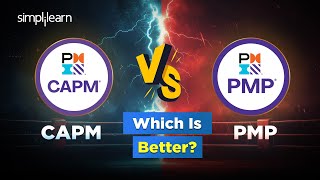 33
33
 34
34
 35
35
 36
36
 37
37
 38
38
 39
39
 40
40
 41
41
 42
42
 43
43
 44
44
 45
45
 46
46
 47
47
 48
48
 49
49
 50
50
 51
51
 52
52
 53
53
 54
54
 55
55
 56
56
 57
57
 58
58
 59
59
 60
60

Ethical Hacking Full Course 2026 | Ethical Hacking Course for Beginners | Simplilearn
Simplilearn
AWS Full Course 2026 | AWS Cloud Computing Tutorial for Beginners | AWS Training | Simplilearn
Simplilearn
Data Structures And Algorithms Full Course | Data Structures and Algorithms Tutorial | Simplilearn
Simplilearn
SQL Full Course 2026 | SQL Tutorial for Beginners | SQL Beginner to Advanced Training | Simplilearn
Simplilearn
Microsoft Azure Full Course 2026 | Azure Tutorial for Beginners | Azure Training | Simplilearn
Simplilearn
Shopify Tutorial For Beginners 2026 | Shopify Course | shopify dropshipping | Simplilearn
Simplilearn
Six Sigma Full Course 2026 | Six Sigma Green Belt Training | Six Sigma Training | Simplilearn
Simplilearn
🔥Feeling Stuck? How Upskilling Can Boost Your Career! #shorts #simplilearn
Simplilearn
Growth Hacking In Marketing | Learn Growth Hacking Marketing Strategies | Simplilearn
Simplilearn
🔥Cracked 3 Job Offers with One AIML Course! | 20–30% Salary Hike #shorts #simplilearn
Simplilearn
Top 10 Must-Have Figma Plugins for UI/UX Designers in 2026 | Figma Plugins | Simplilearn
Simplilearn
Business Analytics Full Course 2026 | Business Analytics Tutorial For Beginners | Simplilearn
Simplilearn
Simplilearn Reviews | Getting future-ready with course in Artificial Intelligence | Roopam’s story
Simplilearn
Generative AI Full Course 2026 | Gen AI Tutorial for Beginners | Gen AI Explained | Simplilearn
Simplilearn
Full Stack Developer Course 2026 | Full Stack Java Developer Tutorial for Beginners | Simplilearn
Simplilearn
Simplilearn Reviews | How David Went From Seasoned Engineer to AI Innovator #GetCertifiedGetAhead
Simplilearn
Complete Social Media Marketing Strategy for 2026 | Social Media Marketing Strategy | Simplilearn
Simplilearn
🔥Top 4 Cybersecurity Certifications You Need! #simplilearn #shorts
Simplilearn
🔥Cloud Engineer Salary in India 2026 | City-Wise Breakdown #shorts #simplilearn
Simplilearn
Digital Marketing Full Course 2026 | Digital Marketing Tutorial For Beginners | Simplilearn
Simplilearn
Full Stack Java Developer Course | Full Stack Java Developer Tutorial for Beginners | Simplilearn
Simplilearn
Social Media Marketing Full Course | Social Media Marketing Tutorial For Beginners | Simplilearn
Simplilearn
How To Create LLM Chatbot Demo 2026 | Build a LLM Chatbot From Scratch | Simplilearn
Simplilearn
Digital Supply Chain Management Certification | Supply Chain Management Course | Simplilearn
Simplilearn
AI Agents Full Course 2026 | AI Agents Tutorial for Beginners | How to Build AI Agents | Simplilearn
Simplilearn
ITIL Full Course 2026 | ITIL 4 Foundation Course | ITIL Tutorial For Beginners | Simplilearn
Simplilearn
Generative AI Full Course 2026 | Gen AI Tutorial for Beginners | Gen AI Explained | Simplilearn
Simplilearn
ITIL Full Course 2026 | ITIL 4 Foundation Course | ITIL Tutorial For Beginners | Simplilearn
Simplilearn
Simplilearn Reviews | Integrating AI & Music | Diego's Story
Simplilearn
Digital Marketing Full Course 2026 | Digital Marketing Tutorial For Beginners | Simplilearn
Simplilearn
SEO Full Course 2026 | SEO Tutorial for Beginners | SEO Training | SEO Explained | Simplilearn
Simplilearn
PMP Vs CAPM: Which Certification Should You Choose? | PMP Vs CAPM | Simplilearn
Simplilearn
Complete Data Analyst Roadmap 2026 | How To Become A Data Analayst In 2026 | Simplilearn
Simplilearn
Generative AI Full Course 2026 | Gen AI Tutorial for Beginners | Gen AI Explained | Simplilearn
Simplilearn
🔥5 Jobs That Are Most Likely Safe from Layoffs in Today’s Market #shorts #simplilearn
Simplilearn
🔥Git vs GitHub – What's the Difference?
Simplilearn
What Goes Behind Building the Likes of Uber and Netflix? | Product Management Tutorial | Simplilearn
Simplilearn
AI Agents Full Course 2026 | AI Agents Tutorial for Beginners | How to Build AI Agents | Simplilearn
Simplilearn
Full Stack Developer Course 2026 | Full Stack Java Developer Tutorial for Beginners | Simplilearn
Simplilearn
Product Life Cycle 2025 | Stages Of Product Life Cycle | Product Life Cycle Tutorial | Simplilearn
Simplilearn
Project Management Full Course 2026 | Project Management Tutorial | PMP Course | Simplilearn
Simplilearn
PCB Design Course 2025 | PCB Designing Explained | How To Make PCBs | Simplilearn
Simplilearn
Python Full Course 2026 | Python Data Analytics Tutorial For Beginners | Simplilearn
Simplilearn
🔥Top Product Management Skills You Need to Succeed in 2026 #shorts #simplilearn
Simplilearn
SQL For Data Analytics 2026 | Essential SQL Commands | SQL Tutorial For Beginners | Simplilearn
Simplilearn
Simplilearn Reviews | Paving Way To Success With AI & ML Course | Soumik’s Upskilling Journey
Simplilearn
Six Sigma Full Course 2026 | Six Sigma Green Belt Training | Six Sigma Training | Simplilearn
Simplilearn
Learn Snowflake In 45 Mins | Snowflake Tutorial | What Is Snowflake | Snowflake Explained
Simplilearn
🔥ML Career Tip – How to Start Learning Machine Learning in 60 Seconds! #shorts#simplilearn
Simplilearn
🔥Agile vs Waterfall in 60 Seconds #shorts #simplilearn
Simplilearn
Excel Full Course 2026 | Excel Tutorial For Beginners | Microsoft Excel Course | Simplilearn
Simplilearn
What Are AI Agents? | Types Of AI Agents | AI Agents Explained | AI Agents Tutorial | Simplilearn
Simplilearn
How To Create a Product Roadmap In 2026 | Product Roadmap | What Is Product Roadmap | Simplilearn
Simplilearn
SQL Full Course 2026 | SQL Tutorial for Beginners | SQL Beginner to Advanced Training | Simplilearn
Simplilearn
🔥What Is Phishing? #shorts #simplilearn
Simplilearn
Cloud Computing Full Course 2026 | Cloud Computing Tutorial | Cloud Computing Course | Simplilearn
Simplilearn
Simplilearn Reviews | Overcoming Rejection & career plateau to finding a New Job : Bhaskar Banerji
Simplilearn
Six Sigma Full Course 2026 | Six Sigma Green Belt Training | Six Sigma Training | Simplilearn
Simplilearn
Generative AI Full Course 2026 | Gen AI Tutorial for Beginners | Gen AI Explained | Simplilearn
Simplilearn
VLSI Design Course 2026 | VLSI Tutorial For Beginners | VLSI Physical Design | Simplilearn
Simplilearn
Related Reads
📰
📰
📰
📰
The Person Who Fixed the Bugs Just Vanished
Dev.to · xulingfeng
Apa Saja yang Dinilai Skema Sertifikasi Project Management BNSP?
Medium · Data Science
Why Your Team Loses Track of Work (And It's Not a Discipline Problem)
Dev.to · SarasG
Wrike Review 2026: Project Management Features, Pricing and Alternatives
Dev.to · Jon
Chapters (14)
Introduction to Project Management Full Course 2025
2:05
PMP Exam Guide
9:41
What is project management
31:09
Phases Of Project Management
52:12
All about PMP Certification
1:02:05
How to be Project Manager
1:12:11
Project Management Roadmap for beginners
1:24:55
Project Management Fundamentals
6:13:31
Gantt Charts for PMP
6:31:16
PMP Exam Guide
6:38:52
kotters 8 step change model
6:49:53
Top 10 Project Management Tools
7:14:06
Project Management Interview Tips
7:34:28
Common PMP Interview Questions and Answers
🎓
Tutor Explanation

 DeepCamp AI