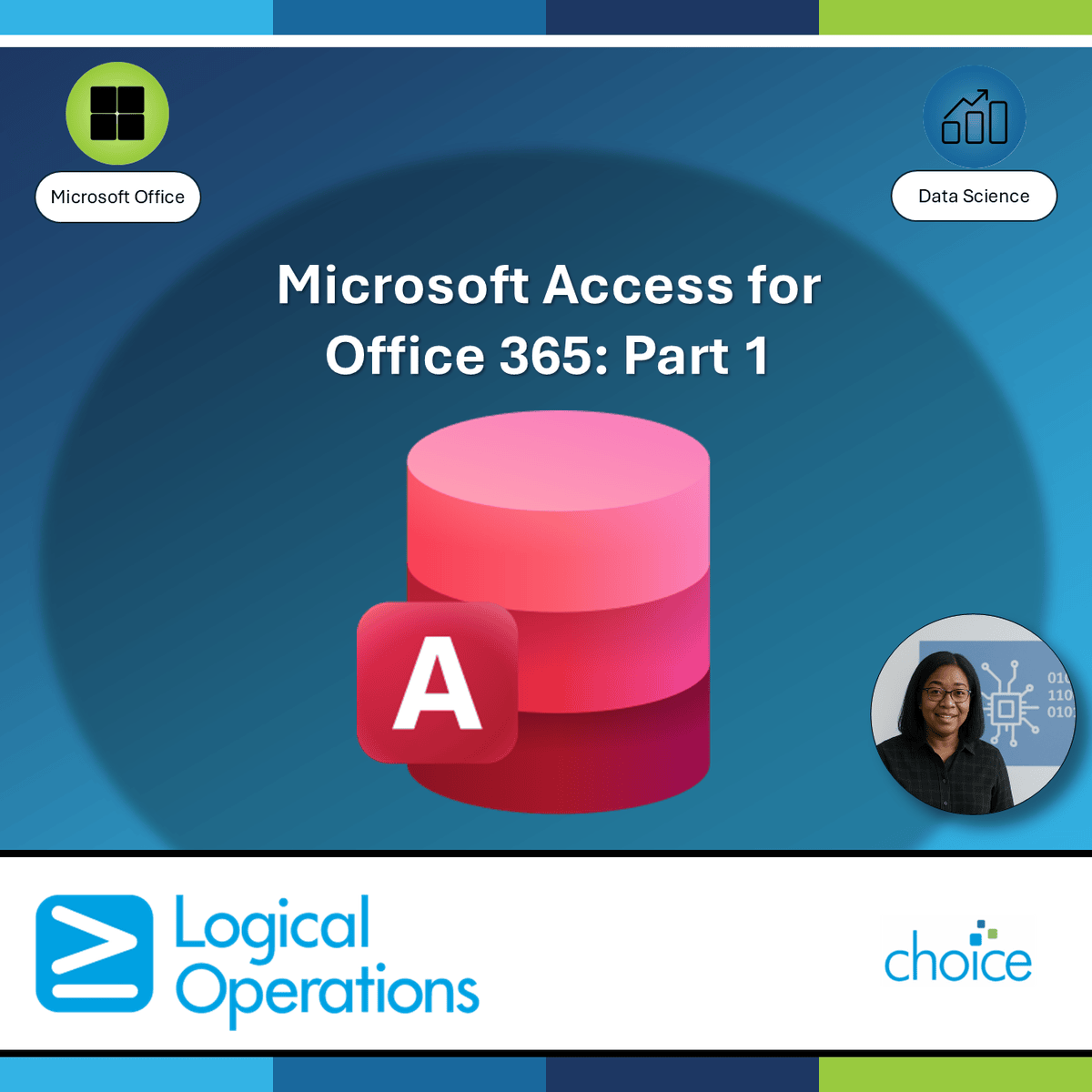
Microsoft Access for Office 365: Part 1
Data is everywhere. Most job roles today involve some form of data management. Virtually everyone is affected in some way by the need to manage data. A relational database application such as Microsoft® Access® can help you and your organization with this task. This course is the first part of a three-course Specialization that covers the skills needed to perform database design and development in Access.
This course may be a useful component in your preparation for the Microsoft Access Expert (Microsoft 365 Apps and Office 2019): Exam MO-500 certification exam.
This course is designed for students looking to establish a foundational understanding of Access, including the skills necessary to create a new database, construct data tables, design forms and reports, and create queries.
In this course, you will: navigate within the Access application environment, create a simple database, and customize Access configuration options; organize and manage data stored within Access tables; use queries to join, sort, and filter data from different tables; use forms to make it easier to view, access, and input data; and create and format custom reports.
This course requires that you have Microsoft Access installed on a Windows PC. The course setup instructions provided in the first module of the course go into more detail about the hardware and software requirements.
Watch on Coursera ↗
(saves to browser)
Sign in to unlock AI tutor explanation · ⚡30
More on: Data Literacy
View skill →







Related AI Lessons
⚡
⚡
⚡
⚡
Big Tech firms are accelerating AI investments and integration, while regulators and companies focus on safety and responsible adoption.
Dev.to AI
I Built a 5-Signal Vendor Watchlist for Google I/O 2026 - Here's What Each One Will Break in My Stack
Dev.to · Mykola Kondratiuk
Big Tech firms are accelerating AI investments and integration, while regulators and companies focus on safety and responsible adoption.
Dev.to AI
Il Paradosso Delle IA e il Fermo dell’Autore:
Medium · AI
🎓
Tutor Explanation

 DeepCamp AI