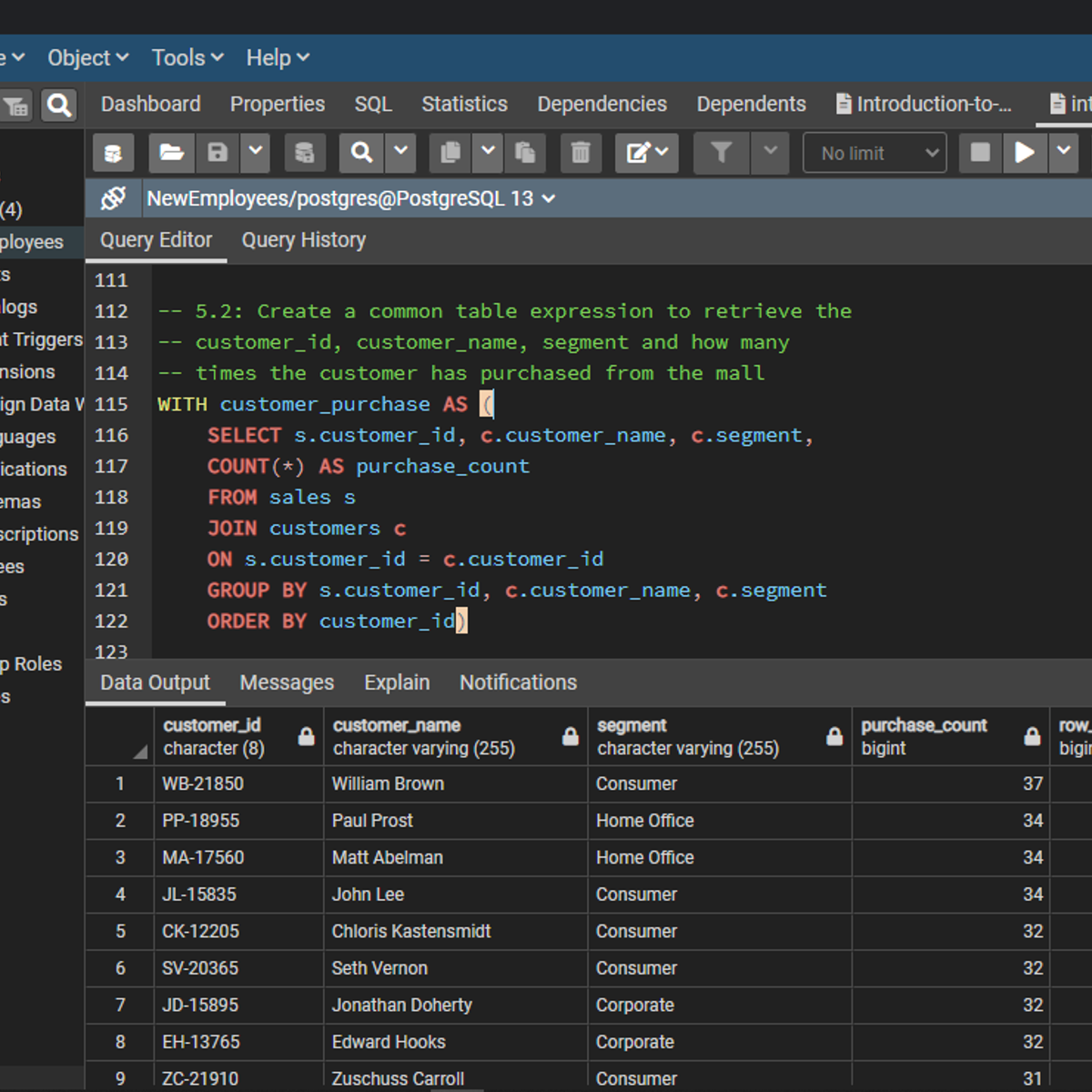
Introduction to SQL Window Functions
Skills:
SQL Analytics90%
Key Takeaways
Introduces SQL Window Functions through a hands-on project-based course with extensive database querying
Original Description
Welcome to this project-based course Introduction to SQL Window Functions. This is a hands-on project that introduces SQL users to the world of window functions. In this project, you will learn how to explore and query the project-db database extensively. We will start this hands-on project by retrieving the data in the table in the database.
By the end of this 2-hour-and-a-half-long project, you will be able to use different window functions to retrieve the desired result from a database. In this project, you will learn how to use SQL window functions like ROW_NUMBER(), LEAD(), LAG(), and FIRST_VALUE() to manipulate data in the project-db database. These window functions will be used together with the OVER() clause to query this database.
Watch on External: Coursera ↗
(saves to browser)
Sign in to unlock AI tutor explanation · ⚡30
More on: SQL Analytics
View skill →







Related Reads
🎓
Tutor Explanation

 DeepCamp AI