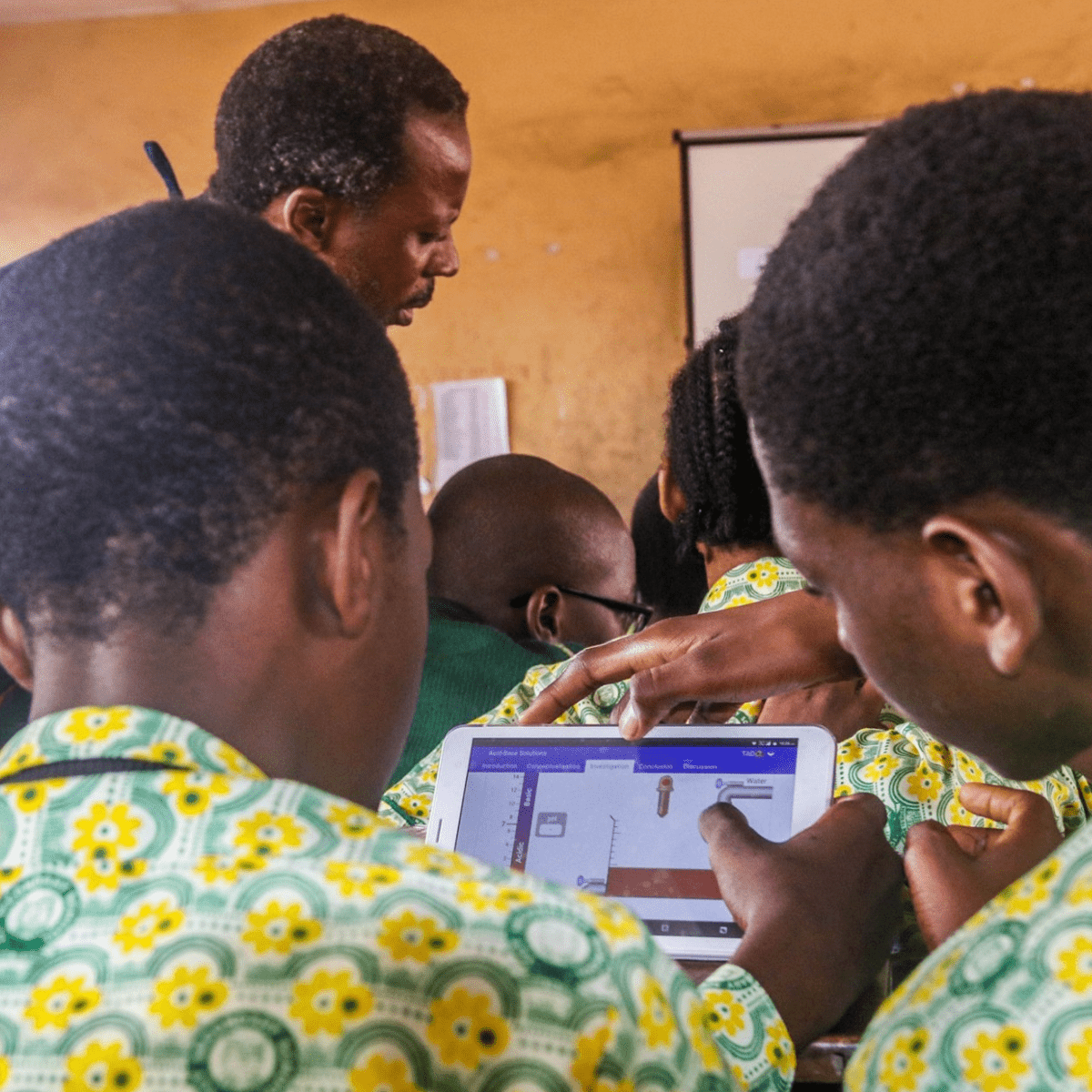
Implementation of PhET Activities for STEM Education
Skills:
Reading ML Papers60%
PhET Interactive Simulations ( https://phet.colorado.edu/ ), a project of the University of Colorado Boulder, provides fun, free, interactive, research-based science and mathematics simulations for use across, primary, secondary, and higher education levels. We extensively test and evaluate each simulation to ensure educational effectiveness. All simulations are open source and free to all students and teachers.
In this course, you will learn how to effectively design and implement a Teacher Guide that makes use of PhET’s simulations for mathematics and science.
To finish this course, you need to complete two assignments with Peer Review: 1) Design a Teacher Guide that integrates an inquiry-based activity with simulations, and 2) Implement your lesson in your class, and reflect on the results.
This course is the fourth and final of four courses that make up the specialization “Active Learning in STEM with PhET Interactive Simulations”.
This course is also available in Spanish as “Implementación de Actividades PhET para la Educación STEM” and in Portuguese as "Implementação de Atividades PhET para Educação STEM".
Watch on Coursera ↗
(saves to browser)
Sign in to unlock AI tutor explanation · ⚡30
More on: Reading ML Papers
View skill →





Related AI Lessons
⚡
⚡
⚡
⚡
The ABCs of reading medical research and review papers these days
Medium · LLM
#1 DevLog Meta-research: I Got Tired of Tab Chaos While Reading Research Papers.
Dev.to AI
How to Set Up a Karpathy-Style Wiki for Your Research Field
Medium · AI
The Non-Optimality of Scientific Knowledge: Path Dependence, Lock-In, and The Local Minimum Trap
ArXiv cs.AI
🎓
Tutor Explanation

 DeepCamp AI