
Gen AI - RAG Application Development using LangChain
Key Takeaways
Develops RAG applications using LangChain and Retrieval-Augmented Generation
Original Description
This course features Coursera Coach!
A smarter way to learn with interactive, real-time conversations that help you test your knowledge, challenge assumptions, and deepen your understanding as you progress through the course.
This comprehensive course will equip you with the skills to develop advanced language model applications using LangChain and Retrieval-Augmented Generation (RAG). Through hands-on projects and demonstrations, you will learn how to integrate large language models, prompt engineering, and vector databases into scalable AI-driven applications. Starting with the basics, the course progresses through fundamental concepts of LangChain and builds to complex RAG applications.
The course begins by introducing core concepts such as LangChain, large language models, and the basics of prompts. It moves on to essential topics like agents, tools, and working with language embeddings, providing you with practical knowledge to construct powerful applications. You will then apply these skills to real-world projects, ranging from SQL data integration to building conversational chatbots and extracting information from invoices. With practical demonstrations and expert guidance, you will create sophisticated systems using LangChain and RAG techniques.
By the end of the course, you will have developed hands-on projects that demonstrate your ability to build and deploy robust language model applications. You will gain proficiency in using advanced techniques like conversational memory, document parsing, and LangChain expression language, which are critical to modern AI applications.
This course is designed for developers, data scientists, and AI enthusiasts eager to learn about language models and their real-world applications. Basic programming knowledge is required, and familiarity with Python will be beneficial. The difficulty level is intermediate, assuming the learner has some experience with AI concepts or software development.
By the end of the course,
AI explanation not available for this lesson yet
This lesson is still being prepared for the AI tutor. In the meantime, explore lessons that are ready.
Browse explainer-ready lessons →
More on: RAG Basics
View skill →
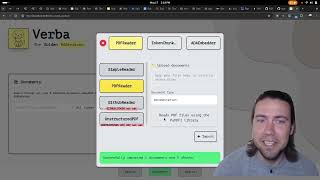
![Build a RAG Agent in n8n | Vector DB Pinecone + WhatsApp + Gmail [2026]](https://i.ytimg.com/vi/4eJsZBgwFJ4/mqdefault.jpg)



Related Reads
📰
📰
📰
📰
Why Does RAG Miss Information That's Clearly in the Document?
Dev.to AI
When The Same Question Needs A Different Answer Depending On Where The Caller Is
Medium · RAG
Evolution of RAG Systems
Medium · RAG
I Built STAIR From Scratch: A Retriever That Returns Section Names, Not Chunk IDs
Medium · RAG
🎓
Tutor Explanation
 DeepCamp AI