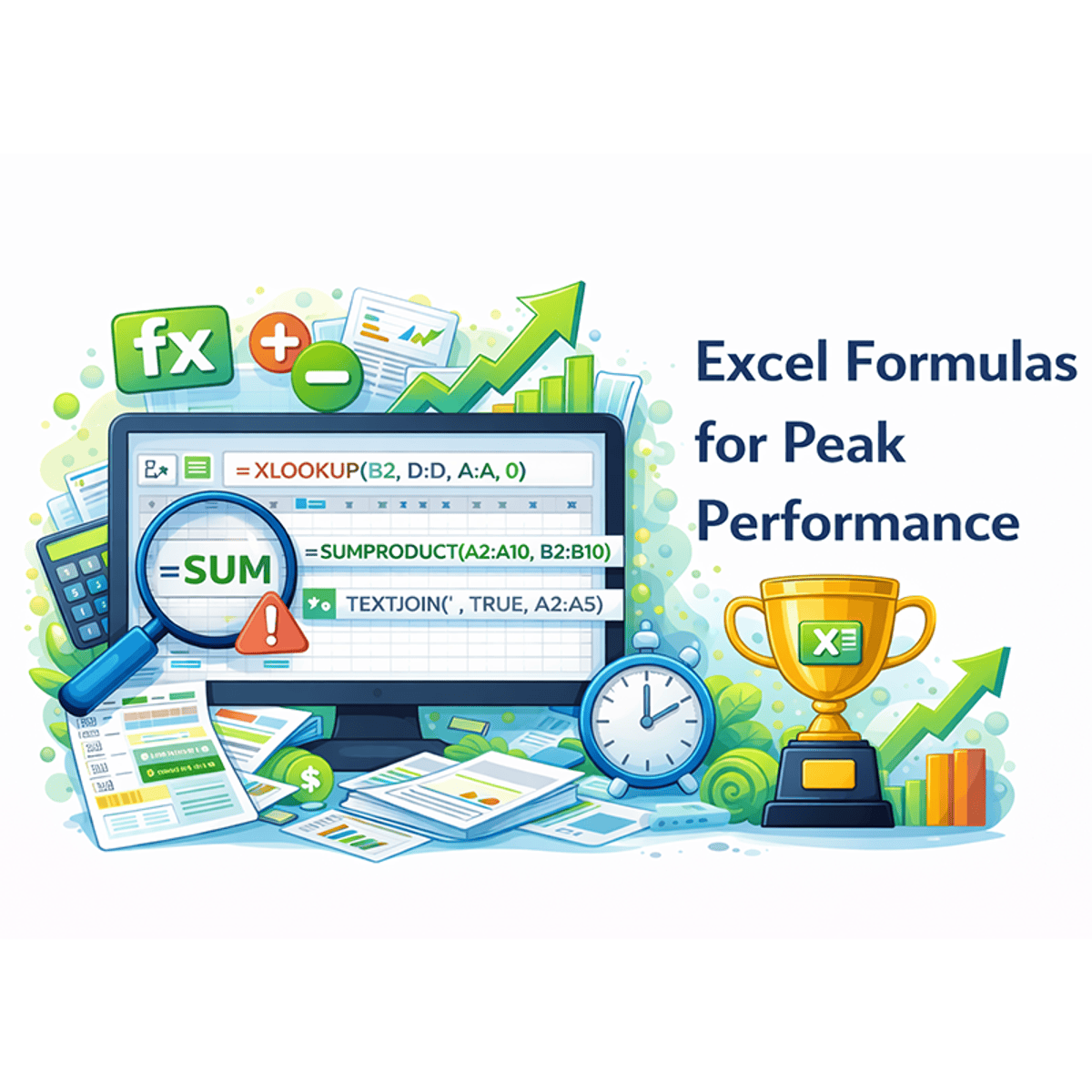
Excel Formulas for Peak Performance
Excel Formulas for Peak Performance is the advanced course for professionals who need to build models that are not only accurate but exceptionally fast. When datasets scale, standard formulas fail. This course teaches you to master workbook optimization.
You will learn to systematically audit complex spreadsheets, using formula-auditing tools to pinpoint performance bottlenecks caused by volatile functions like OFFSET and inefficient arrays. Then, you’ll master powerful alternatives. You'll leverage SUMPRODUCT for complex multi-conditional calculations and use modern dynamic arrays like FILTER to replace slow helper columns and lookups.
Through hands-on labs, you'll refactor an inherited pricing model and consolidate a large sales dataset, achieving a measurable drop in recalculation time. By the end, you'll transform fragile, lagging workbooks into robust, lightning-fast models ready for demanding professional use. Elevate your Excel skills from proficient to expert.
Watch on External: Coursera ↗
(saves to browser)
Sign in to unlock AI tutor explanation · ⚡30
More on: Data Literacy
View skill →









Related AI Lessons
⚡
⚡
⚡
⚡
Python for Data Science — Boxplots and Outlier Detection
Medium · Data Science
Python for Data Science — Scatter Plots and Relationships Between Variables
Medium · Data Science
CSV explained — the quirks that quietly corrupt your data (and how to avoid them)
Dev.to · William Andrews
ARIMA & SARIMA: Model Statistik Klasik untuk Deret Waktu
Medium · Data Science
🎓
Tutor Explanation
 DeepCamp AI