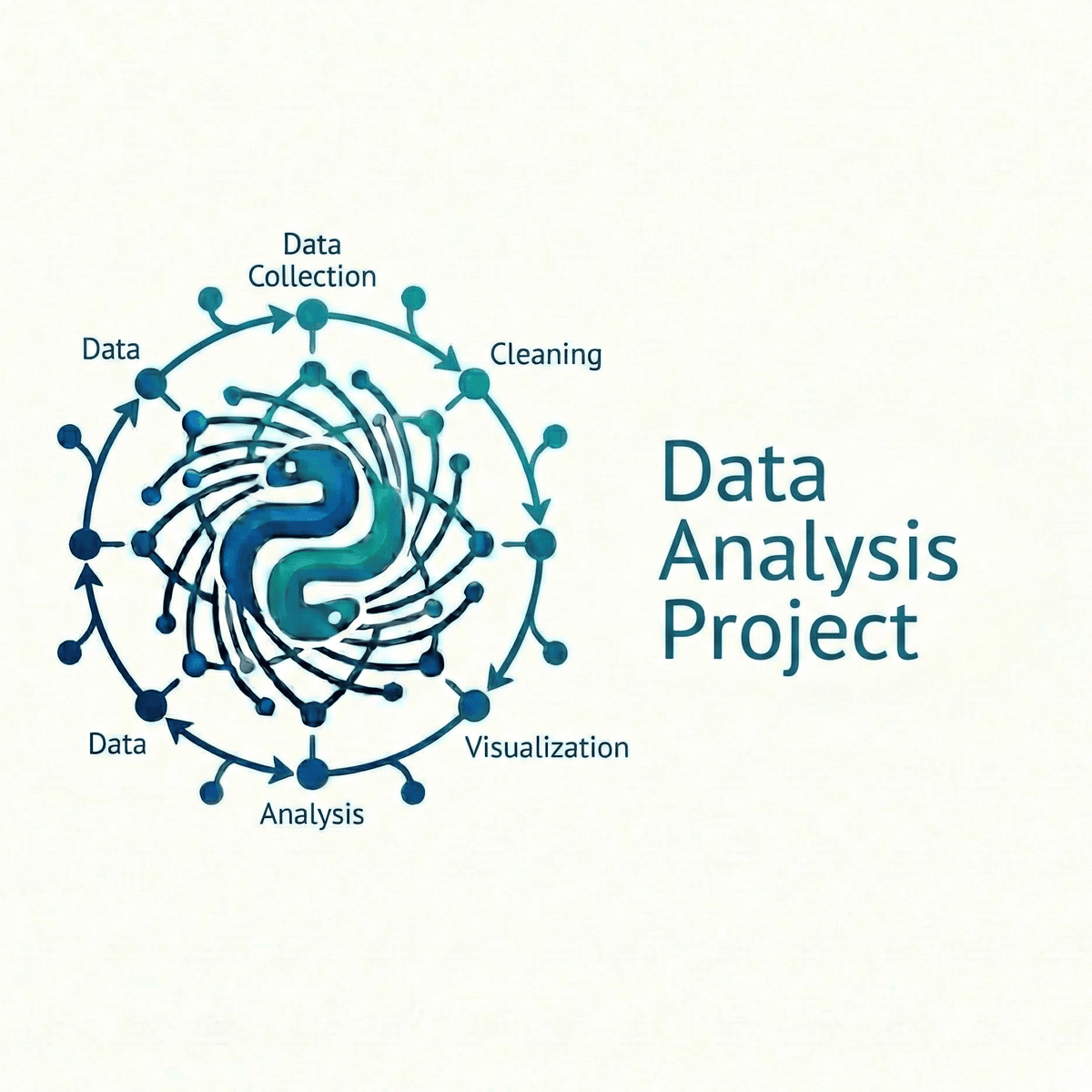
Data Analysis with Python Project
Key Takeaways
Conducts real-life data analysis projects using Python
Original Description
The "Data Analysis Project" course empowers students to apply their knowledge and skills gained in this specialization to conduct a real-life data analysis project of their interest. Participants will explore various directions in data analysis, including supervised and unsupervised learning, regression, clustering, dimension reduction, association rules, and outlier detection. Throughout the modules, students will learn essential data analysis techniques and methodologies and embark on a journey from raw data to knowledge and intelligence. By completing the course, students will be proficient in data analysis, capable of applying their expertise in diverse projects and making data-driven decisions.
By the end of this course, students will be able to:
1. Understand the fundamental concepts and methodologies of data analysis in diverse directions, including supervised and unsupervised learning, regression, clustering, dimension reduction, association rules, and outlier detection.
2. Define the scope and direction of a data analysis project, identifying appropriate techniques and methodologies for achieving project objectives.
3. Apply various classification algorithms, such as Nearest Neighbors, Decision Trees, SVM, Naive Bayes, and Logistic Regression, for predictive modeling tasks.
4. Implement cross-validation and ensemble techniques to enhance the performance and generalizability of classification models.
5. Apply regression algorithms, including Simple Linear, Polynomial Linear, and Linear with regularization, to model and predict numerical outcomes.
6. Perform multivariate regression and apply cross-validation and ensemble methods in regression analysis.
7. Explore clustering techniques, including partitioning, hierarchical, density-based, and grid-based methods, to discover underlying patterns and structures in data.
8. Apply Principal Component Analysis (PCA) for dimension reduction to simplify high-dimensional data and aid in data visualization.
9. Utilize
Watch on External: Coursera ↗
(saves to browser)
Sign in to unlock AI tutor explanation · ⚡30
More on: Data Literacy
View skill →









Related Reads
📰
📰
📰
📰
Confused Between Data Science, Data Analytics, Cloud Computing, DevOps, Data Engineering, and Generative AI? Here's How to Choose the Right Career
Dev.to AI
Data Science with AI — Join IDSA Janakpuri Today
Medium · Data Science
Stop Writing Python Classes Until You Learn The 4 Things You Can Do To Every Piece Of Data An…
Medium · Data Science
Why I Stopped Trying to Predict Electricity Price Spikes (And Built Something Better Instead)
Medium · Data Science
🎓
Tutor Explanation

 DeepCamp AI