
Create Chatbots & NLP Apps
Key Takeaways
Implements retrieval-augmented generation systems for chatbot applications with natural language processing capabilities
Original Description
Ready to transform customer interactions through intelligent conversation? This Short Course was created to help data analysts and professionals accomplish the development of sophisticated chatbot applications with natural language processing capabilities. By completing this course, you'll be able to implement retrieval-augmented generation systems, optimize conversational flows, extract meaningful insights from unstructured text, and make data-driven decisions about text representation methods.
By the end of this course, you will be able to:
Build a chatbot prototype using RAG (retrieval-augmented generation) and measure user satisfaction through SUS survey
Evaluate dialog-flow metrics (fallback rate, turn length) and iterate on intent-matching rules
Apply named-entity recognition to extract key terms from support tickets and quantify precision/recall
Evaluate two vectorization techniques (TF-IDF vs. embeddings) on a text-classification task
This course is unique because it combines hands-on chatbot development with rigorous evaluation methodologies, ensuring your AI solutions deliver measurable business value.
To be successful in this project, you should have a background in Python programming and basic machine learning concepts.
AI explanation not available for this lesson yet
This lesson is still being prepared for the AI tutor. In the meantime, explore lessons that are ready.
Browse explainer-ready lessons →
More on: RAG Basics
View skill →
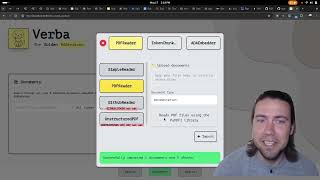
![Build a RAG Agent in n8n | Vector DB Pinecone + WhatsApp + Gmail [2026]](https://i.ytimg.com/vi/4eJsZBgwFJ4/mqdefault.jpg)



Related Reads
📰
📰
📰
📰
Chunking Strategies for Production RAG: From Fixed-Size to Context-Aware and Multimodal Retrieval
Medium · AI
Chunking Strategies for Production RAG: From Fixed-Size to Context-Aware and Multimodal Retrieval
Medium · Data Science
Relevance Is Not Enough: How to Evaluate Enterprise RAG for Authority, Permissions, and Time
Dev.to AI
Your RAG Isn't Broken. Your Retrieval Pipeline Is.
Dev.to · RAJSHREE
🎓
Tutor Explanation

 DeepCamp AI