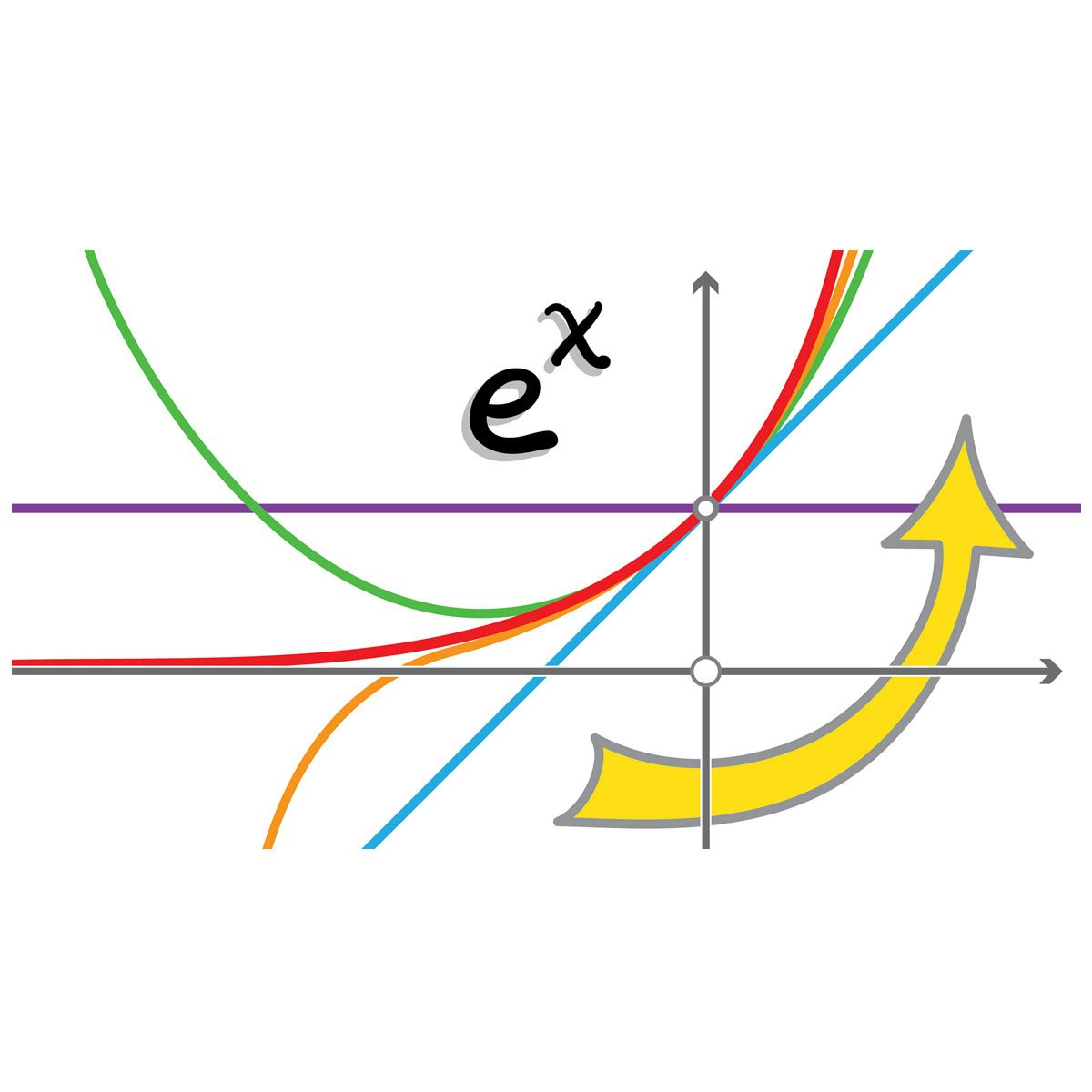
Calculus: Single Variable Part 1 - Functions
Key Takeaways
Covers single-variable calculus for engineering and science students
Original Description
Calculus is one of the grandest achievements of human thought, explaining everything from planetary orbits to the optimal size of a city to the periodicity of a heartbeat. This brisk course covers the core ideas of single-variable Calculus with emphases on conceptual understanding and applications. The course is ideal for students beginning in the engineering, physical, and social sciences. Distinguishing features of the course include: 1) the introduction and use of Taylor series and approximations from the beginning; 2) a novel synthesis of discrete and continuous forms of Calculus; 3) an emphasis on the conceptual over the computational; and 4) a clear, dynamic, unified approach.
In this first part--part one of five--you will extend your understanding of Taylor series, review limits, learn the *why* behind l'Hopital's rule, and, most importantly, learn a new language for describing growth and decay of functions: the BIG O.
AI explanation not available for this lesson yet
This lesson is still being prepared for the AI tutor. In the meantime, explore lessons that are ready.
Browse explainer-ready lessons →
More on: ML Maths Basics
View skill →

![AI With Python Full Course 2026 [FREE] | Learn Artificial Intelligence With Python | Simplilearn](https://img.youtube.com/vi/IvFW-r_S6UI/mqdefault.jpg)

Related Reads
📰
📰
📰
📰
What Skills Are Required for an AI Job?
Medium · Machine Learning
AI ile Geleceğin Yıldızlarını Keşfetmek: Futbolcu Değer Artışı Tahmini Projesi
Medium · Machine Learning
Architecting Low-Latency Real-Time AI Pipelines: Edge Streaming, Vector Indexing, and Concurrency…
Medium · Machine Learning
I Started With Nothing. Now I Make $198k as an ML Engineer.
Medium · AI
🎓
Tutor Explanation
 DeepCamp AI