When to choose CPU vs GPU: Databricks AI Runtime Explained
Key Takeaways
Databricks AI Runtime allows users to choose between CPU and GPU for their AI workflows, with CPUs suitable for data work and GPUs ideal for deep learning tasks, and provides a serverless Nvidia GPU environment for easy model training and deployment
Full Transcript
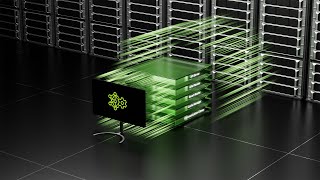
Databricks introduced AI runtime with serverless Nvidia GPUs. But the bigger question, when should you use CPU and when GPU? Choosing the wrong compute can make your workflow slower, more expensive, and unnecessarily complex. The answer comes down to the workload. Let me explain. CPUs are still great for the data work, ETL, feature engineering, SQL, data preprocessing, and classical machine learning. That's the work most teams need before they even get to model training. GPUs are different. They are built for deep learning workloads, fine-tuning LLMs, training computer vision models, recommenders, and neural networks. So, in a typical AI workflow, you might prepare your data on CPU, then train your model on GPU, and deploy through model serving. What Databricks AI runtime changes is how easy that GPU step becomes. Because setting up a GPU environment has traditionally been painful. You have to provision infrastructure, match code versions, manage dependencies, configure libraries, and sometimes figure out distributed training. AI runtime removes a lot of that setup. Now, you can attach your Databricks notebook, choose your accelerator, and start training with serverless Nvidia GPUs. You can choose from a single A10, a single H100, or eight H100s for distributed training. And the workflow stays inside Databricks. So, you can prepare data on CPU, train on GPU, track experiments with MLflow, and schedule production jobs with Lake Flow, all governed through Unity Catalog. This built for AI and ML teams that want to train custom models without spending weeks becoming infrastructure engineers. Resources are in the descriptions. Save this for your next AI/ML project.
Original Description
The conversation around GPUs has shifted this year. It used to be about training models from scratch. Now it is about token economics.
Here is the simple mental model:
→ CPU for the data work. ETL, feature engineering, SQL, classic ML.
→ GPU for deep learning. Fine-tuning LLMs, computer vision, recommenders, neural networks.
Calling a frontier proprietary model on every request adds up fast at production scale. A lot of teams are realizing they can fine-tune a strong open-weights model like Kimi K2 or Qwen on their own data, run it on GPU, and get a system that is cheaper per token and often better at their specific task.
That is where on-demand GPUs start to matter. You pick your accelerator, A10 or H100, attach it to your notebook, and fine-tune the open model that fits your workload.
More on: ML Pipelines
View skill →






Related Reads
📰
📰
📰
📰
What Is AI Inference? The Difference Between Training a Model and Actually Using It
Dev.to AI
The Python Script I Built That Turned a Messy Folder Into a Money-Making Automation
Medium · Programming
I Solved 200 LeetCode Problems And Froze On Problem 201.
Medium · Programming
Replay Was Meant to Be the Filter and Filters Nothing: 36 of 36 Mined Skills Verify, Including a Chimera
Dev.to AI
🎓
Tutor Explanation
 DeepCamp AI