
Building RAG Systems with Open Models
Key Takeaways
Builds RAG systems using open models and generative AI solutions for developers and engineers
Original Description
The Building RAG Systems with Open Models course is designed for developers, engineers, and technical product builders who are new to Generative AI but already have intermediate machine learning knowledge, basic Python proficiency, and familiarity with development environments such as VS Code, and who want to engineer, customize, and deploy open generative AI solutions while avoiding vendor lock-in.
The course provides learners with the skills to design and implement retrieval-augmented generation (RAG) applications for real-world use cases. Learners start by exploring the fundamentals of RAG architecture, breaking down key components such as retrievers, rankers, generators, and orchestration layers, while learning design patterns for tasks like question answering, summarization, and knowledge synthesis.
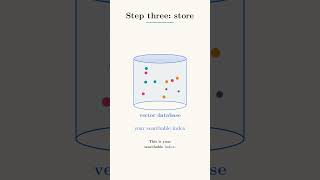
They then dive into embeddings and vector databases, comparing FAISS, ChromaDB, Milvus, and Pinecone, and applying indexing and chunking strategies to improve retrieval efficiency and semantic relevance. The final module brings all elements together to build production-ready RAG pipelines using LangChain and open LLMs, incorporating advanced retrieval methods, hallucination mitigation, and evaluation frameworks for accuracy and reliability. By the end, learners will have built a functional RAG application with configurable components, optimized for performance and equipped with robust evaluation metrics.
AI explanation not available for this lesson yet
This lesson is still being prepared for the AI tutor. In the meantime, explore lessons that are ready.
Browse explainer-ready lessons →
Related Reads
🎓
Tutor Explanation
 DeepCamp AI