Analyze & Manage Banking Risks Effectively
Skills:
Data Literacy70%
Key Takeaways
Analyzes and manages banking risks using structured risk management frameworks and internal risk controls
Original Description
Analyze major types of banking risk, evaluate liquidity and market exposures, apply structured risk management frameworks, assess legal and operational risk scenarios, and design effective internal risk controls.
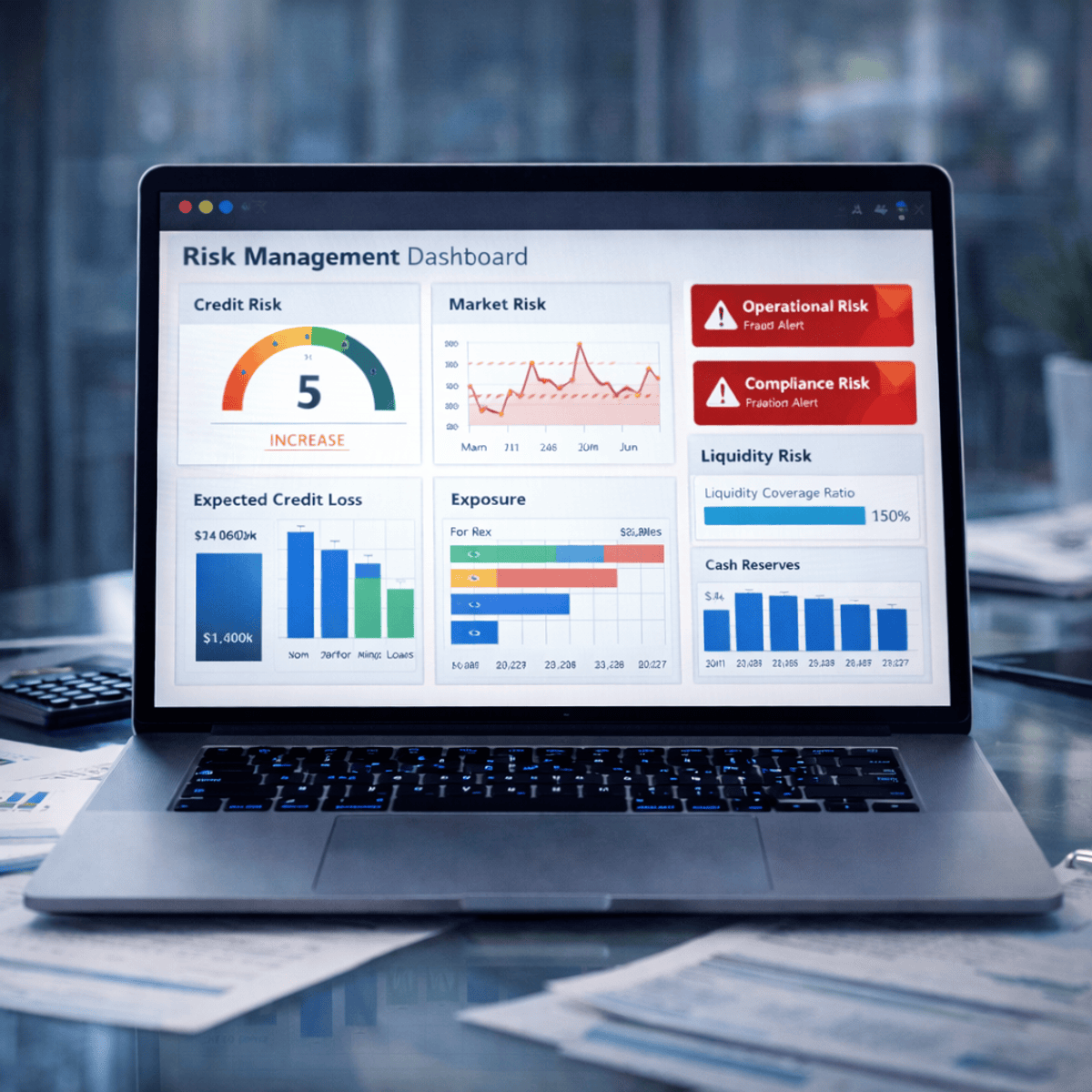
This course equips learners with practical knowledge to understand and manage risk in modern banking institutions. Covering credit risk, liquidity risk, market risk, legal risk, and operational risk, it explains how financial institutions identify, measure, monitor, and control risk exposures. Learners will explore real-world examples, funding mismatches, system failures, fraud risks, and compliance challenges to build a comprehensive understanding of integrated risk management.
What makes this course unique is its structured, step-by-step progression from foundational risk concepts to applied risk control mechanisms across multiple risk categories. Rather than focusing on theory alone, it connects risk principles directly to real banking operations and decision-making.
By completing this course, learners will strengthen their financial analysis skills, improve risk evaluation capabilities, and gain practical insights valuable for careers in banking, finance, risk management, audit, and compliance.
Watch on External: Coursera ↗
(saves to browser)
Sign in to unlock AI tutor explanation · ⚡30
More on: Data Literacy
View skill →









Related Reads
📰
📰
📰
📰
The Miami startup building blockchain settlement rails for African governments
TechCabal
The Most Important Part of FinTech Is the One You’ll Never See
Medium · AI
I was tired of every budgeting app wanting my bank login. So I built one that never asks.
Medium · Startup
M-Pesa enters stablecoin pilot with Visa and Onafriq in DRC
Techpoint Africa
🎓
Tutor Explanation

 DeepCamp AI