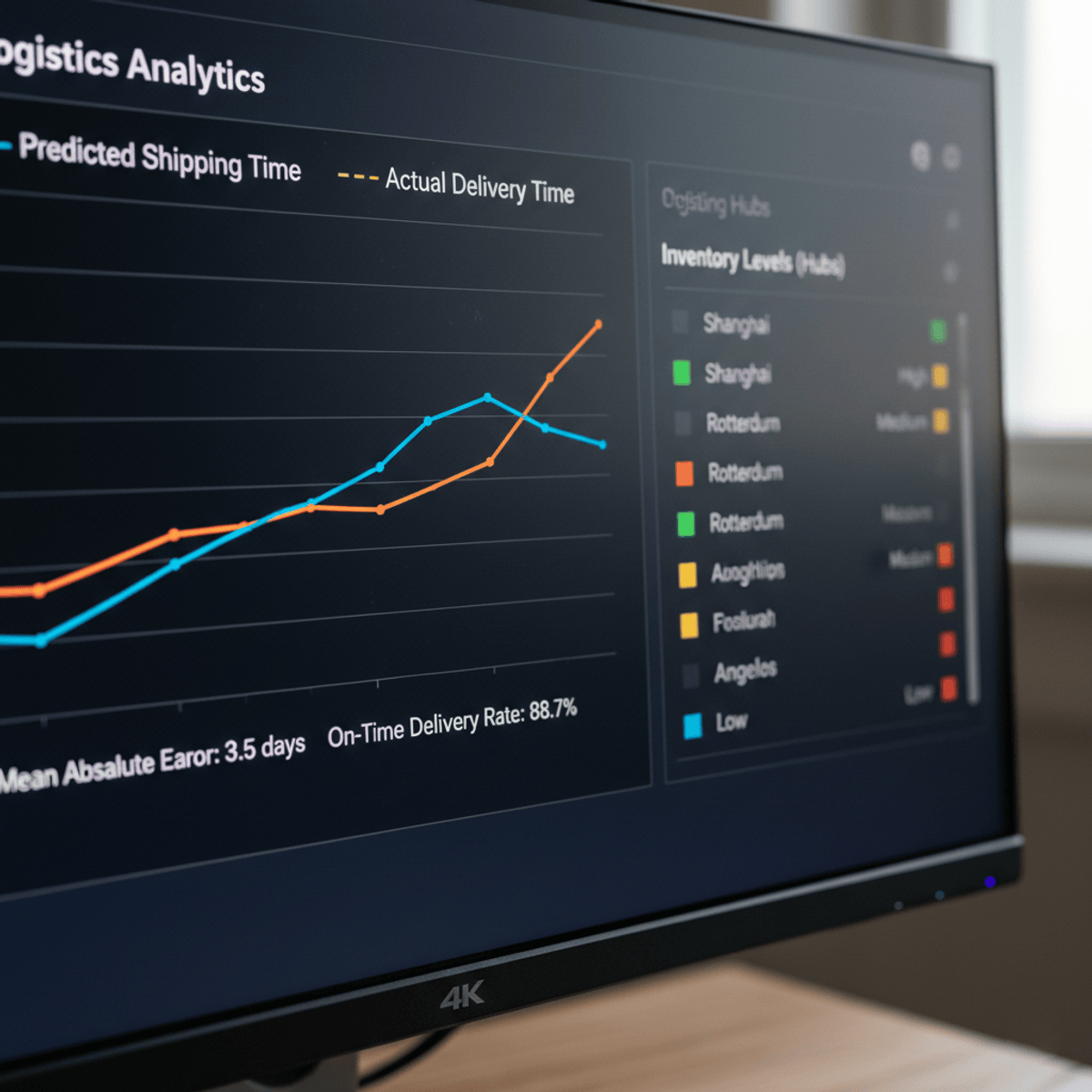
Analyze and Predict Shipping Time Using Machine Learning
Skills:
ML for Analytics90%
Key Takeaways
Analyzes and predicts shipping time using machine learning workflows and data-driven models
Original Description
By the end of this course, learners will be able to analyze shipping and pricing data, evaluate inventory and demand patterns, apply machine learning workflows, and predict shipping time and demand using data-driven models.
This course provides a practical, end-to-end understanding of how machine learning is applied to real-world shipping and logistics problems. Learners begin by exploring shipping pricing strategies, inventory availability, and data preparation techniques that form the foundation of reliable predictive models. The course then progresses into exploratory data analysis, correlation assessment, and distribution analysis to uncover meaningful insights from shipping datasets.
Unlike theory-heavy ML courses, this program emphasizes business-aligned decision making, showing how model evaluation metrics such as Mean Absolute Error translate directly into operational outcomes. Learners also gain hands-on exposure to demand forecasting, feature engineering, normalization, and discretization, enabling them to improve model accuracy and interpretability.
By completing this course, learners will build industry-relevant skills in logistics analytics, strengthen their ability to design and evaluate machine learning models, and gain a competitive edge in data-driven supply chain and e-commerce roles.
AI explanation not available for this lesson yet
This lesson is still being prepared for the AI tutor. In the meantime, explore lessons that are ready.
Browse explainer-ready lessons →
More on: ML for Analytics
View skill →






Related Reads
📰
📰
📰
📰
The revenue your sales data can’t see: modeling the true cost of stockouts
Medium · Machine Learning
The revenue your sales data can’t see: modeling the true cost of stockouts
Medium · Data Science
The revenue your sales data can’t see: modeling the true cost of stockouts
Medium · Python
10 Python Libraries That Data Scientist Must Try
Medium · Python
🎓
Tutor Explanation

 DeepCamp AI