Why CrewAI? Key Features
Key Takeaways
Delves into the core motivation behind CrewAI, focusing on collaborative multi-agent systems, task specialization, and dynamic task allocation
Full Transcript
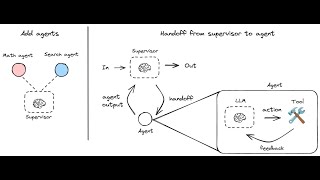
Welcome to the introduction to Crew Aai. But first, I want to give you an idea of what Crew Aai is and what Crew AI provides as a framework. We have seen what an agent is and now we have a feeling of why working with agents can be definitely more powerful than just using LLMs with prompts. Let's have a look at why Crew AI is actually around. What is the motivation behind this Python package? So first of all, CRU is a collaborative multi- aent AI platform. In this sentence, we can actually see two key points. The first is collaborative. Collaborative, we will see how this is actually implemented and how we can exploit this feature of crew AI. For now, let's focus on the meaning. Collaborative means that whenever we have to work with multi- aent there will be some sort of collaboration implemented in QAI collaboration means that if we compare it to classical LLM's approaches and this is something I will do often during the course we will see that collaboration means that we're not just writing one single prompt that is confined to whatever you write into the string that is sent to the LLM but instead Instead, we have different techniques and different tasks and agents that are collaborating all together to reach one specific goal. And of course, multi- aent is the fact that we are not confined to one single agent, but instead we can have multiple agents taking care of different tasks and working together for the same goal. Now, let's have a look into the key features of Crew AI. This picture explains very well what we have under the hood. First of all, we have as we mentioned before this multi- aent collaboration. So we have these agents inside the crew that can also access tools like browsing the internet or accessing some external KPIs and they're working together towards the goal that you set as global goal of your application. And the second point is task specialization. This is crucial to understand why Crew AI is and why working with frameworks like this in general is definitely a better solution compared to classic LLM's approach because here you're not confined as I said before to one single prompt but instead you focus on what the agent do what the agents do and then you can focus on what are the tasks that you assign to the agent. So you're actually basically splitting these two concepts in two. You're not putting everything in one frame in one prompt, but instead you're splitting this in two different objects, the task and the agents. That means that you can have different task that are specialized in different requests, different goals or whatever you want to solve. The third topic is dynamic task allocation. This is basically what we described in the first module when we were showing this loop feedback that we have on top of the classical LLM approach. Dynamit task allocation means that whenever we are working with LLM and requesting something and trying to solve a solution trying to solve a problem the solution is the final solution is a result of many iterations and adjustments that are happening inside crew AI. So the framework is adjusting the output based on the answers that are basically sent by the LLM that is used in this case. We will say that we can use different LLMs actually but for now we just refer to LLM. So dynamic task allocation in a nutshell we try to solve a problem. We're not confined to one single output but instead we adjust we adjust the output based on whatever is happening in the environment. And also one more thing this will be definitely more clear whenever we're going to touch these topics like agents, tasks, crews, managers. And the fourth point is scalability and flexibility. It doesn't matter what you want to solve. Solutions like this are very flexible. You can apply them to many domains because if you think about it, this is not just about crew AI. This is how we solve problems in general. We can have different people working towards the same goal. They can actually form a team and they have different tasks assigned to all each of the people that that is part of the team or the crew and these people are working towards the same goal and perhaps is a manager on top of these people that is that tries to be sure that all the people in this case the agents of the team are going in the right direction and so forth so on. So you can actually understand that this is very flexible and you can apply to many domains. Now this is something I mention many times especially when I go to conferences and I talk about these technologies. It's important for me that we focus on software engineering. We focus on products. As a data scientist, of course, I need to work with data, but I also need to work with products that can be delivered and it can be easily implemented. So, at the same time, as a software engineer, what I like about working with frameworks like Crew AI is that I don't have to reinvent all the concepts that we have in these packages. So the agent collaboration, the design of the interfaces that we will see in the next slides, the fact that you don't have to take care of how how the resources of your machine are actually used. All these dynamic components that are already implemented in Crew AI. These are all things that you don't have to take care of. So you can focus on the solution. You can focus on the product you want to build. This is really important. So what I see is that you can easily at least in my case I can easily create small prototypes. One important point is I can minimize the backend demands. So I'm not sending a lot of tokens to the LLMs because we have a lot of optimization process happening under the hood and I also believe it accelerates time to market. So, so that means that whenever you have a solution in mind with interfaces like what is provided by crew AI, you can easily build your product without taking care of concepts that could be very time expensive to build like agents, tasks, collaboration. Now, that's it for this module. I hope this introduction was clear and in the next one we will have a look into some of the classes, decorators and functions that QAI has to provide. We reached the end of the first module. At this point we know why working with agents is important and for some classes of problem is probably essential. I wanted you to understand what are the foundations of crew AI before moving into the technical details which is part of the second part of this course. For now, keep in mind that working with agents is definitely something more than LLM's prompts. We have something more on top that we can exploit based on the problems that we need to solve. So, I hope you enjoy the first part and I'll see you in the second part of this course.
Original Description
Description: Why is CrewAI a game-changer for developers? We dive into the core motivation behind this Python package, focusing on collaborative multi-agent systems, task specialization, and dynamic task allocation. Discover how to accelerate your time-to-market by using AI agents that work like a human team.
Chapters:
0:00 Motivation behind CrewAI
0:45 Collaborative vs. Classical LLM Approaches
1:35 Key Feature: Multi-Agent Collaboration
2:15 Task Specialization & Dynamic Allocation
3:30 Scalability and Flexibility in Software Engineering
4:45 Product Development with CrewAI
#LLM #SoftwareEngineering #AIWorkflows #CrewAI #PythonProgramming
Watch on YouTube ↗
(saves to browser)
Sign in to unlock AI tutor explanation · ⚡30
More on: Multi-Agent Systems
View skill →



Related Reads
📰
📰
📰
📰
My AI agents kept re-verifying the same work. So I made verification a signed, reusable object
Dev.to AI
I Built a Privacy-First Health Record MCP Server That Runs Entirely on Your Machine
Dev.to AI
Tessl Academy is live (in preview) — and there are two ways in
Dev.to AI
The Relationship Is the Product
Medium · AI
Chapters (6)
Motivation behind CrewAI
0:45
Collaborative vs. Classical LLM Approaches
1:35
Key Feature: Multi-Agent Collaboration
2:15
Task Specialization & Dynamic Allocation
3:30
Scalability and Flexibility in Software Engineering
4:45
Product Development with CrewAI
🎓
Tutor Explanation

 DeepCamp AI