What is Deep Learning?| Deep Learning Basics | Deep Learning
Skills:
Neural Network Basics53%
About this lesson
What is Deep Learning?| Deep Learning Basics | Deep Learning #deeplearning #deeplearningtutorial #ai #machinelearning 👍 Like, Share, and Subscribe for more videos on: Python | SQL | Artificial Intelligence | Generative AI | Machine Learning 🔔 Hit the bell icon to stay updated with our upcoming videos! 🔴 Subscribe to our channel to get video updates. Hit the subscribe button : https://goo.gl/6ohpTV Do not miss: Python Tutorials - https://youtube.com/playlist?list=PLQtyrrKdUiv2p1IEmuXRZu4F2P87mt4as&si=rmuRuSDzf6YpsTKf Generative AI (GenAI) - https://youtube.com/playlist?list=PLQtyrrKdUiv2Xd4Dp_N4gJAy_hP8Mpy4N&si=GYNXt6e_2ckwWXSq SQL - https://youtube.com/playlist?list=PLQtyrrKdUiv2p1IEmuXRZu4F2P87mt4as&si=OiDkstzQRAuX5WDo
Full Transcript
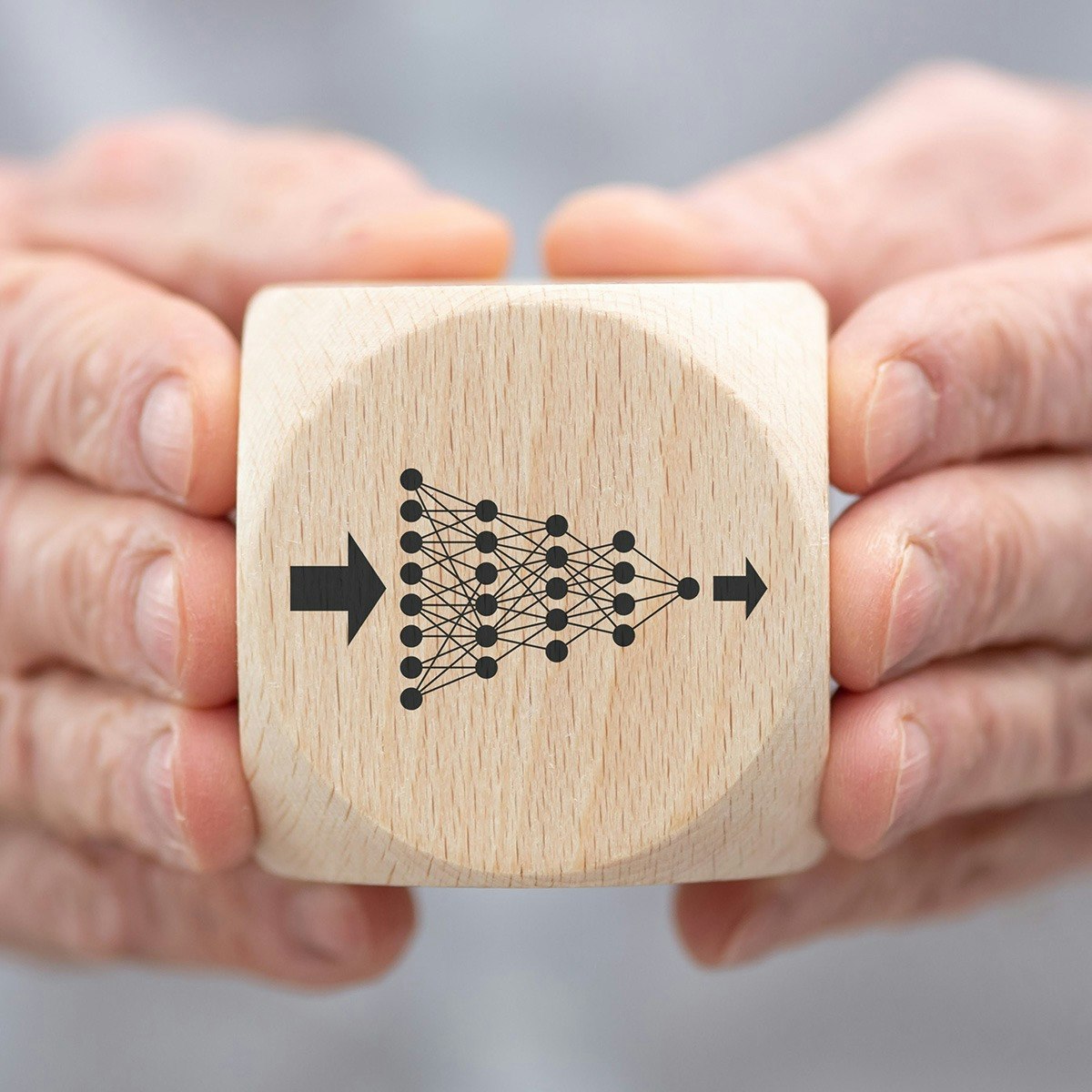
Hello everyone, welcome to my channel. Today we are starting our new series that is deep learning. Now let's dive into our video and learn the fundamentals of deep learning. So what is deep learning? It is a method to teach computers to learn complex patterns from the raw data using layered structure called neural networks. The traditional algorithm might struggle with huge and unstructured data. Whereas in deep learning, the system excels by automatically extracting the features without any human intervention. For example, let's imagine teaching a child to recognize a dog. We don't give rules like 2 year plus tail equals to dog. The child sees so many examples of dog and learns the pattern automatically. Hence, deep learning works the same way. It builds its understanding layer by layer. Now, let's see the basic differences of machine learning versus deep learning. Machine learning, it works well with small or medium data sets. Whereas deep learning, it requires huge amounts of data. In machine learning, humans must identify features such as aces, sapes, patterns and so on. In deep learning, model learns features automatically. Machine learning can run on standard CPUs. Whereas deep learning, it requires high performance GPUs. In machine learning, training time is less that is minutes to hour. Whereas in deep learning, training time is longer that is days to weeks. Machine learning is less complex whereas deep learning is highly complex. Now let's see how does deep learning actually works. Step one is the input. It could be any data such as a sentence, an image or an audio. So this kind of data is converted into numerical vectors. Next is forward propagation where the data flows through layers. Each layer looks at the data, extracts some patterns and passes it forward. Then an activation function like sigmoid decides whether the neuron should fire or not. After that the model's output is compared to the actual level by using a loss function. Then back propagation is when the error is sent backward through the network. Then an optimizer adjust the weights to reduce the error in the next round. Hence this is how deep learning operates by going through cycle of guessing and correcting for our desired outputs. Now let's understand the types of deep learning layers. The first is input layer. It receives raw data. Next is hidden layer. Here every neuron is connected to every neuron. Perform computitions to transform input into some useful patterns. Next is the output layer. It provides the final prediction. Now let's discuss the types of neural networks. Convolutional neural networks or CNN. CNN is good for identifying objects or images and also finding the patterns like aces and shapes. Basically, it's for computer vision. Recurrent neural networks or RNN. It is designed for sequential data such as time series and natural language. LSTM or GRU. It is an improved version of RNN. It has a better memory for long sequences. Generative adversarial networks. Two networks that is generator and discriminator compete to create realistic data. It is used for data augmentation, image generation and so on. Transformers. Transformers are used in modern AI systems. This is the architectures behind LLMs like GPD4, Gemini and so on. They use self attention to process the entire sequences of the data. simultaneously. Therefore, these are some of the neural networks. We understand that different neural networks are built to perform different task. Now, let's see the applications of deep learning. Deep learning is used in health care for early detection of cancer in X-rays and MRI scans. It is used in image recognition to detect objects in images. Similarly, it is used for autonomous vehicles for realtime object detection and path planning. It is also used in natural language processing such as real-time translation, summarization and code assistance. Next is deep learning is useful in finance such as in trading and fraud detection. It is also good for creative arts such as in AI generated music, video and digital arts. Next is for speech recognition to convert voice into text. Okay, these are some of the applications of deep learning. Now let's learn some of the advantages of deep learning. Deep learning has high accuracy as it outperforms all other algorithms on large data sets. Deep learning learns automatically. Hence there is no need for manual feature design. So it saves a lot of time. Deep learning handles complex data such as images, texts, audio and so on. Deep learning it improves with more data. That means more data it leads to better performance. So these are some of the advantages of deep learning. Now let's see the disadvantages of deep learning. Deep learning it requires huge data. That means it requires millions of labeled examples to avoid the errors. It is highly costly because it requires powerful hardware for large models. It is often difficult to understand why a model made a specific decision. Therefore, these are some of the disadvantages of deep learning. So it is always better to validate our output. Okay, this is all for deep learning. We learned that deep learning uses layered networks. It learns patterns automatically. It works best with complex data and it powers modern AI systems. This is all for today's episode. If you enjoyed this video, do not forget to like, share, and subscribe to my channel. Thank you for watching. I'll see you in the next episode.
Original Description
What is Deep Learning?| Deep Learning Basics | Deep Learning
#deeplearning #deeplearningtutorial #ai #machinelearning
👍 Like, Share, and Subscribe for more videos on:
Python | SQL | Artificial Intelligence | Generative AI | Machine Learning
🔔 Hit the bell icon to stay updated with our upcoming videos!
🔴 Subscribe to our channel to get video updates.
Hit the subscribe button : https://goo.gl/6ohpTV
Do not miss:
Python Tutorials -
https://youtube.com/playlist?list=PLQtyrrKdUiv2p1IEmuXRZu4F2P87mt4as&si=rmuRuSDzf6YpsTKf
Generative AI (GenAI) -
https://youtube.com/playlist?list=PLQtyrrKdUiv2Xd4Dp_N4gJAy_hP8Mpy4N&si=GYNXt6e_2ckwWXSq
SQL -
https://youtube.com/playlist?list=PLQtyrrKdUiv2p1IEmuXRZu4F2P87mt4as&si=OiDkstzQRAuX5WDo
Watch on YouTube ↗
(saves to browser)
Sign in to unlock AI tutor explanation · ⚡30
More on: Neural Network Basics
View skill →






Related AI Lessons
⚡
⚡
⚡
⚡
10 Python Concepts You Must Know Before Calling Yourself Advanced
Medium · AI
10 Python Concepts You Must Know Before Calling Yourself Advanced
Medium · Data Science
10 Python Concepts You Must Know Before Calling Yourself Advanced
Medium · Programming
10 Python Concepts You Must Know Before Calling Yourself Advanced
Medium · Python
🎓
Tutor Explanation

 DeepCamp AI