What is a hierarchical task pattern?
Skills:
Agent Foundations90%
Key Takeaways
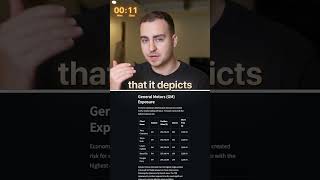
The video discusses the hierarchical task decomposition pattern, an AI architecture that breaks down complex problems into simpler subtasks, using tools like Google Cloud and the Agent Development Kit.
Original Description
The hierarchical task decomposition pattern breaks down complex and massive, open-ended problems into simpler, manageable subtasks. Amit, a Senior Developer Relations Engineer, shares how this AI architecture helps developers tackle huge goals.
Build an AI team that can tackle huge goals → https://goo.gle/4qoxOqD
Speaker: Amit Maraj
Products Mentioned: Google Cloud, Agent Development Kit, Cloud Run
Watch on YouTube ↗
(saves to browser)
Sign in to unlock AI tutor explanation · ⚡30
Playlist
Uploads from Google Cloud Tech · Google Cloud Tech · 0 of 60
← Previous
Next →
1
 2
2
 3
3
 4
4
 5
5
 6
6
 7
7
 8
8
 9
9
 10
10
 11
11
 12
12
 13
13
 14
14
 15
15
 16
16
 17
17
 18
18
 19
19
 20
20
 21
21
 22
22
 23
23
 24
24
 25
25
 26
26
 27
27
 28
28
 29
29
 30
30
 31
31
 32
32
 33
33
 34
34
 35
35
 36
36
 37
37
 38
38
 39
39
 40
40
 41
41
 42
42
 43
43
 44
44
 45
45
 46
46
 47
47
 48
48
 49
49
 50
50
 51
51
 52
52
 53
53
 54
54
 55
55
 56
56
 57
57
 58
58
 59
59
 60
60

I’m going for it #GoogleCloudCertified
Google Cloud Tech
I had to get #GoogleCloudCertified
Google Cloud Tech
Be better overall at what you do #GoogleCloudCertified
Google Cloud Tech
Cloud Monitoring on our radar #Analysis #Uptime
Google Cloud Tech
Introduction to Generative AI Studio
Google Cloud Tech
How to use Github Actions with Google's Workload Identity Federation
Google Cloud Tech
Introduction to Responsible AI
Google Cloud Tech
Networking updates and CDMC-certified architecture
Google Cloud Tech
Create and use a Cloud Storage bucket
Google Cloud Tech
How to digitize text from documents
Google Cloud Tech
Faster analytical queries with AlloyDB
Google Cloud Tech
Next ‘23 sessions and FaaS Wave
Google Cloud Tech
Introduction to Assured Open Source Software
Google Cloud Tech
BigQuery Cost Optimization: Storage
Google Cloud Tech
BigQuery Cost Optimization: Compute
Google Cloud Tech
BigQuery Cost Optimization: Select Queries
Google Cloud Tech
Remote Field Equipment Management with Manufacturing Data Engine
Google Cloud Tech
Supercharging your applications with Cloud SQL Enterprise Plus
Google Cloud Tech
Vector Support on our radar #GenAI
Google Cloud Tech
Architecting a blockchain startup with Google Cloud
Google Cloud Tech
Kubernetes and multitasking updates!
Google Cloud Tech
GKE: Using Kubernetes Events
Google Cloud Tech
How to configure firewall rules for Cloud Composer
Google Cloud Tech
Vertex AI Embeddings API + Matching Engine: Grounding LLMs made easy
Google Cloud Tech
Geospatial analytics on our radar #EarthEngine #BigQuery
Google Cloud Tech
Ensuring requests are set in Kubernetes
Google Cloud Tech
Cloud Next 2023, Google research program, and more!
Google Cloud Tech
How to migrate projects between organizations with Resource Manager
Google Cloud Tech
How to run #MySQL in Google Cloud
Google Cloud Tech
#GenerativeAI for enterprises and #Next2023
Google Cloud Tech
How Google Photos scales to store 4 trillion photos and videos
Google Cloud Tech
Google Cross-Cloud Interconnect (Demo 2)
Google Cloud Tech
GKE Cost Optimization Golden Signals: Introduction
Google Cloud Tech
GKE Cost Optimization Golden Signals: Workload Rightsizing
Google Cloud Tech
GKE Load Balancing: Overview
Google Cloud Tech
GKE Load Balancing: Best Practices
Google Cloud Tech
Disaster Recovery in GKE
Google Cloud Tech
How to configure IP masquerade agent in GKE Standard clusters
Google Cloud Tech
Enable and use GKE Control plane logs
Google Cloud Tech
Compliance in Australia with Assured Workloads
Google Cloud Tech
Creating budgets and budget alerts in Google Cloud #FinOps
Google Cloud Tech
Cloud SQL Enterprise Plus on our radar #mySQL
Google Cloud Tech
What's Next for Google Cloud?
Google Cloud Tech
How Loveholidays scaled with Contact Center AI
Google Cloud Tech
What is fleet team management in GKE?
Google Cloud Tech
Troubleshoot VPC Network Peering
Google Cloud Tech
Introduction to DocAI and Contact Center AI
Google Cloud Tech
Cloud Run Direct VPC egress explained
Google Cloud Tech
Database deployment options in GKE
Google Cloud Tech
Analyze cloud billing data with #BigQuery
Google Cloud Tech
Tips to becoming a world-class Prompt Engineer
Google Cloud Tech
Serverless is simple. Do I need CI/CD?
Google Cloud Tech
Accelerating model deployment with MLOps
Google Cloud Tech
How Hawaii's Department of Human Services scaled with CCAI
Google Cloud Tech
Pricing API on our #Radar
Google Cloud Tech
How Recommendations AI for Media can boost customer retention
Google Cloud Tech
Troubleshooting: Node Not Ready Status
Google Cloud Tech
One weekend until Cloud Next 2023!
Google Cloud Tech
#GoogleCloudNext starts tomorrow!
Google Cloud Tech
#GoogleCloudNext will be demand!
Google Cloud Tech
More on: Agent Foundations
View skill →







Related Reads
📰
📰
📰
📰
Oh My Opencode — Turn OpenCode into a Multi-Agent System with 7 Specialized Agents
Dev.to AI
Token Anomaly Detection: The Algorithm That Stops Runaway Loops Before the Bill Arrives
Dev.to AI
Block Buzz Deep Dive: Architecture, Features, and How Humans and AI Agents Collaborate
Dev.to AI
Block Buzz: Open Source Workspace for Humans and AI Agents
Dev.to AI
🎓
Tutor Explanation
 DeepCamp AI