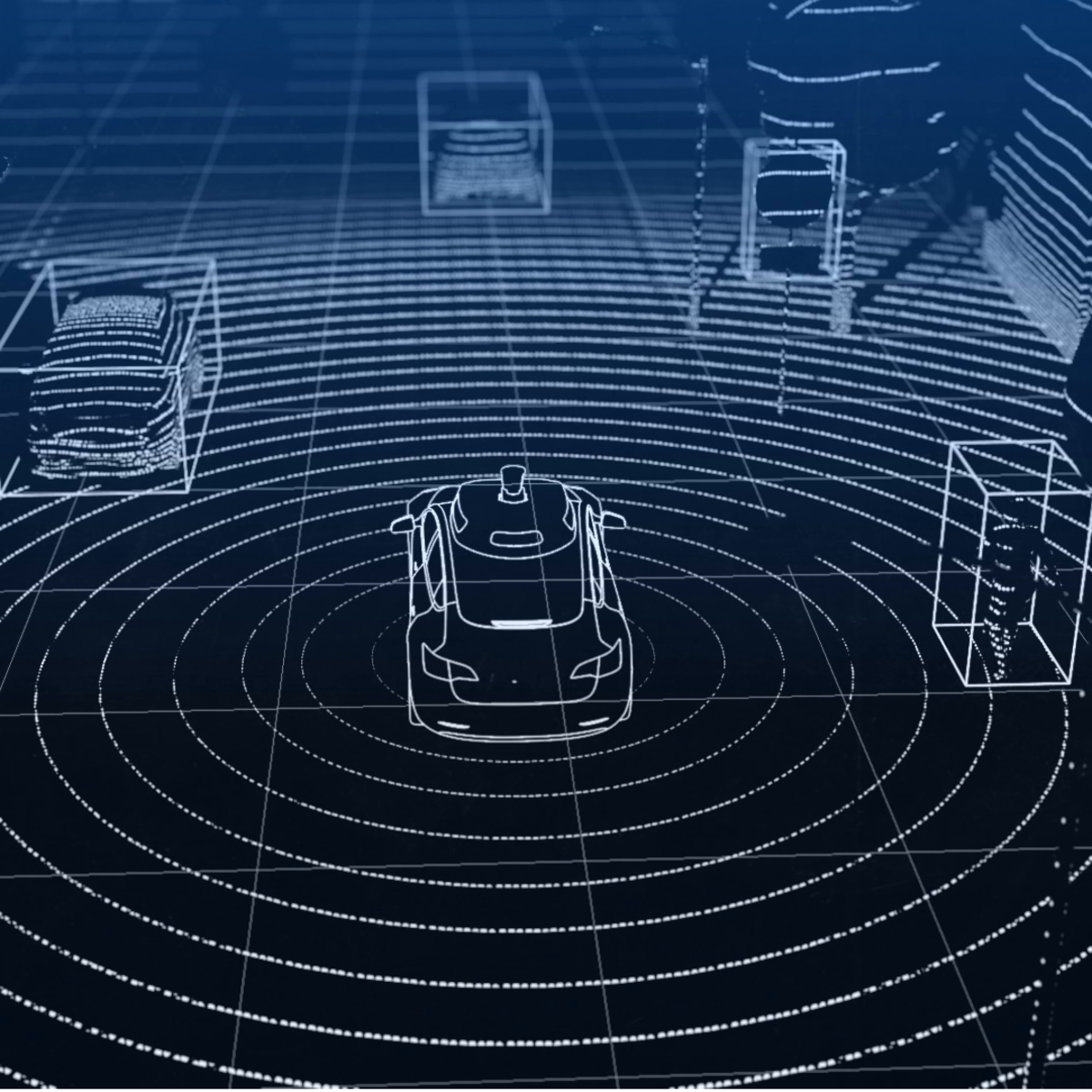
Visual Perception for Self-Driving Cars
Skills:
CV Basics90%
Key Takeaways
Introduces visual perception for self-driving cars using computer vision methods
Original Description
Welcome to Visual Perception for Self-Driving Cars, the third course in University of Toronto’s Self-Driving Cars Specialization.
This course will introduce you to the main perception tasks in autonomous driving, static and dynamic object detection, and will survey common computer vision methods for robotic perception. By the end of this course, you will be able to work with the pinhole camera model, perform intrinsic and extrinsic camera calibration, detect, describe and match image features and design your own convolutional neural networks. You'll apply these methods to visual odometry, object detection and tracking, and semantic segmentation for drivable surface estimation. These techniques represent the main building blocks of the perception system for self-driving cars.
For the final project in this course, you will develop algorithms that identify bounding boxes for objects in the scene, and define the boundaries of the drivable surface. You'll work with synthetic and real image data, and evaluate your performance on a realistic dataset.
This is an advanced course, intended for learners with a background in computer vision and deep learning. To succeed in this course, you should have programming experience in Python 3.0, and familiarity with Linear Algebra (matrices, vectors, matrix multiplication, rank, Eigenvalues and vectors and inverses).
Watch on External: Coursera ↗
(saves to browser)
Sign in to unlock AI tutor explanation · ⚡30
More on: CV Basics
View skill →



🎓
Tutor Explanation

 DeepCamp AI