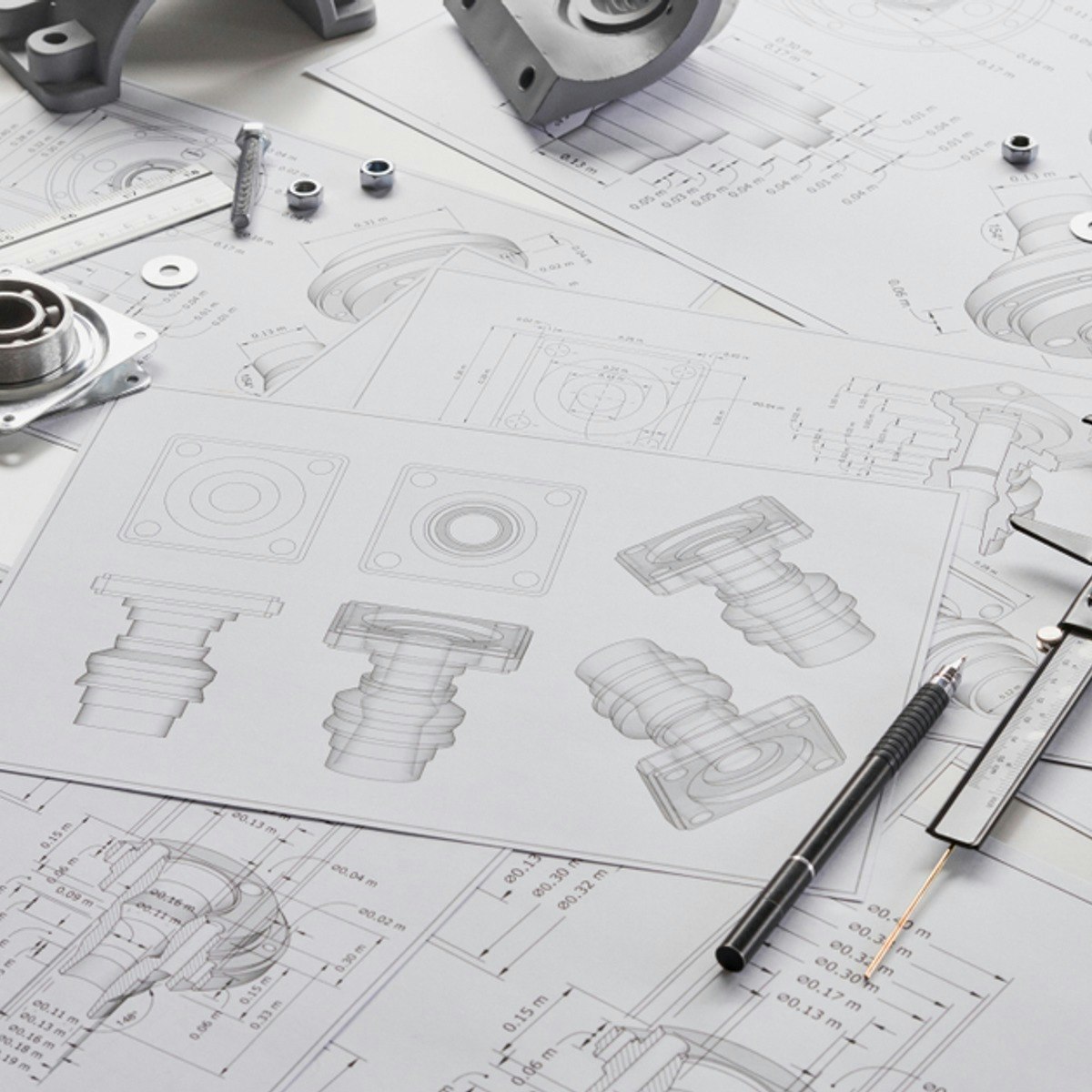
Using Rapid Prototyping in the Engineering Design Process
Key Takeaways
Applies rapid prototyping in the engineering design process to solve open-ended problems
Original Description
Hello, everyone! Welcome to this course on Using Rapid Prototyping in the Engineering Design Process. This is part of the Rapid Prototyping and Tooling specialization. In this course, I’ll cover the engineering design process and how it can be used to solve open-ended problems. I’ll discuss the different stages of prototyping and why it is advantageous to produce prototypes rapidly. I’ll then discuss engineering drawings and how to communicate information about 3-dimensional objects on 2-dimensional mediums such as paper or a computer screen. Finally, I’ll end this course by discussing computer-aided design, also known as CAD, and how it can greatly assist in making prototypes.
By exploring many examples from different robotics projects I’ve had the opportunity to work on, by the end of this course, you should have a better understanding of the engineering design process and where rapid prototyping fits into it, as well as some tools to help you with developing high-quality prototypes. There’s a lot of awesome content to cover, so without further ado, let’s dive into the world of rapid prototyping!
Watch on External: Coursera ↗
(saves to browser)
Sign in to unlock AI tutor explanation · ⚡30
More on: Systems Design Basics
View skill →









Related Reads
📰
📰
📰
📰
Follow-up: The ArxivLens Protocol: Transforming Research Nois
Dev.to AI
On July 1, 2026, arXiv will spin out from Cornell University, its home for the past 25 years, to become an independent nonprofit organization. Major funding support from Simons Foundation and Schmidt Sciences. Ditching the red for their website. [N]
Reddit r/MachineLearning
CS-NRRM™ Official Publications: Paper 1 and Paper 2 Are Now Available
Medium · Data Science
Found a potential mistake in an ICLR 2026 blogpost [D]
Reddit r/MachineLearning
🎓
Tutor Explanation
 DeepCamp AI