Support Vector Machines in Python, From Start to Finish
Skills:
Supervised Learning90%
Key Takeaways
Builds a Support Vector Machine for classification using scikit-learn and the Radial Basis Function Kernel
Original Description
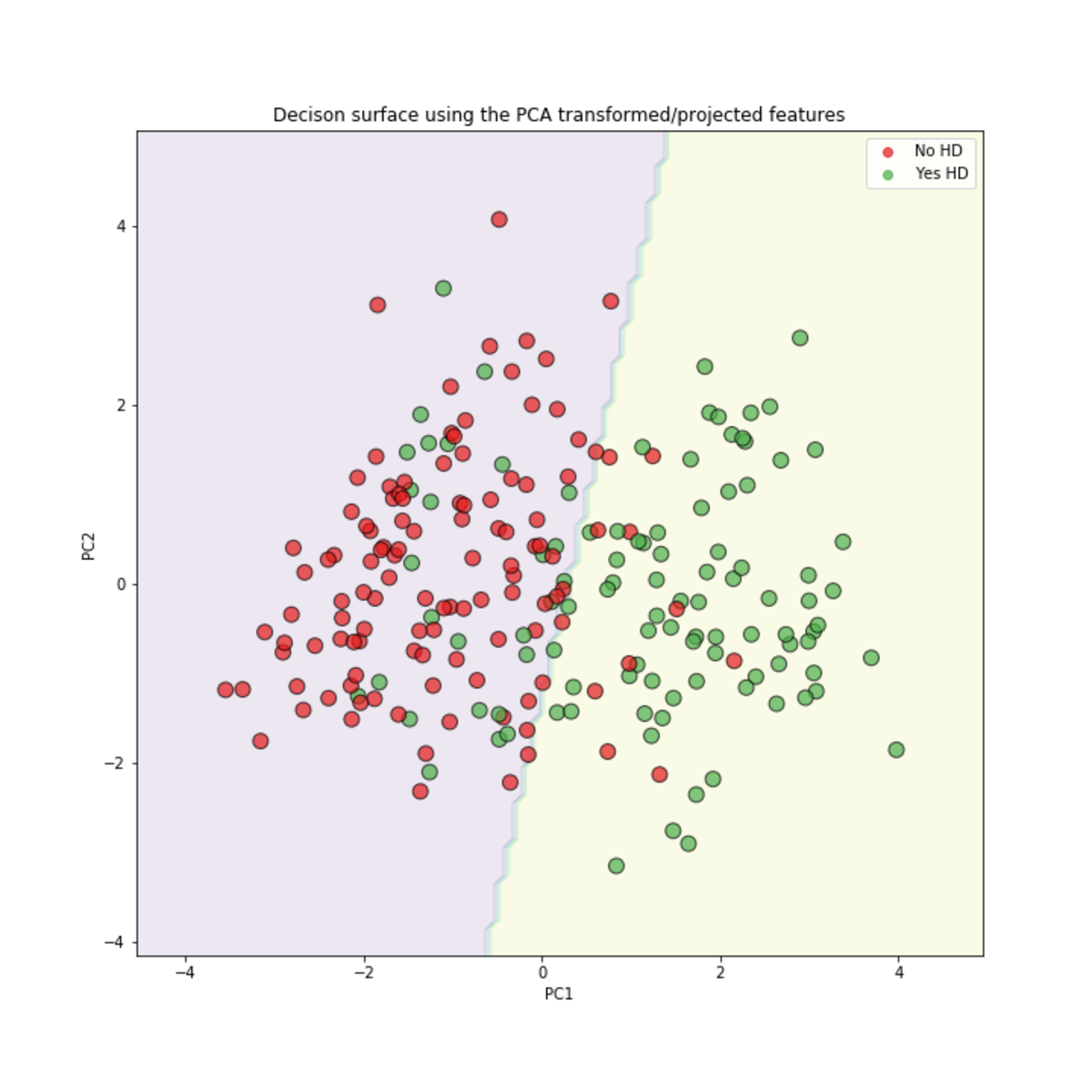
In this lesson we will built this Support Vector Machine for classification using scikit-learn and the Radial Basis Function (RBF) Kernel. Our training data set contains continuous and categorical data from the UCI Machine Learning Repository to predict whether or not a patient has heart disease.
This course runs on Coursera's hands-on project platform called Rhyme. On Rhyme, you do projects in a hands-on manner in your browser. You will get instant access to pre-configured cloud desktops containing all of the software and data you need for the project. Everything is already set up directly in your Internet browser so you can just focus on learning. For this project, you’ll get instant access to a cloud desktop with (e.g. Python, Jupyter, and Tensorflow) pre-installed.
Prerequisites:
In order to be successful in this project, you should be familiar with programming in Python and the concepts behind Support Vector Machines, the Radial Basis Function, Regularization, Cross Validation and Confusion Matrices.
Notes:
- You will be able to access the cloud desktop 5 times. However, you will be able to access instructions videos as many times as you want.
- This course works best for learners who are based in the North America region. We’re currently working on providing the same experience in other regions.
AI explanation not available for this lesson yet
This lesson is still being prepared for the AI tutor. In the meantime, explore lessons that are ready.
Browse explainer-ready lessons →
More on: Supervised Learning
View skill →





Related Reads
📰
📰
📰
📰
Trained a neural net to reconstruct Bad Apple in real-time.
Reddit r/deeplearning
AI/ML Under the Hood — Part 29: CNN Breaking News: Proximity Matters
Medium · Deep Learning
Deep Learning Scientists — Claude Cowork: The Deep Learning Scientist’s New Lab Partner
Medium · Data Science
Why Qwen3.8 27B Looked Brilliant in Testing but Failed to Ship My AI Newspaper
Medium · Deep Learning
🎓
Tutor Explanation
 DeepCamp AI