Stop Re-Explaining Your Project to Claude Code
Key Takeaways
Setting up a session file, dashboard, and handoff prompt for Claude Code to establish context and transfer project state
Original Description
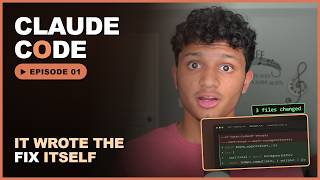
Every Claude Code session starts from 5 to 15 minutes of context establishment. You close the window and the context is lost, and you do the same work again next time. I set up three things to fix this: a session file that survives across conversations, a dashboard that gives you live project state instead of stale CLAUDE.md, and a handoff prompt that transfers exactly what matters to a fresh session.
TIMESTAMPS
0:00 The context tax nobody talks about
0:47 Three things that fix it
1:03 What a Claude Code session actually is
1:32 The Session file
1:43 Capturing progress across conversations
2:10 Real example: course dashboard
2:32 Sessions span multiple days of work
2:52 A session file is still not enough
2:57 Static vs dynamic memory
3:26 CLAUDE.md is static memory
3:42 Inside the dashboard
3:55 How embedded queries work
4:24 Loading memory into Claude
4:48 Dynamic memory = always current
6:06 What happens at the context limit?
6:17 The dumb zone
7:03 Why compaction isn't enough
8:14 Live demo: generating a handoff
8:18 Retrospective: capturing learnings
9:14 Auto-continue with cmux
10:11 Agent types the next prompt
10:22 Fresh session picks up the handoff
10:42 Park or continue
11:04 Next video: build a dashboard for your life
Follow me:
Substack (newsletter): https://artemxtech.substack.com
Discord (community): https://discord.gg/g5Z4Wk2fDk
X: https://x.com/ArtemXTech
GitHub: https://github.com/ArtemXTech
Watch on YouTube ↗
(saves to browser)
Sign in to unlock AI tutor explanation · ⚡30
More on: AI Pair Programming
View skill →




Related Reads
📰
📰
📰
📰
3 AI Coding Assistant Opportunities: From Token Waste to Enterprise Security
Dev.to · ping wang
From Using Claude Code to Growing It — The Complete Environment-Building Series
Dev.to · Lily
Breaking the Physical Wall: The Ultimate Guide to Heterogeneous AI Parallelism on Android
Dev.to · Programming Central
What is Vibecoding and Why It Will Change How You Build Things
Medium · Programming
Chapters (24)
The context tax nobody talks about
0:47
Three things that fix it
1:03
What a Claude Code session actually is
1:32
The Session file
1:43
Capturing progress across conversations
2:10
Real example: course dashboard
2:32
Sessions span multiple days of work
2:52
A session file is still not enough
2:57
Static vs dynamic memory
3:26
CLAUDE.md is static memory
3:42
Inside the dashboard
3:55
How embedded queries work
4:24
Loading memory into Claude
4:48
Dynamic memory = always current
6:06
What happens at the context limit?
6:17
The dumb zone
7:03
Why compaction isn't enough
8:14
Live demo: generating a handoff
8:18
Retrospective: capturing learnings
9:14
Auto-continue with cmux
10:11
Agent types the next prompt
10:22
Fresh session picks up the handoff
10:42
Park or continue
11:04
Next video: build a dashboard for your life
🎓
Tutor Explanation
 DeepCamp AI