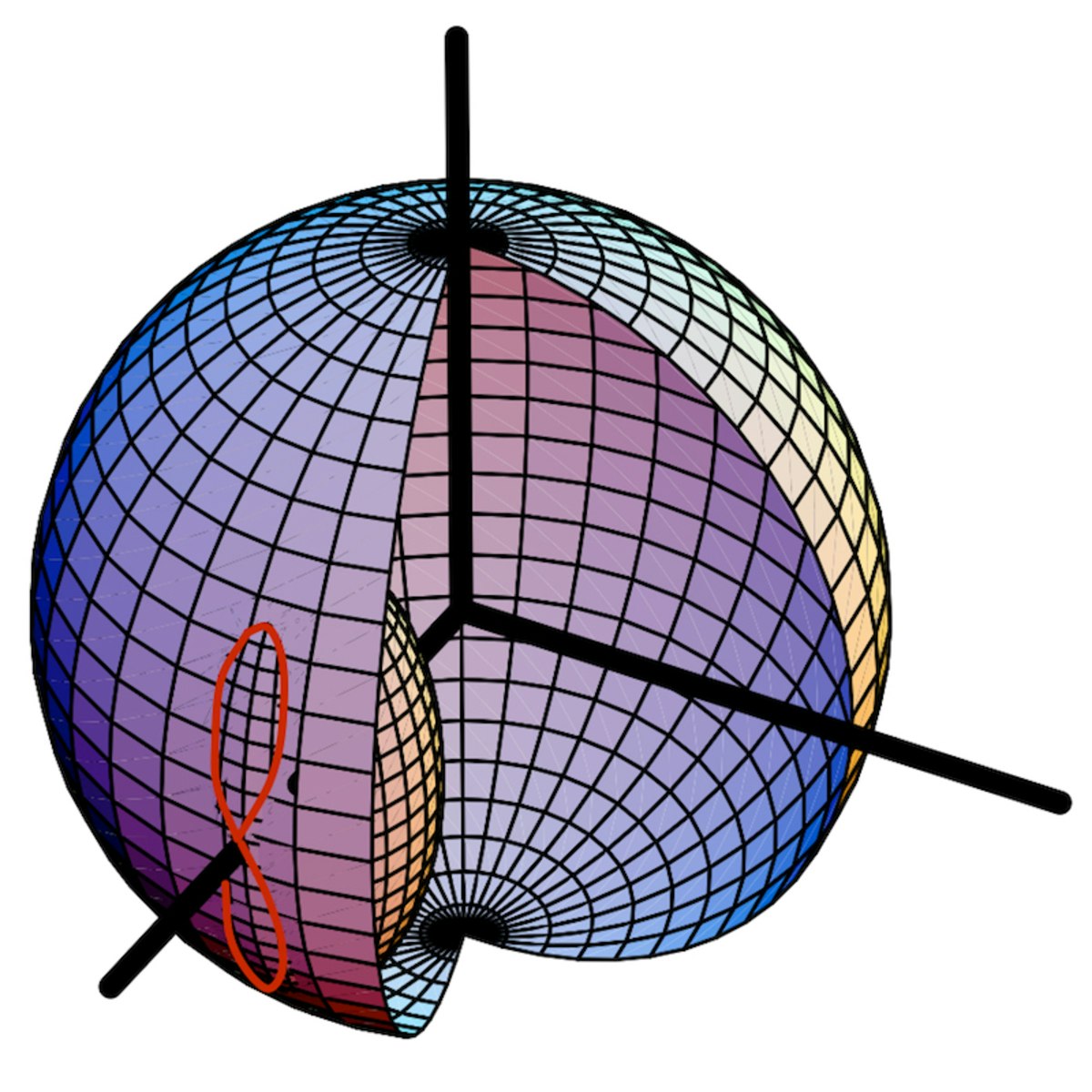
Spacecraft Dynamics Capstone: Mars Mission
Key Takeaways
Employs skills in rigid body Kinematics, Kinetics, and Control to determine the kinematics of an orbit frame and reference frames for a Mars mission
Original Description
The goal of this capstone spacecraft dynamics project is to employ the skills developed in the rigid body Kinematics, Kinetics and Control courses. An exciting two-spacecraft mission to Mars is considered where a primary mother craft is in communication with a daughter vehicle in another orbit. The challenges include determining the kinematics of the orbit frame and several desired reference frames, numerically simulating the attitude dynamics of the spacecraft in orbit, and implementing a feedback control that then drives different spacecraft body frames to a range of mission modes including sun pointing for power generation, nadir pointing for science gathering, mother spacecraft pointing for communication and data transfer. Finally, an integrated mission simulation is developed that implements these attitude modes and explores the resulting autonomous closed-loop performance.
Tasks 1 and 2 use three-dimensional kinematics to create the mission related orbit simulation and the associated orbit frames. The introductory step ensures the satellite is undergoing the correct motion, and that the orbit frame orientation relative to the planet is being properly evaluated.
Tasks 3 through 5 create the required attitude reference frame for the three attitude pointing modes called sun-pointing, nadir-pointing and GMO-pointing. The reference attitude frame is a critical component to ensure the feedback control drives the satellite to the desired orientation. The control employed remains the same for all three pointing modes, but the performance is different because different attitude reference frames are employed.
Tasks 6 through 7 create simulation routines to first evaluate the attitude tracking error between a body-fixed frame and a particular reference frame of the current attitude mode. Next the inertial attitude dynamics is evaluated through a numerical simulation to be able to numerically analyze the control performance.
Tasks 8-11 simulate the closed-lo
Watch on External: Coursera ↗
(saves to browser)
Sign in to unlock AI tutor explanation · ⚡30
Related Reads
📰
📰
📰
📰
OpenAI tries the consulting path with 'Presence', charging enterprises boots-on-the-ground prices to deploy agents
The Register
What is a Ralph Loop?
Dev.to AI
building enterprise multi-agent workflows in .net with mistral
Dev.to AI
Automation Is Evolving Beyond RPA: Why AI Agents Are the Next Enterprise Leap
Dev.to AI
🎓
Tutor Explanation

 DeepCamp AI