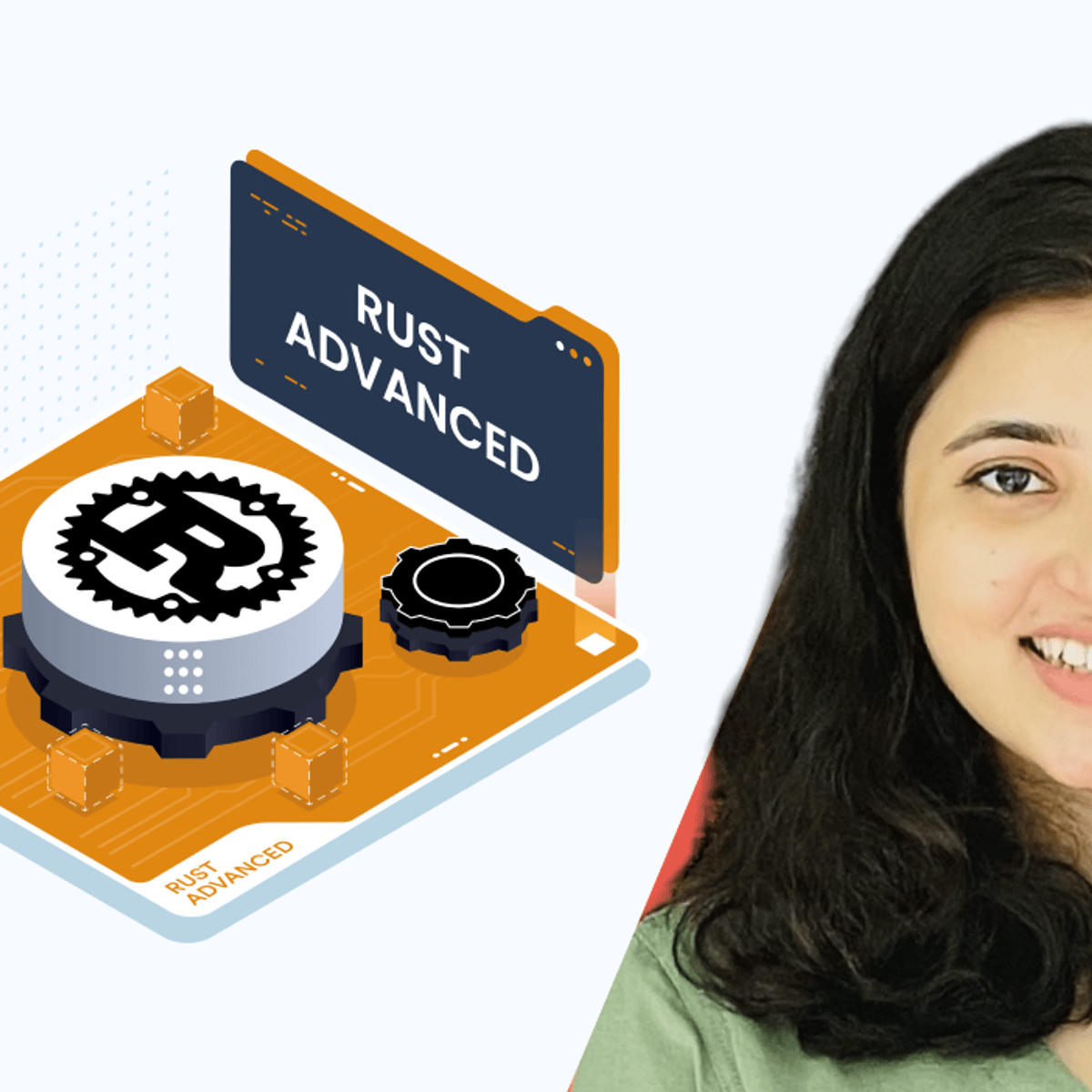
Rust Programming - Advanced Concepts
Master the art of building high-performance, memory-safe, and concurrent systems with the world’s most loved programming language. This course is designed for developers who have grasped the basics of Rust and are ready to tackle complex, real-world architectural challenges.
We go deep into the "inner workings" of Rust, moving beyond simple ownership to explore Smart Pointers, Custom Traits, and Asynchronous Runtimes. You will learn to write "Fearless Concurrency" by leveraging the compiler to prevent data races and explore the boundary between safe and Unsafe Rust. From building high-speed Network Services to compiling high-performance modules for the web via WebAssembly, this course provides the technical depth required to become a professional Rust Engineer.
What You Will Learn
Architect Complex Data: Use Smart Pointers (Rc, Arc, RefCell) to build advanced data structures.
Master Functional Patterns: Harness Iterators and Closures for zero-cost data processing.
Scale with Async: Build non-blocking applications using async/await and the Tokio ecosystem.
Systems Integration: Interface with hardware and C-libraries using FFI and Unsafe Rust.
Modern Web Power: Deploy Rust logic into the browser with WebAssembly (Wasm).
What You'll Learn
Coursera teaches advanced Rust programming concepts
Watch on External: Coursera ↗
(saves to browser)
Sign in to unlock AI tutor explanation · ⚡30
More on: API Design
View skill →





Related AI Lessons
⚡
⚡
⚡
⚡
Bloom Filters, Explained Properly
Dev.to · Daksh Gargas
Prefix Sums: The Preprocessing Trick That Makes Range Queries Instant
Medium · Programming
I Thought I Was Ready for the Interview — Then One Simple Math Question Destroyed Me
Medium · Programming
Week 2(Day 10): LeetCode Two Pointers(slow & fast): Remove Duplicates from Sorted Array (Brute…
Medium · Python
🎓
Tutor Explanation
 DeepCamp AI