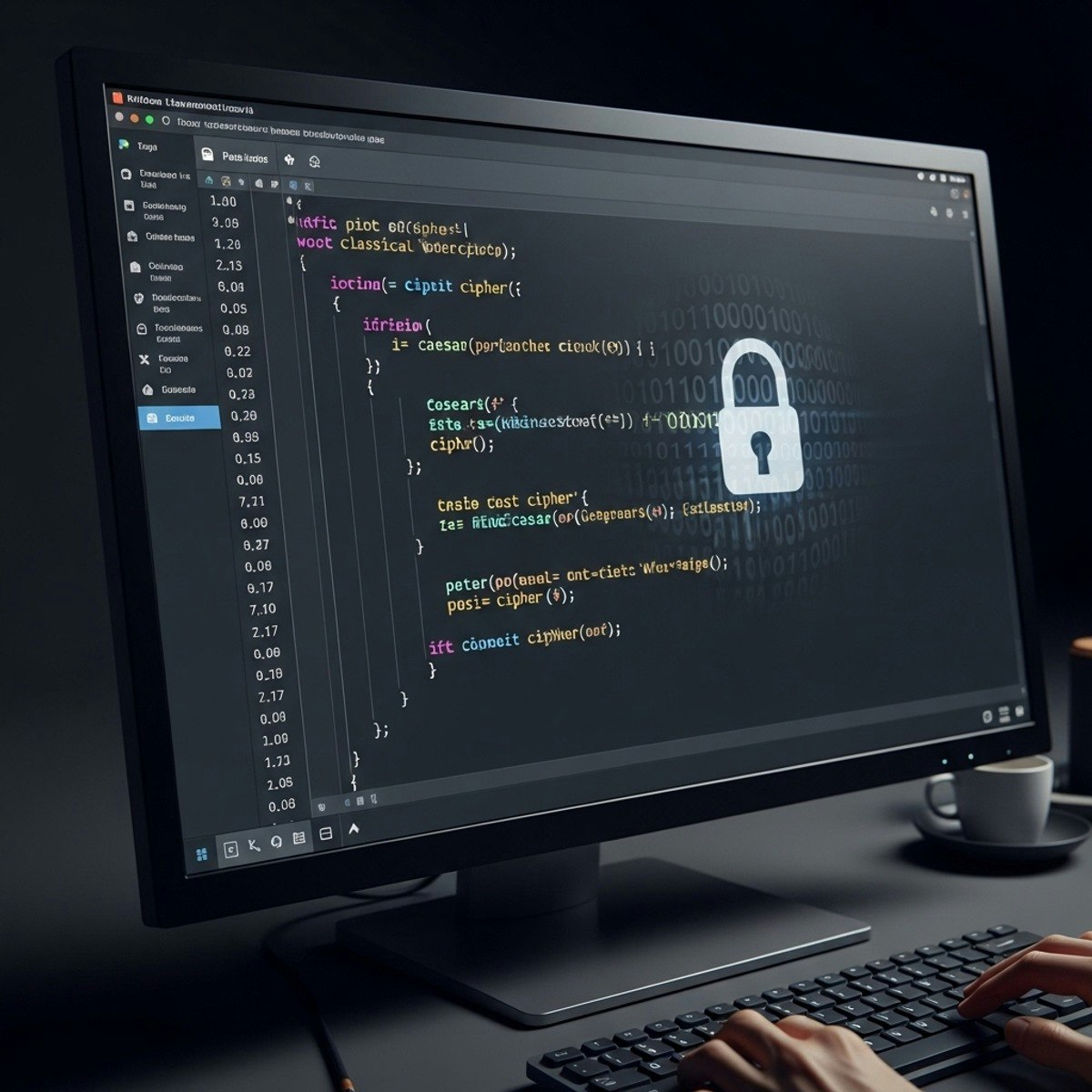
Python Hacking: Apply, Implement & Analyze
Key Takeaways
Applies Python programming to hacking techniques, including string functions, classical ciphers, and encryption programs
Original Description
Learners completing this course will be able to define Python programming basics, apply string functions, implement classical ciphers, analyze transposition techniques, and evaluate encryption programs through testing and debugging. Designed specifically for beginners, this course bridges Python fundamentals with practical hacking applications, ensuring learners build confidence step by step.
Through four structured modules, participants will explore Python syntax, manipulate strings, apply the Caesar cipher, and work with dictionaries and keys. They will then design and test transposition cipher programs, handle edge cases, and implement debugging strategies. The course concludes with detailed program walkthroughs, advanced examples, and file encryption, enabling learners to apply their skills in real-world scenarios.
What makes this course unique is its project-driven approach, combining coding with cybersecurity concepts from the very beginning. Each lesson integrates theory with hands-on practice, ensuring learners not only understand Python but also apply it to encryption and hacking techniques. By the end, students will have both the knowledge and practical experience to advance into more complex cybersecurity challenges.
Watch on External: Coursera ↗
(saves to browser)
Sign in to unlock AI tutor explanation · ⚡30
Related AI Lessons
⚡
⚡
⚡
⚡
Security Belongs on the Blueprint
Medium · Cybersecurity
# A 4-Line HTML File Stole the Admin’s Secret — Intigriti LeakyJar CTF Writeup
Medium · Cybersecurity
The Digital Gateway to Arabic Cybersecurity
Medium · Cybersecurity
Cybersecurity vs Cloud Computing – Which Career Will Dominate 2026? ☁️
Medium · Cybersecurity
🎓
Tutor Explanation

 DeepCamp AI