
Production-Ready Multimodal ML Engineering
Key Takeaways
Designs and operates multimodal AI systems using ML engineering skills and scalable cloud infrastructure
Original Description
Production machine learning systems don't run on model accuracy alone — they depend on reliable data pipelines, optimized inference, and scalable cloud infrastructure. This course integrates the full stack of ML engineering skills needed to build and operate multimodal AI systems in the real world.
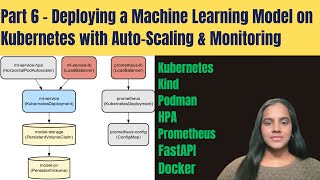
You will design a unified feature store schema for image, audio, and text data, then automate ingestion and validation using Apache Airflow and Great Expectations. You will apply test-driven development to PyTorch data loaders and training loops, optimize a model for real-time inference using TensorRT, and manage your codebase with GitFlow and CI/CD pipelines. Finally, you will containerize and deploy a GPU-accelerated service to Kubernetes, tuning autoscaling to meet production performance targets.
By the end, you will have a portfolio-ready project demonstrating end-to-end ML infrastructure skills — exactly what employers look for in ML Infrastructure Engineers, MLOps Engineers, and senior ML practitioners.
Watch on External: Coursera ↗
(saves to browser)
Sign in to unlock AI tutor explanation · ⚡30
More on: ML Pipelines
View skill →




Related Reads
📰
📰
📰
📰
A Phased Blueprint for Migrating From Google Workspace to Microsoft 365
Hackernoon
Feature Freshness: The Forgotten Problem of MLOps
Medium · LLM
Day 19 of the 100 Days of MLOps Challenge
Medium · DevOps
From Critical Infrastructure to AI Factories: Building an AI Operations Copilot on Nebius…
Medium · LLM
🎓
Tutor Explanation

 DeepCamp AI