Pressure, Force, Motion, and Humidity Sensors
"Pressure, Force, Motion, and Humidity Sensors" can also be taken for academic credit as ECEA 5342, part of CU Boulder’s Master of Science in Electrical Engineering degree.
This is our third course in our specialization on Embedding Sensor and Motors. To get the most out of this course, you should first take our first course entitled Sensors and Sensor Circuits. Our first course gives you a tutorial on how to use the hardware and software development kit we have chosen for the lab exercises. This third course assumes that you already know how to use the kit.
After taking this course, you will be able to:
● Understand how to specify the proper pressure, force, strain, position, motion, acceleration, occupancy, and humidity sensors for taking real-time process data.
● Implement these sensors into an embedded system in both hardware and software.
● Add the sensor and sensor interface into a microprocessor based development kit.
● Create hardware and firmware to process sensor signals and feed data to a microprocessor for further evaluation.
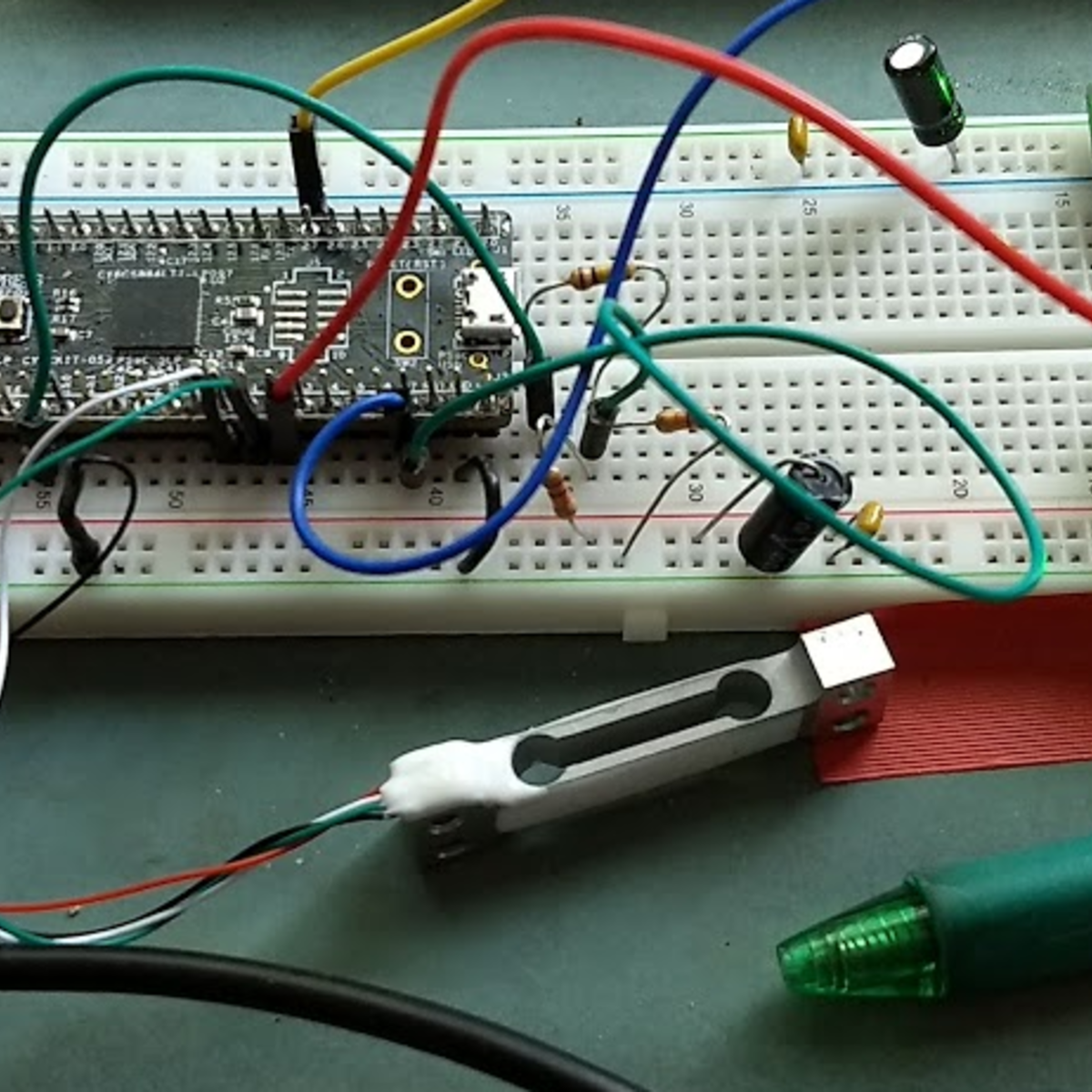
In this course you will build the circuit from Video 7 (Lab Exercise on strain gauges), Module 2 (Force and Strain Sensors and Touch Screens), and use it to make screen shots of the timing of the switch. If you haven't already wired up the system and written all the software per the instructions of Video 7, please do so now.
This course includes specific hardware and software requirements. Please review the FAQ below for complete details.
Watch on Coursera ↗
(saves to browser)
Sign in to unlock AI tutor explanation · ⚡30
Related AI Lessons
⚡
⚡
⚡
⚡
This Tool is Changing How Chinese Devs Build AI Apps
Dev.to AI
Japan’s Monster Wolf robot is a $4,000 scarecrow with red LED eyes, and it actually works
The Next Web AI
5 Claude AI Prompts That Save Me 10 Hours Every Week (Copy & Paste Ready)
Medium · ChatGPT
Desktop vs Web Applications for PDF Accessibility Validation
Medium · AI
🎓
Tutor Explanation
 DeepCamp AI