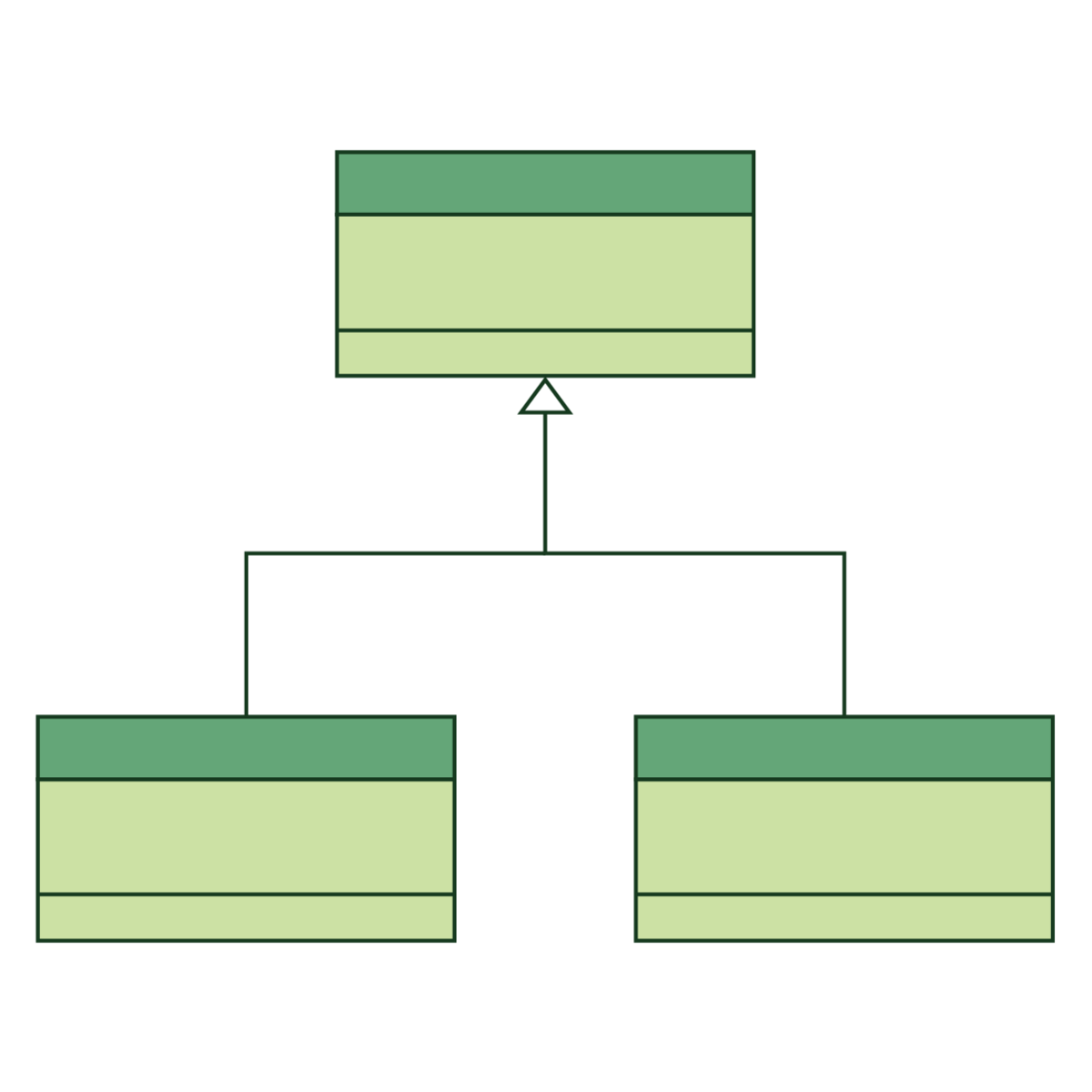
Object-Oriented Design
Skills:
API Design60%
This course takes Java beginners to the next level by covering object-oriented analysis and design. You will discover how to create modular, flexible, and reusable software, by applying object-oriented design principles and guidelines. And, you will be able to communicate these designs in a visual notation known as Unified Modelling Language (UML).
You will be challenged in the Capstone Project to apply your knowledge of object-oriented design by evolving and documenting the Java codebase for an Android application with corresponding UML documentation.
After completing this course, you will be able to:
• Apply the Class Responsibility Collaborator (CRC) technique to analyze and design the object-oriented model for a problem.
• Explain and apply object-oriented modeling principles and their purpose (e.g., abstraction, encapsulation, decomposition, generalization).
• Explain and apply different types of inheritance
• Explain the difference between association, aggregation, and composition dependencies.
• Express object-oriented models as Unified Modeling Language (UML) class diagrams.
• Translate between UML class diagrams and equivalent Java code.
• Apply design guidelines for modularity, separation of concerns, information hiding, and conceptual integrity to create a flexible, reusable, maintainable design.
• Explain the tradeoff between cohesion and coupling.
Watch on External: Coursera ↗
(saves to browser)
Sign in to unlock AI tutor explanation · ⚡30
More on: API Design
View skill →









Related AI Lessons
⚡
⚡
⚡
⚡
How Logo Design Shapes Customer Trust in Dubai Businesses
Medium · SEO
Stop Returning JSON From Your MCP Server. Start Returning UI.
Medium · Data Science
Stop Returning JSON From Your MCP Server. Start Returning UI.
Medium · LLM
I Tried Canva’s AI Features for the First Time – Here’s What a Non-Designer Learned
Medium · Machine Learning
🎓
Tutor Explanation

 DeepCamp AI