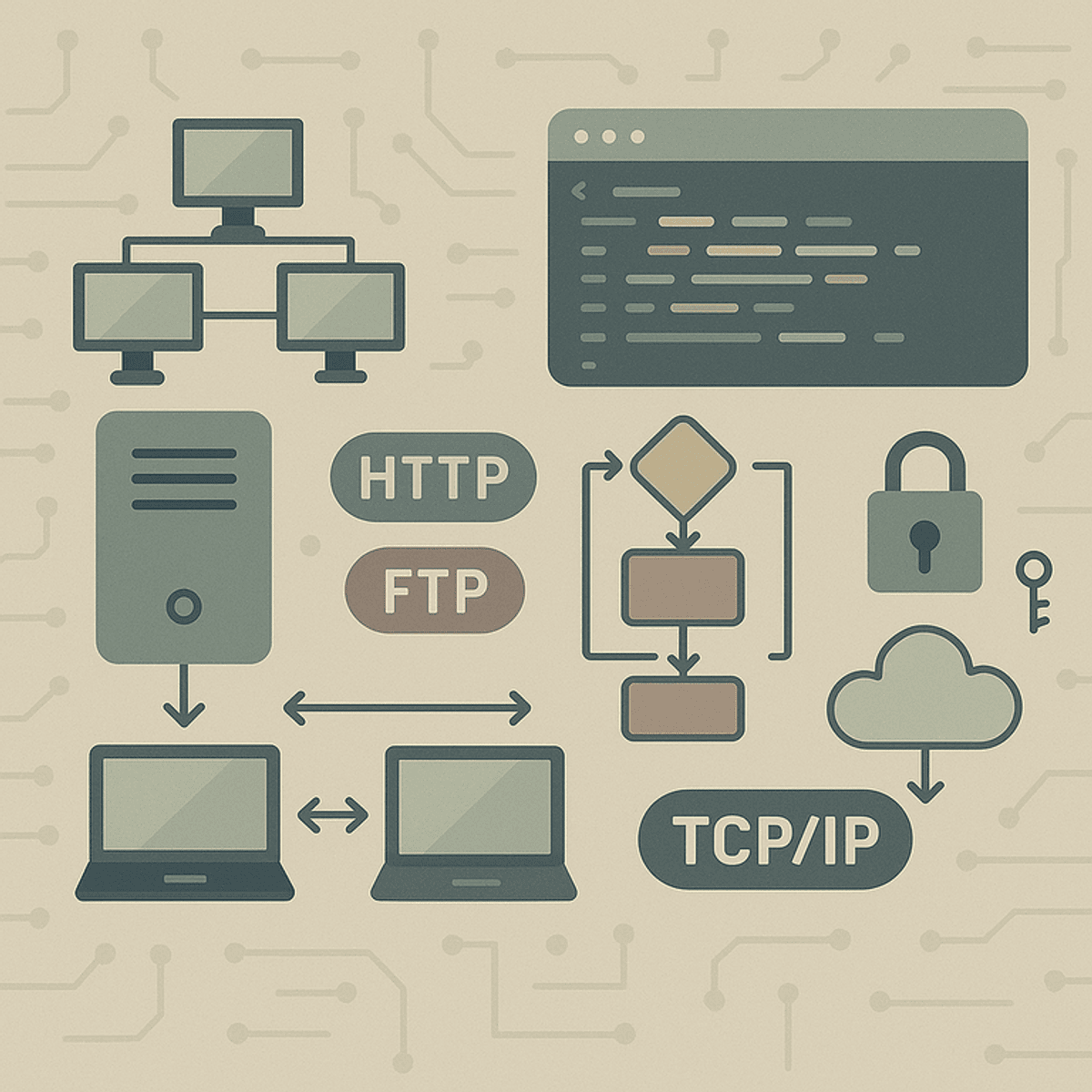
Network Programming and Client-Server Programming
Key Takeaways
Master network programming and client-server architectures using socket programming with UDP, TCP, and SCTP protocols
Original Description
Master the foundational principles and advanced techniques of network programming and client-server architectures with this comprehensive, hands-on course designed for aspiring systems programmers and backend developers. You'll learn to build robust networked applications using socket programming with UDP, TCP, and SCTP protocols, while exploring inter-process communication mechanisms including signals, pipes, message queues, and shared memory. The course progresses from fundamental network concepts and layered architectures to advanced topics in distributed systems, remote procedure calls (RPC), and scalable server design patterns. Through practical implementation exercises, you'll develop real-world client-server applications including Telnet, FTP, and HTTP servers, while mastering performance optimization techniques for concurrent and preforked server architectures. You'll gain expertise in I/O models, asynchronous programming, network debugging tools like tcpdump and Wireshark, and distributed application frameworks. Whether you're preparing for roles in backend development, cloud computing, microservices architecture, or systems engineering, this course equips you with essential skills to design, implement, and optimize networked applications that power modern distributed systems and enterprise infrastructure.
Watch on External: Coursera ↗
(saves to browser)
Sign in to unlock AI tutor explanation · ⚡30
Related AI Lessons
⚡
⚡
⚡
⚡
Distributed Transactions in System Design: Why Data Consistency Becomes Hard Once Your Application…
Medium · Programming
Monolith vs Microservices: A Real-World Architectural Autopsy
Dev.to · Erwin Wilson Ceniza2
FOV in FPS Games: The Math Behind Field of View Settings
Dev.to · Alex Carter
How I Structured My Next.js 14 App Router Project — And Why It Scales
Dev.to · Mbanefo Emmanuel Ifechukwu
🎓
Tutor Explanation

 DeepCamp AI