Multi Agent Design Patterns | A Cost-Value Breakdown | Rakesh Gohel
Skills:
Multi-Agent Systems90%
Key Takeaways
Analyzes multi-agent design patterns using a cost-value breakdown
Original Description
Multi Agent Design Patterns | A Cost-Value Breakdown | Rakesh Gohel
I have reviewed dozens of AI agent architectures this year alone.
The same expensive, avoidable mistake keeps showing up every time…
Teams are not failing because they chose the wrong model. They are failing because they chose the wrong pattern for the wrong problem.
And nobody catches it until the system is already in production.
Here is what I keep seeing on the ground:
Engineers get excited about multi-agent systems rightfully so. They spin up parallel pipelines, build hierarchical orchestrators, stack composite patterns on top of each other.
It looks impressive in a diagram. It looks very different on an infrastructure bill.
The question nobody asks early enough is simple: Does this problem actually need this pattern?
📌 6 patterns, here is the cost vs. value reality of each:
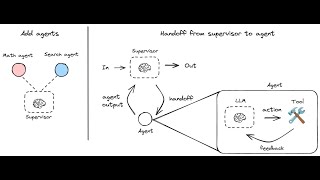
→ Sequential: Lowest overhead of all. Tasks flow step by step in order. Start here and only move up when this pattern genuinely cannot do the job.
→ Parallel: Compresses time but multiplies cost. Only worth deploying when tasks are truly independent and latency is your real bottleneck.
→ Hierarchical: Best long-term ROI when sub-agents are reusable across workflows. The orchestration layer pays for itself only at scale.
→ Generator-Critic: One agent creates, another reviews, loops repeat until quality passes. Only reach for this when output quality is the primary success metric.
→ Human-in-the-Loop: Latency here is intentional, not a bug. Non-negotiable for compliance, billing, and any decision with real consequences.
→ Composite: Most expensive to run. Reserve strictly for end-to-end workflows where the full pattern stack genuinely earns its cost.
📌 What most architects are missing in 2026:
Design patterns alone are not enough anymore. The protocol stack underneath has changed everything:
→ MCP handles how your agents connect to tools
→ A2A handles how your agents coordinate with each other
→ Both no
Watch on YouTube ↗
(saves to browser)
Sign in to unlock AI tutor explanation · ⚡30
More on: Multi-Agent Systems
View skill →



Related Reads
📰
📰
📰
📰
CLI Ownership Management: master, owner, and session Commands for Self-Hosted Wallets
Dev.to AI
Our drift-warning hook was silently dead for 23 days. Zero warnings looked exactly like good behavior.
Dev.to AI
Spotify expands its AI push with a ChatGPT-like music assistant
TechCrunch AI
A practical checklist for evaluating an OpenAI-compatible AI API gateway
Dev.to · Alex
🎓
Tutor Explanation

 DeepCamp AI