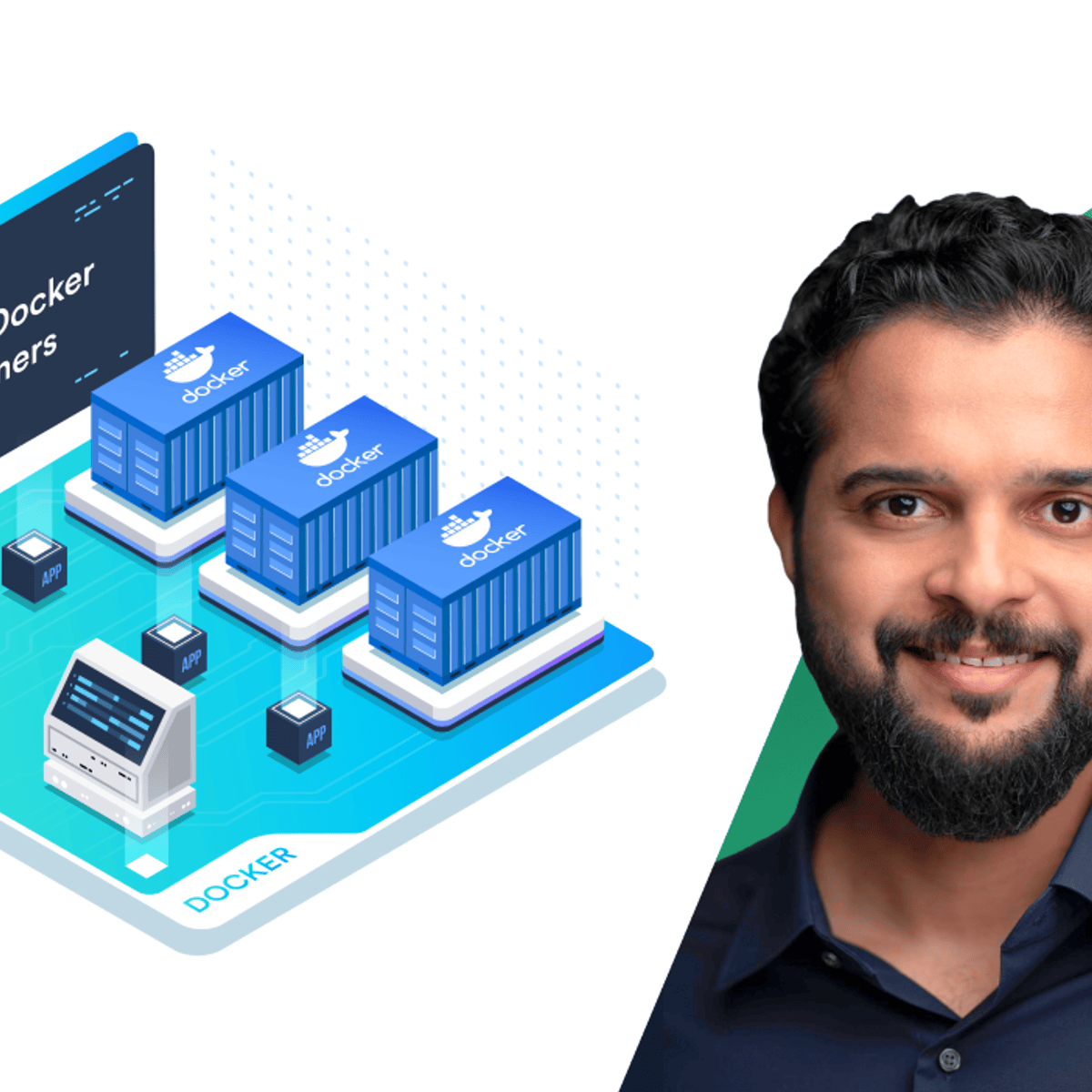
Mastering Docker & Containers - Hands-On Course
Skills:
Docker & Containers90%
Key Takeaways
Mastering Docker and containers for software deployment and management
Original Description
Say goodbye to the "it works on my machine" excuse forever. This course provides an immersive look at containerization, the technology that has revolutionized how we package and deploy software. You will learn to deconstruct monolithic applications into lightweight, portable containers that run identically across any environment—from a local laptop to a massive cloud cluster. We focus heavily on the creation and optimization of Docker images, teaching you how to use multi-stage builds to minimize security risks and image sizes.
Beyond single containers, you will master the orchestration of multi-service environments using Docker Compose. We explore the complexities of container networking, volumes for persistent data storage, and the specific configurations needed for Python and database-driven applications. This is not just about running containers; it’s about architecting resilient, cloud-native systems. By the time you complete this course, you will understand how to build portable, immutable infrastructure that serves as the perfect vehicle for modern microservices and high-scale web applications.
Every topic follows a three-step structure: read the concept, attempt the hands-on lab independently, then watch a solution video that walks through the expert approach and explains the reasoning at each step. You build skills and the thinking patterns behind them.
Who this is for: Developers, DevOps engineers, and systems professionals with Linux administration experience who want to add Docker and container skills to their toolkit.
AI explanation not available for this lesson yet
This lesson is still being prepared for the AI tutor. In the meantime, explore lessons that are ready.
Browse explainer-ready lessons →
More on: Docker & Containers
View skill →






Related Reads
📰
📰
📰
📰
Slack Built Its Own EC2 Platform. Buying One Was the Harder Question.
Medium · DevOps
Engineering Culture Starts with Version Control — Building Trust, Ownership, and Collaboration at…
Medium · DevOps
Not Every Workload Belongs on a Free Server: Red Flags and Exit Criteria
Dev.to · Casey Sun
Reviewing a PR You Can't Run Locally: A Reproducible Free-Tier Loop
Dev.to · Blake Yang
🎓
Tutor Explanation
 DeepCamp AI