Master These 7 Patterns to Pass Any Coding Interview
Key Takeaways
This video teaches a system to solve any Data Structures and Algorithms (DSA) problem by recognizing patterns, using a checklist called Empire, and mastering 7 key patterns: hash map, two pointers, sliding window, BFS and DFS, binary search, heap, and dynamic programming.
Full Transcript
Picture this. You're in the interview. The interviewer shares their screen, types out a problem, and says, "Take your time." And your brain just empties. You've done 200 practice problems. Doesn't matter. Completely blank. If that's you, or honestly, if that's your worst nightmare before an interview, this video fixes it. By the end, you'll have a system that turns a problem you've never seen into one you recognize in about 30 seconds. And stick around because the last trick is the one strong candidates use that almost nobody teaches. Let's start with the trap. Almost everyone falls into it. You grind problems. 100, 200, 400. You're feeling unstoppable. And then the interviewer asks problem number 401, something you've never seen, and you freeze. Here's the hard truth. Memorizing solutions does not scale. There are basically infinite problems. But, and this is the secret that people who pass already know, there are not infinite ideas. There are about 15 patterns. Learn to recognize the pattern, and the solution almost writes itself. So, how do you attack a problem you've never seen before? You use a simple checklist. I call it Empire. And you say every step out loud because interviews test how you think, not whether you can read minds. U, understand. Restate the problem. Ask about the input. Check the edge cases. M, match. What does this remind me of? This step is the whole game. P, plan. Say the brute force first, then make it faster. I, implement. R, review. Dry run your own code on an example. And E, evaluate. State the time and space complexity. Six steps. Every problem. Every single time. Now the part that actually solves things, matching. Every clue in a question quietly points to a pattern. Let me show you how fast this gets. Here's one. The array is sorted, and you need to find two numbers that add up to a target. Pause the video. What pattern is this? Think. Got it? Sorted plus find a pair equals two pointers, one finger at each end walking inward. The words literally handed you the answer. So, here's the cheat sheet. Screenshot this part. Sorted array, find a pair, two pointers. A contiguous subarray, the longest or the maximum, sliding window. Top K of anything, a heap. Counting, duplicates, anagrams, a hash map. A linked list cycle or its middle, fast and slow pointers. Level by level, that's BFS. All paths, all combinations, DFS and backtracking. Number of ways or minimum and maximum cost, dynamic programming. Next greater element or matching parentheses, a stack. Prerequisites and ordering, topological sort. And sorted, but find the boundary, binary search. Your turn again. You're asked for the longest substring without repeating characters. Pause. Which pattern? Okay, contiguous plus longest equals sliding window. Notice what's happening. You're not solving from scratch. You're just reading the clues. Now, you do not need all 15 on day one. Seven patterns carry most interviews. Hash map, two pointers, sliding window, BFS and DFS, binary search, heap, and dynamic programming. Master those seven and honestly, you're dangerous. Okay, the part you actually came for. How do you make this stick? Three rules. One, practice by pattern, not randomly. Do eight sliding window problems back to back until the trigger becomes a reflex. Two, memorize one template per pattern, not 50 solutions. One little skeleton you tweak. And three, this is the trick I promised you. The 30-second rule. Before you write a single line of code, say out loud, "This is a blank problem because blank." You are not training your typing. You are training the match. Do this for two weeks and patterns start jumping out at you before you even finish reading the question. One last thing, and it is free points that people leave on the table. Think out loud the entire time. Silence loses offers, narration wins them. The candidate who says the brute force is n squared, I can do better with a hash map beats the one who silently writes perfect code. They are hiring your thinking, not your typing. So here is the whole system start to finish. Run umpire, match the clue to a pattern, drop in the template, state the big O, practice by pattern, memorize the triggers, not the solutions, and talk through everything. That is how you solve a problem you have never seen in your life. If this genuinely reframed DSA for you, you definitely know someone stress grinding problems at 2:00 in the morning right now. Send them this video, it might save them months. And a like really does help another nervous candidate find it. Drop your weakest pattern in the comments and I'll make it the next video. Save this one, you'll want the cheat sheet before your next interview. You've got this. I'll see you in the next one.
Original Description
You've done 200 LeetCode problems… and you still freeze when the interviewer types problem #201. Here's the fix: stop memorizing solutions, and start recognizing patterns. There are only ~15.
This video gives you a complete system to solve any DSA problem you've never seen — perfect for coding interviews, students, and self-taught devs.
You'll learn:
✅ UMPIRE — a 6-step method to attack any problem (out loud)
✅ The pattern cheatsheet: "see THIS → use THIS" (screenshot it)
✅ The 7 patterns that carry most interviews
✅ How to actually memorize them (the 30-second rule)
✅ What to literally say out loud to pass
🧠 Two pause-and-answer challenges inside — drop your answers in the comments!
⏱️ Chapters
0:00 The interview freeze
0:30 Why memorizing doesn't scale
0:55 ∞ problems → 15 patterns
1:05 UMPIRE: the 6-step method
1:38 Matching: clue → pattern
1:46 Quiz #1 — name the pattern
2:02 The pattern cheatsheet 📸
2:42 Quiz #2 — name the pattern
2:59 The 7 patterns to master first
3:14 How to actually memorize them
3:51 Think out loud (free points)
4:06 The full system
4:22 Save this before your interview
📌 Free cheatsheet (all patterns + templates): [link in pinned comment]
💬 Drop your WEAKEST pattern below 👇 — I'll make it the next video.
If this helped, a like pushes it to another nervous candidate, and sharing it with a friend grinding at 2am might save them months.
#DSA #CodingInterview #LeetCode #DataStructures #Algorithms #SoftwareEngineer #TechInterview #LearnToCode #ProgrammingTips #FAANG
More on: Algorithm Basics
View skill →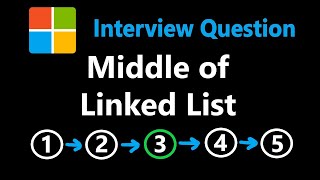







Related Reads
📰
📰
📰
📰
Trapping Rain Water: Understanding Data Structure Choices from a Beginner’s Perspective
Medium · Programming
The Grid Problem That Looks Easy Until You Need the Lexicographically Smallest Path
Medium · Programming
The Algorithm That’s Practically O(1) — But Provably Isn’t
Medium · Programming
Knight Attack Made BFS Feel Like a Recipe, Not a Template
Medium · Python
Chapters (13)
The interview freeze
0:30
Why memorizing doesn't scale
0:55
∞ problems → 15 patterns
1:05
UMPIRE: the 6-step method
1:38
Matching: clue → pattern
1:46
Quiz #1 — name the pattern
2:02
The pattern cheatsheet 📸
2:42
Quiz #2 — name the pattern
2:59
The 7 patterns to master first
3:14
How to actually memorize them
3:51
Think out loud (free points)
4:06
The full system
4:22
Save this before your interview
🎓
Tutor Explanation

 DeepCamp AI