Master the Command Line in 2026: Pipes, Redirects & CLI Tools Developers Actually Use
Skills:
Linux & CLI95%
Key Takeaways
Mastering the command line with Linux/Unix tools, pipes, redirects, and CLI tools
Full Transcript
So, if I just uh Hmm. That command that shows my currently listening ports looks scary, doesn't it? Well, it's not scary. It's actually a bunch of different little commands connected together in a particular order to produce this wonderful output. Now, since command line tools are all the rage again, yeah. I want to use this opportunity in this video to teach you some of the basics of the command line. What's a switch? What's a parameter? What's a pipe? What's a redirect? All of those things and more and some really cool command line utilities at the end of this video that make my day and maybe yours a little bit better. So, let's get started with some basics. Let's start with some of the commands you are most likely going to use and already are using if you've ever been inside of the command line. And I'll start here with ls. ls or list stuff is a command line that lists stuff, lists files, lists folders. Side note. The reason this command exists both on Linux, macOS, and BSD systems is because of something called POSIX. p o s i x. It's a standard basically mandates how certain command line utilities should behave, should act, and how they interact together. So, when I say we're learning learning Linux commands, uh I'm just basically saying we're learning a 50-year-old standard that's applied across a lot of different systems. Yeah. Another side note. Have you ever wondered why these commands are so short? Why is it ls? Why is it rm? Why Why is it cd? grep and all those things? Why not something proper? Well, back in the day when the this compliant was being made, when these commands were actually being created initially on old Unix systems, the way folks building these commands were interacting with these systems was through something called a teletype. Basically, it looks like a typewriter, is incredibly slow, and it is not something you want to type in long long commands. So, people opted in to according to the story to just use incredibly short commands. So, the more you know. Okay, back to ls. So, what we have here with ls is a listing our directory, our files and folders, but it has them in this like horizontal way, and I want this in a wonderful list with some more information. Well, I can augment my ls command with some parameters. So, if you do ls {dash} l, a list. Whoa, look at that. A list. Files, folders, but a lot more details as well, including file sizes. But what if I want all of my commands all of my files, including the hidden files? In Linux and the Unix systems, it's uh there's a dot in front of the hidden files. So, if I do this ls {dash} l a, appending the a parameter to my para parameters, look at that. I have the dot files as well here. Excellent. What if I want to I don't know, pick the file sizes and make them human readable instead of having 76,140 bytes for cargo.lock? Another parameter, ls {dash} l a h. Look at that. H in these commands is usually stands for human readable. So, in this case, it converts these sizes into something that's like 75k instead of the 76,140. So, picking your simple command line utility like ls, adding a couple parameters to it can make it do different things, make it do more things. And ls is not the only one here. I can if I do take like a command like I don't know, cat and then just expand on this, you will see a bunch of different additional commands. If I do something like I don't know, mkdir to create a directory and I expand, again, more additional parameters I can pass to this. I want to also stress something. You may see a couple of different parameter types here. There's the uh {dash} {dash} mode and there's the {dash} m. As is usual, if there are two dashes in front, it's usually a more than a single character parameter. So, it's {dash} {dash} mode or just {dash} m. Just be careful. You will realize not all of them have, for example, the {dash} {dash} help does not have a {dash} {dash} h. So, always look at these things so when you're when you're deciding which parameters to use. And actually, you know what? Let's talk about {dash} {dash} help. {Dash} {dash} help actually, for most of the Linux Unix POSIX commands, gives you a wonderful usage um output where you can actually see what parameters do exist and exactly what do they do, and sometimes you may even get like an example of how these things are used. So, let's move on and how you can get help with your command line utilities with some built-in functionality. Sometimes command line tool options and parameters can be a little bit more overwhelming, right? I I showed you a couple of examples. You're You're probably going to remember ls {dash} l or, you know, mkdir {dash} b. Some of those like very common ones are going to be just second nature, but how can you get some help? How can you find I don't know, how to use TLS on the docker command? Well, uh a lot of these commands, as as I mentioned, have the built-in {dash} {dash} help command. So, if I do like docker {dash} {dash} help, you will see a help wonderful help documentation or reference for um docker, the docker command here. And you see here the {dash} {dash} TLS is how you do TLS on docker. Again, you can do the same thing with ls {dash} {dash} help, and you will get a little bit more details than you've seen me just kind of expand all the parameters with my uh well, bash completion. Doesn't matter. But like you will see all of the available options for ls, and there's so much options for ls, and we've only seen three, right? So, the {dash} {dash} help command is your friend. Do not forget {dash} {dash} help. But what if you want more? What if you want to more than this? Why would you ever need more than this? Well, sometimes you need more, a little bit more details, maybe even an example or two. Luckily, Linux most Unix systems come with man pages or manuals. And this comes with a man command. So, if I do man and then uh let's say let's do ls. man ls. You will see the proper manual for ls. And most POSIX compliant uh commands have a man file. Not all of them have, but a lot of them do, including certain elements like, you know, specific syscalls. I won't get into that, but like your command, the typical typical things you will use have a command. So, maybe even like man cd. Look at that. Change working directory. Now, there's not not a lot of examples here, I would assume. It's super simple. It's the most simplest of commands. But uh you know, if you do man docker, you will see a lot more to the docker manual than just uh the help example. Actually, no. It's actually quite simple. If I man docker docker run, we should see a lot of stuff here when it comes to just docker run and hopefully a lot more examples. So, man pages are an excellent way. And again, you can scroll with that using your mouse wheel. You can move with arrows. You can use also vim key bindings to move this. Most importantly, you can do something like I don't know, {slash} command. The {slash} command, the forward slash, opens up a search window. So, if I would do like something like tag, it would go and find me the the phrase called tag. And if I keep hitting n, it's going to move on to the to the to the next ones. It's using like a I think this is the the less uh the less text viewer here, so it has the all less key bindings, but man pages are an excellent way for you to find all the information about a given command line. But there's an alternative. And man pages usually come by default on a system. Sometimes you may need to install a package to have the man manual pages on, but there's a wonderful tool that I love to use. So, welcome to useful tool num- tool number one, tldr or too long didn't read. So, tldr is an additional package that you have to install manually, but tldr basically gives you the tldr on docker. So, if I do this, tldr will download stuff from the internet. You need an internet connection. And it's going to give me the most common ones that you need to use. It comes in a wonderful little colors thing. If I do tldr, even ls, it's going to give me a lot of the common examples of how to use the tldr um well, how to use the ls command. The {dash} {dash} help parameter on your commands is an excellent way to learn about more your command. And well, what else what other parameters can I use? Uh the man page, so man command name, is an excellent way for you to do a manual of that specific uh command. But if you want something kind of a mix of the two or something a little bit more concise and a little bit more curated, tldr is the command you should use. And I'm going to leave a link for the tldr um just underneath the like button down below. Okay. So, that was a help command. Well, getting help in your commands. Let's move on to well, pipes. The superpower of the Linux or the Unix or POSIX command line. So, fun fact, first of all, pipes were introduced back in 1973 when Doug McIlroy pestered Ken Thompson to bring them into the Unix system. And they've been part of the POSIX standard ever since. So, pipes are an important superpower in your command. Think of pipes as plumbing. Yeah, plumbing. Output from one side goes into the input of the other side. Let me show you. So, right here, I have a web access log. And this is just a a log file that um well, let me show you. So, cat web access log just shows me the the web log, the the the the access log to my web server. And you can see a bunch of different requests here. And cat, the command here, which we hadn't used in the past, but cat just outputs the context of a file to the terminal, right? Which is great. What I can do right now is I can cat the web access log by using the pipe pipe uh pipe character, which is the straight line just above your enter key on the shift backslash thingy. Yeah. If you do that and I carry I I I pipe it into grep. And grep is a tool command line tool that does searching. It basically search searches whatever it it pulls out and it and it extracts lines with, for example, a specific pattern. So, if I do a grep 404, it is going to go ahead and it's going to look for all lines containing the string 404. So, if I do enter, look at that. Instead of the whole access log, I pipe the access log into grep, grep did its magic, and outputted this. Fantastic. What if I wanted to do something else? If I do, for example, another pipe to this. And I can do wc-l. And wc just means word count. And -l, another parameter, uh is just telling you that instead of counting words, count lines. So, with this collection of pipes, I actually instead of getting the actual logs, I will get how many times I got a 404 in my access logs. It is amazing. I love it, right? And again, you can complicate this as much as to your heart's content. If I do just a 200, you will see how many 200s I got. But I can do something like um What could we do? We could do head five. And this will just give me the top five of these things, right? Instead of the whole thing. And I can just do kind of kind of a bunch of piping like this. It is a It is an incredible um incredibly useful command. And the common examples that are being piped are something like grep, head, sort, um tail, unique, wc, and a whole lot of different examples. When I was starting out with with with with the Linux back in the day, I know my first thing I always used was ps ps ps-aux would basically get you the list of all the processes. If if I wanted to make sure that a single process is running instead of just doing this whole thing, I could do ps aux grep Firefox. And look at that. I have a couple of Firefox tabs open and running. So, pipes are incredibly powerful and are going to be absolutely the most important tool inside of your command line tool belt. But let's move on to something a little bit more complicated, a little bit more Well, I would say even more useful. Let's talk about redirects or saving your work from commands. I also want to give you an example of a cool little utility number two called bat. So, we've seen cat in the past example which just prints out the file to the terminal. Well, bat does the same thing, kind of, but with a little bit more flair. So, if I do cat web access log, we get a dump of data onto the terminal. Sure, it's fine. It's excellent for piping in. But if I want to just look at this, it's not that great. So, I can use a tool called bat. And if I do bat web access.log, look at that. Colors, syntax highlighting, scrolling, searching, all of those things. So much better, right? Um I think before before before bat was a thing, I would have to cat into like less or more and then do some stuff there. But bat is a great way to to kind of augment your cat. Um if that makes sense. It's not a full and dropping replacement. I do believe bat has like uh uh the ability to just be uh uh compatible fully with with yeah, like plain style. Like I think there's there's a way to make bat fully compatible with cat. Um however, I I wouldn't rely on it. So, if you need cat functionality as the POSIX system has has has defined, use cat. But you can also have bat installed locally as well for some pretty printing. Let's go back to the redirects. And um it's also part of the POSIX compliance as well. Redirects is a very powerful uh part of your command line experience where you get to basically redirect the input or output from your files. It is similar to pipes, but not exactly. This has to do This is dealing more with like actual files on disks instead of just piping outputs from commands. They're still going to be kind of piping, but but let me give you an example. So, here I have a file called unsorted data. So, if I bat unsorted data uh unsorted data, you will see that it's a file that has just a bunch of stuff here, right? And I want to sort this. I want to sort this by, you know, by name by by alphabetically. So, I can actually use the sort command. So, the sort command is a is an excellent command that just takes some sort of input and just sorts the sorts it in the output. Super simple. So, what I can do here is I could technically do the following. I could cat unsorted data, pipe it into sort, and just get it sorted. But we can do better with redirects. So, I can do sort redirect the output of unsorted data, okay? And then redirect the output into sorted data uh txt, right? Look at that. Okay. If I bat sorted data, it is sorted. So, excellent. So, what we did here is we've used two types of the redirects to basically extract the data from uh unsorted data.txt, redirect it into sort, and then whatever comes out of that, we redirected back into a file called sort sorted data.txt. Fantastic. Now, um this is a this is a I would say slightly more complicated example. You don't necessarily do this quite often. Most often you will see yourself just using one of these or just one of these, right? Like a a double um a double double um greater than sign or or single greater than sign. So, let me show you an example. So, I have a file here called app.log, right? So, if I want to append something to this file, I can just do the following. I can do echo, which is just printing out something on the screen. I'm going to say echo foo. And I'm going to just output it with double greater than signs into app.log. If I do that and I bat the file again, there's a line foo. So, what I have appended an additional line to this. And this is a very common example. You'll see it. And if you're using coding assistant these days, quite often will they use a command like echo string redirect into a file. That is a very common pattern they will be using because it just sometimes makes stuff easier for the coding assistants. So, that is one thing. But here's where it gets dangerous. So, you've seen the greater than double greater than signs. But there's also uh single greater than sign. The problem with a single greater than sign is it that it's a override. So, this is a uh uh a dangerous time. And and uh it's a dang- dangerous little sign to use. So, let me show you. If I do So, I again, bat app.log. Excellent. Okay. Um but if I do echo oops and then do a single app.log single greater than sign for redirect. Okay. Looks fine. Okay, fine. Bat my log. Oops. A single line. So, when using redirects, be very careful you're using the correct one. Are you trying to append data to the file or are you trying to overwrite the file? Because uh plenty of times did I accidentally do something like this. So, yeah. Okay, before we wrap up, another cool a very important command line utility for you, the listeners, the developers, but also for your coding assistants as well. So, let me talk to you about jq. jq is one of those things that I feel like should be part of the POSIX compliance, should be part of the standard, should be shipped on every system shipped on every system, but it's not. But jq is basically a JSON processor that helps you parse JSON files well, through the command line. So, let me give you an example. So, I'm going to drop in a command here. And this is an AWS CLI command that describes all my instances. But what I'm doing here is I'm piping it into jq with some specific parameters to jq. Basically, I'm telling it to extract the instance IDs from the JSON object which we receive back. Because when you run the AWS EC2 describe-instances, it just returns JSON. So, if I do this, uh we should be able to see just the instance now instance things. So, it is just a fantastic tool. It is something that you should have on your system. If you do not have it right now, go ahead. Install it. I'll wait. But let me actually show you how we can put this all together. I have another even more important command to show you here. It also has a lot with lot to do with AWS CLI. So, I'm just trying to copy paste it from here so we can be a little bit more expedient. Uh let's do it like this. Copy. Boom. Okay. Paste. All right. What is going on here? There's a lot of stuff happening here on screen. So, let me show you. AWS EC2 describe-instances backslash. This is just a bash thing where we're just putting it in a new line. We are running the command with multiple different commands in it. So, AWS EC2 describe-instances. So, these are sub commands of a command. Then we're adding the dash dash dash query parameter. And that specific query parameter is inputting some sort of an input and we're giving it this like a query path. And again, another backslash [clears throat] just because we want to hit the going a a line down. Then we're adding another parameter called output text. We're just asking it instead of outputting JSON, please output just pure text. Then where the pipes come in. We are piping it into grep. And we're looking for lines that contain the word running. Simple as that, okay? Um lastly, we are piping it that output into awk. Now, I haven't touched touched on awk, but awk is an incredible tool, super powerful. I don't want to get into it right now, but awk is basically telling what columns are we going to be printing out from this specific output. We're basically printing column one and column three. And then lastly, we are redirecting this output into a file called running instances.txt. So, if we run this, nothing happens, right? But, nothing happened on the screen because we redirected the output of this command into running instances.txt. So, if we do bat running uh running instances run bat running Actually, I have to do cat running instances. Look at that. Yes, we've outputted column number one, which is the instance ID, and column number three, which is the IP address of this instance. So, yeah, you see this very complex things. Now, let me just quickly jump back to the past when we looked at my super complicated command. Maybe we can dissect that command a little bit. As you can see here, we're running ss tul pn, which is just showing all TCP UDP listening ports with process names where we can. We're using awk here to look for either the first row or anything that has a listen in it. Then we're using column here to just sort it nice into columns. Uh and lastly, we're using grep, but not necessarily to just filter stuff out, but we're actually coloring uh all the listen and everything where we have a proper IPv4 address here. So, you can see here um color always, and then we're doing we're doing doing a big old regex expression to find out those things. So, once you know piping, once you know some redirects, once you know parameters, this is not that scary um for you as a as a user. Now, I must stress this. Um why are we talking about command-line tools so much these days? Well, with the advent of stuff like the Kiro CLI or command-line utilities, the coding assistants, the agents that work for you, they rely on command-line tools a lot, right? A lot of times you will see them just run a bunch of commands, bunch of things, bunch of um bunch of built-in Linux commands to either list files, make changes to them, append things. You will see this quite often, and I want you to know what's going on. I want you to recognize those commands. I also want you to build your own commands that you can tell your coding assistants, "Here, run this." Let me actually show you an example. I'm going to I'm going to open up Kiro here, and I'm going to give it a little command. I'm going to just tell it to um So, Kiro CLI chat. I'm going to go and tell it to um I don't know, use a bunch of commands to list all of my GitHub repos. Using curl and jq, uh show all of the repos I have under darko.mesaros. Uh run the command, please. Now, you don't actually have to do it, but this is going to give you an example how Kiro and other coding assistants use command-line interfaces to do stuff for you, right? So, in a second, it's probably going to do it. Yeah, it's going to run a command. Curl, then the big old um URL for for um for my repo, and it's going to be piping into jq, and it's going to be outputting name. So, yes, yes. In a second, look at that. All of my repos available publicly uh inside of my GitHub account. Fantastic. So, it is important. So, I'm encouraging all of you to learn, get comfortable with command-line tools, um experiment, learn about aliases, build your own complex things, and actually tell me in the comments below, what are your favorite open-source command-line tools that you cannot live without. I gave you a couple of them today, but I would also like to mention zoxide, for example. I'll let you figure out what that one is. Um And folks, if you want more technical content like this, or if you would like part two, more advanced command-line utilities like this, uh do let me know in the comments. Leave a like on this video, and of course, do subscribe to the channel. Once again, my name is Ben Darko, and I'll see you guys in the next one.
Original Description
Scared of the command line? Don't be! In this video, we'll break down the fundamentals of Linux/Unix command line tools that every developer should know. Whether you're working with coding assistants like Kiro or just want to level up your terminal skills, this video covers everything from basic commands to powerful piping techniques.
Kiro CLI: https://go.aws/3O1mS48
TLDR: https://go.aws/4tn39uN
Sharkdp: https://go.aws/4thAVS4
JQ: https://go.aws/4verdlA
Follow AWS Developers!
🆇 X: https://go.aws/4vdbgfm
💼 LinkedIn: https://go.aws/3NVQ8tg
0:00 - Introduction
0:24 - Basic Commands & Parameters
4:05 - Getting Help (--help)
9:00 - Pipes: The Unix Superpower
12:16 - Tool Spotlight: Bat
13:35 - Redirects & File Operations
17:28 - Tool Spotlight: JQ
21:35 - CLI Tools & Coding Assistants
23:10 - Next Steps
#AWS #AWSCLI #OpenSource
Watch on YouTube ↗
(saves to browser)
Sign in to unlock AI tutor explanation · ⚡30
Playlist
Uploads from AWS Developers · AWS Developers · 0 of 60
← Previous
Next →
1
 2
2
 3
3
 4
4
 5
5
 6
6
 7
7
 8
8
 9
9
 10
10
 11
11
 12
12
 13
13
 14
14
 15
15
 16
16
 17
17
 18
18
 19
19
 20
20
 21
21
 22
22
 23
23
 24
24
 25
25
 26
26
 27
27
 28
28
 29
29
 30
30
 31
31
 32
32
 33
33
 34
34
 35
35
 36
36
 37
37
 38
38
 39
39
 40
40
 41
41
 42
42
 43
43
 44
44
 45
45
 46
46
 47
47
 48
48
 49
49
 50
50
 51
51
 52
52
 53
53
 54
54
 55
55
 56
56
 57
57
 58
58
 59
59
 60
60

Using Microsoft Active Directory across On-premises and Cloud Workloads
AWS Developers
What is Cloud Computing with AWS? | Hebrew Webinar
AWS Developers
Best Practices for Getting Started with AWS | Hebrew Webinar
AWS Developers
Best Practices for Using AWS Identity and Access Management (IAM) Roles
AWS Developers
Building Scalable Web Apps | Hebrew Webinar
AWS Developers
Dev & Test on the AWS Cloud | Hebrew Webinar
AWS Developers
Storage & Backup on AWS | Hebrew webinar
AWS Developers
Disaster Recovery on AWS | Hebrew Webinar
AWS Developers
AWS Israel News | Episode 1
AWS Developers
Security Best Practices on AWS | Hebrew Webinar
AWS Developers
Ready: Introduction to AI on AWS | Hebrew Webinar
AWS Developers
Set: What is ML for developers? | Hebrew Webinar
AWS Developers
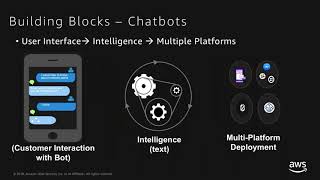
Go!: Building your own ChatBot with Amazon Lex | Hebrew Webinar
AWS Developers
And Beyond: Amazon Sagemaker | Hebrew Webinar
AWS Developers
Building API-Driven Microservices with Amazon API Gateway - AWS Online Tech Talks
AWS Developers
Understanding AWS Secrets Manager - AWS Online Tech Talks
AWS Developers
Best Practices for Building Enterprise Grade APIs with Amazon API Gateway - AWS Online Tech Talks
AWS Developers
Build, Train and Deploy Machine Learning Models on AWS with Amazon SageMaker - AWS Online Tech Talks
AWS Developers
AWS Israel News | Episode 2 | re:Invent
AWS Developers
AWS Floor28 News - January
AWS Developers
AWS Floor28 News - February - Hebrew
AWS Developers
AWS Floor28 News - March - Hebrew
AWS Developers
AWS Floor28 News - April - Hebrew
AWS Developers
AWS Floor28 News - May - Hebrew
AWS Developers
Authentication for Your Applications: Getting Started with Amazon Cognito - AWS Online Tech Talks
AWS Developers
AWS Floor28 News - June - Hebrew
AWS Developers
AWS Floor28 News - July - Hebrew
AWS Developers
Enriching your app with Image Recognition and AWS AI Services - AWS Webinar - Hebrew
AWS Developers
Personalize, Forcast, and Textract - AWS Webinar - Hebrew
AWS Developers
Managing Your ML Development Lifecycle with Amazon SageMaker - AWS Webinar - Hebrew
AWS Developers
Running your ML code in Amazon Sagemaker - AWS Webinar - Hebrew
AWS Developers
Get Started in Minutes with Amazon Connect in Your Contact Center - AWS Online Tech Talks
AWS Developers
AWS Floor28 News - August - Hebrew
AWS Developers
AWS Floor28 News - September - Hebrew
AWS Developers
Deep Dive on Amazon EventBridge - AWS Online Tech Talks
AWS Developers
Advanced Serverless Orchestration with AWS Step Functions - AWS Online Tech Talks
AWS Developers
Living on the Edge - an Introduction to Amazon CloudFront and Lambda@Edge - Hebrew Webinar
AWS Developers
AWS Floor28 News - October - Hebrew - YouTube
AWS Developers
What's New with AWS Storage - AWS Online Tech Talks
AWS Developers
How to Build a Compelling Migration Business Case Using TSO Logic - AWS Online Tech Talks
AWS Developers
Configuring and Managing Amazon S3 Replication - AWS Online Tech Talks
AWS Developers
AWS Floor28 News - November - Hebrew
AWS Developers
Using Relational Databases with AWS Lambda - Easy Connection Pooling - AWS Online Tech Talks
AWS Developers
AWS Floor28 News - December 2019 - Hebrew
AWS Developers
AWS Floor28 News - January 2020 - Hebrew
AWS Developers
Top 10 Data Migration Best Practices - AWS Online Tech Talks
AWS Developers
How to Use Azure Active Directory with AWS SSO - AWS Online Tech Talks
AWS Developers
AWS Tips & Tricks - Amazon Redshift Advisor - Hebrew
AWS Developers
AWS Tips & Tricks - Amazon Redshift Elastic Resize - Hebrew
AWS Developers
AWS Tips & Tricks - Amazon Redshift Spectrum - Hebrew
AWS Developers
AWS Tips & Tricks - Savings Plans & Cost Explorer - Hebrew
AWS Developers
AWS Tips & Tricks - Amazon Redshift Concurrency Scaling - Hebrew
AWS Developers
AWS Tips & Tricks - Training Models with Amazon SageMaker - Hebrew
AWS Developers
AWS Tips & Tricks - Auto Model Tuning with Amazon SageMaker - Hebrew
AWS Developers
AWS Tips & Tricks - Amazon Comprehend - Hebrew
AWS Developers
Understanding High Availability and Disaster Recovery Features for Amazon RDS for Oracle
AWS Developers
Amazon Forecast – Forecasting - From Months to Days (Hebrew)
AWS Developers
Visualize your data with Amazon QuickSight (Hebrew)
AWS Developers
Amazon Kendra (Hebrew)
AWS Developers
AWS Floor28 News - AI/ML Special Edition
AWS Developers
More on: Linux & CLI
View skill →






![MITRE CTF 2019 - Linux [50] Escaping RBASH with SSH](https://i.ytimg.com/vi/MEGBY3XAe_4/mqdefault.jpg)

Related Reads
Chapters (9)
Introduction
0:24
Basic Commands & Parameters
4:05
Getting Help (--help)
9:00
Pipes: The Unix Superpower
12:16
Tool Spotlight: Bat
13:35
Redirects & File Operations
17:28
Tool Spotlight: JQ
21:35
CLI Tools & Coding Assistants
23:10
Next Steps
🎓
Tutor Explanation

 DeepCamp AI