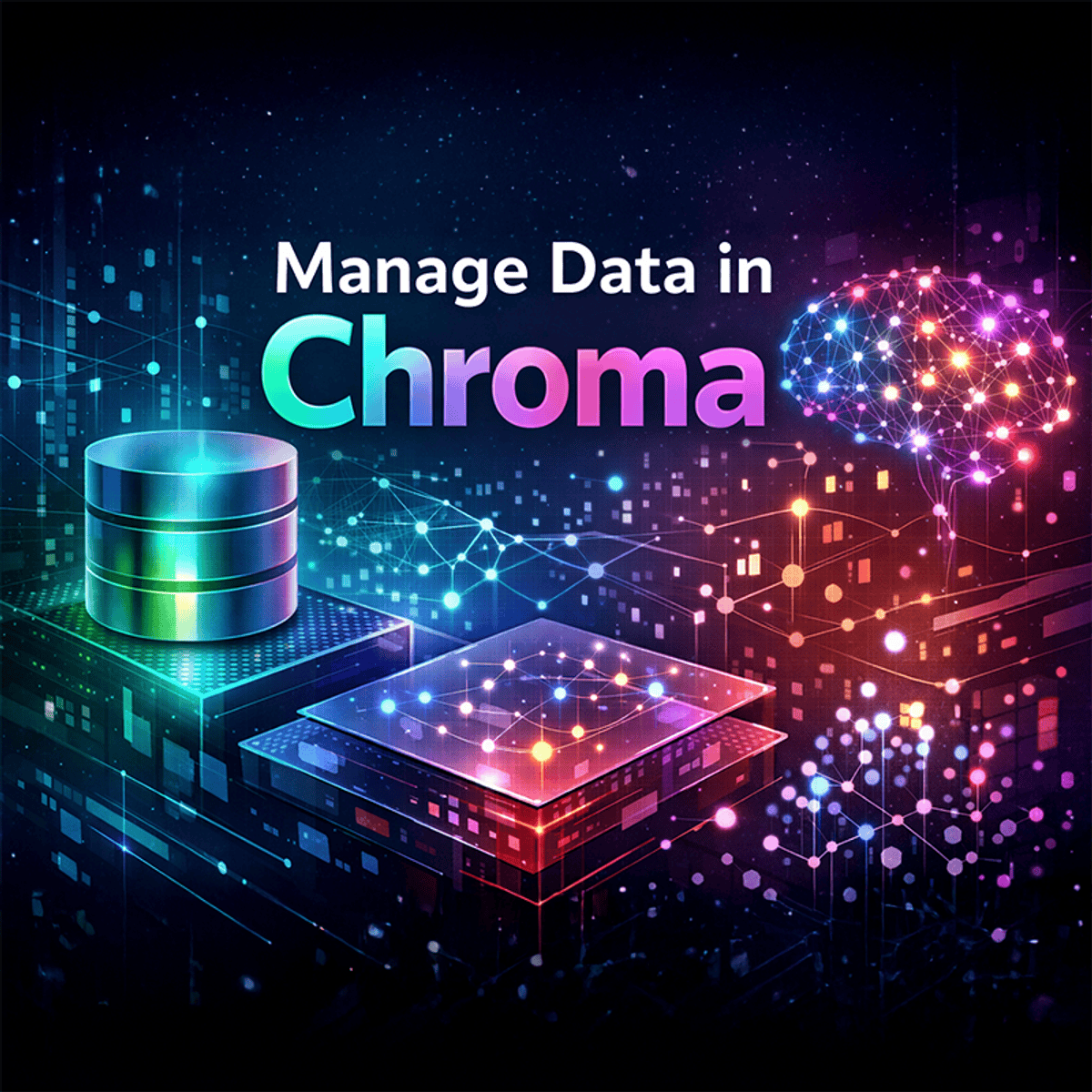
Manage Data in Chroma
Skills:
Vector Stores80%
Key Takeaways
Manages data in Chroma using vector databases for efficient and precise item retrieval
Original Description
Ready to move beyond basic vector search? This intermediate course is for AI practitioners and developers who want to unlock the full potential of their AI applications by mastering data management in Chroma. You'll learn that the power of a vector database isn't just in finding similar items—it's in finding the right items, precisely and efficiently. This course shows you how to build robust, organized, and scalable Chroma databases from the ground up.
You will need to have basic Python programming skills, including familiarity with libraries and data structures like dictionaries. No prior AI/ML experience is required.
You will learn to master metadata to create powerful filtering rules that retrieve exactly what you need, and you'll design multi-collection architectures to neatly organize data across different domains, just like real-world systems at companies like IKEA and JPMorgan. Through hands-on labs, you'll move from theory to practice by scripting a complete Python ETL pipeline to ingest, tag, and organize customer support tickets into a clean, queryable, multi-collection Chroma database. By the end of this course, you won't just be using a vector database; you'll be architecting a sophisticated data management engine ready for real-world AI applications.
AI explanation not available for this lesson yet
This lesson is still being prepared for the AI tutor. In the meantime, explore lessons that are ready.
Browse explainer-ready lessons →
More on: Vector Stores
View skill →![Build a RAG Agent in n8n | Vector DB Pinecone + WhatsApp + Gmail [2026]](https://i.ytimg.com/vi/4eJsZBgwFJ4/mqdefault.jpg)








Related Reads
📰
📰
📰
📰
Why Does RAG Miss Information That's Clearly in the Document?
Dev.to AI
When The Same Question Needs A Different Answer Depending On Where The Caller Is
Medium · RAG
Evolution of RAG Systems
Medium · RAG
I Built STAIR From Scratch: A Retriever That Returns Section Names, Not Chunk IDs
Medium · RAG
🎓
Tutor Explanation
 DeepCamp AI