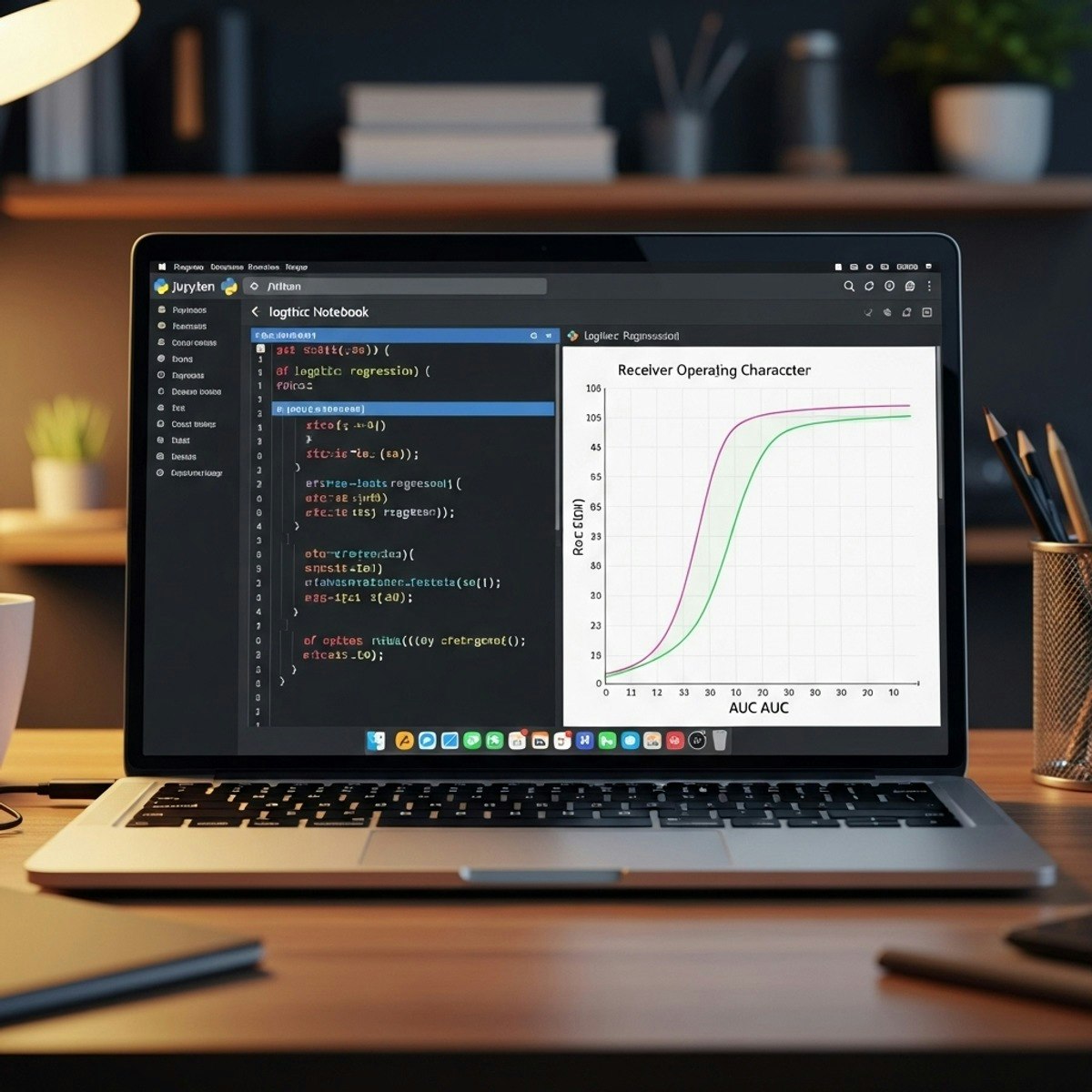
Machine Learning with Python: Diabetes Prediction
Key Takeaways
Builds a diabetes prediction model using machine learning with Python
Original Description
Learners will be able to install and configure Python tools, apply machine learning workflows, transform healthcare data, implement logistic regression, and evaluate prediction models using ROC curves. This course equips students with the practical skills to design, build, and test real-world machine learning solutions for healthcare analytics.
Through step-by-step guidance, learners begin with setting up Anaconda and essential Python libraries, then progress to understanding the Pima Indians Diabetes dataset, exploring machine learning steps, and applying logistic regression for binary classification. The course emphasizes hands-on practice in Jupyter Notebook, where students preprocess data by handling headers, encoding categorical values, and splitting datasets into training and testing sets. Finally, learners validate model performance with ROC curves to interpret diagnostic accuracy.
By completing this course, learners will gain the confidence to translate healthcare datasets into actionable predictions. Unlike generic machine learning tutorials, this course is unique because it focuses on a real medical case study, bridges theory with coding practice, and builds both conceptual understanding and applied skills in predictive modeling.
Watch on External: Coursera ↗
(saves to browser)
Sign in to unlock AI tutor explanation · ⚡30
More on: ML Pipelines
View skill →



Related AI Lessons
⚡
⚡
⚡
⚡
X now offers an MCP server to make its platform easier for AI tools to use
TechCrunch AI
n8n Automation Repurpose Video Content: The 2025 Production Guide
Dev.to AI
You’re Still Paying $200/Month for AI Tools You Could Replace With a Free Local Setup Tonight
Medium · Data Science
Top 10 AI Tools Every College Student Should Know in 2026
Medium · AI
🎓
Tutor Explanation

 DeepCamp AI