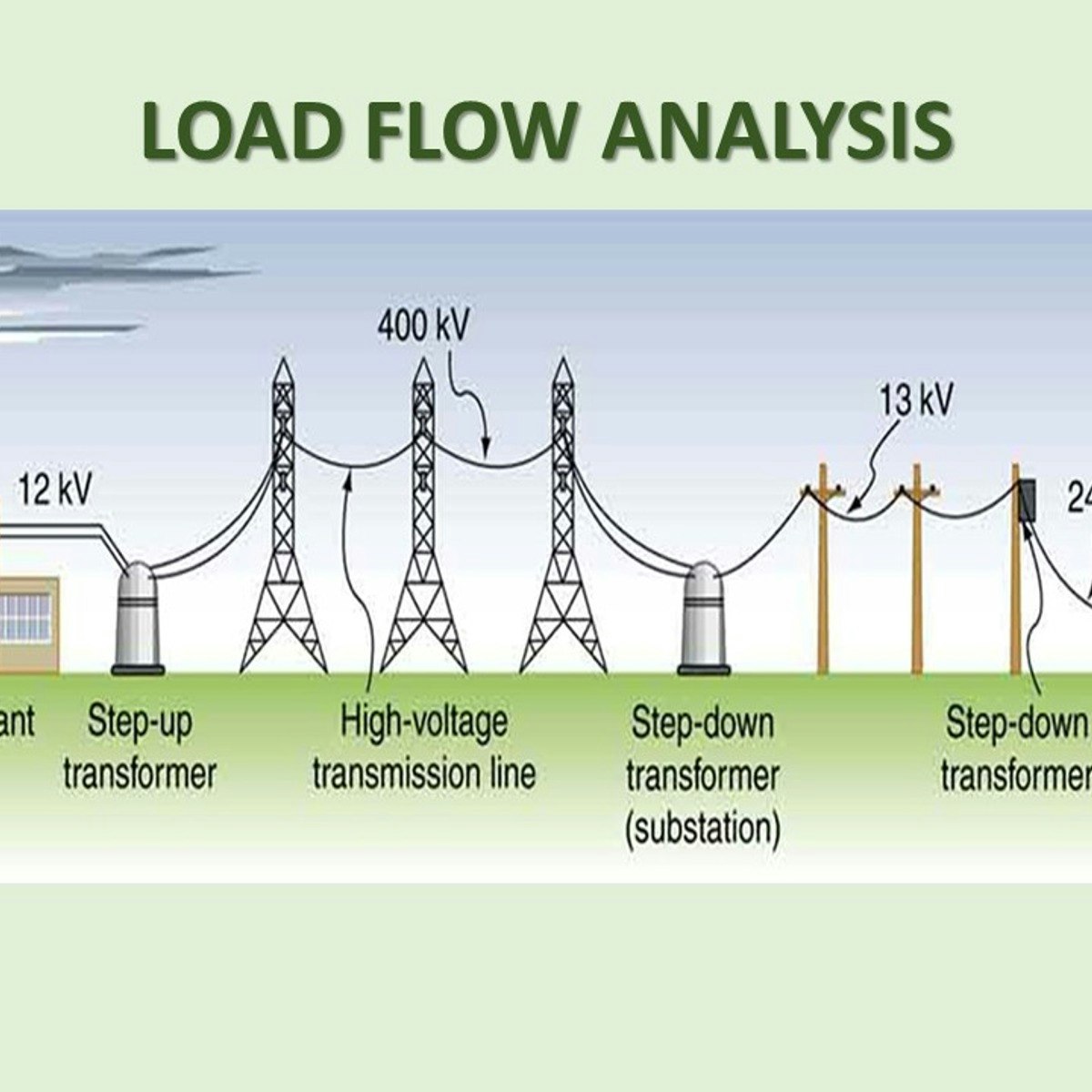
Load Flow Analysis
Skills:
ML Pipelines60%
This course is designed to provide a comprehensive analysis of various solution techniques available for load flow analysis of power system networks.
Objectives
By the end of this course, you will be able to:
• Declare the need for model formulation of power system network and derive the model formulation equations of a network with suitable illustrations. (BL3)
• Deduce the need and applications for tap changers in transformers and arrive at the representation of off nominal tap changing transformer with pi model equivalent circuit. (BL3)
• Develop a comprehensive understanding of the formation of bus impedance and bus admittance matrices using appropriate techniques and illustrate with numerical examples. (BL4)
• Illustrate the concept of graph theory in bus admittance matrix formation and discuss the sparsity in power systems. (BL4)
• Discover the algorithm/flowchart of various numerical solution techniques such as Gauss-Seidel, Newton Raphson and Fast Decoupled algorithms used to obtain load flow solution of power system networks and examine a comparative analysis of these algorithms. (BL4)
• Elucidate the concept of DC and AC-DC load flow equations and their solution with suitable algorithms and case study/examples. (BL4)
This course provides a specialized focus on network model formulation and construction of network matrices, namely, bus admittance and bus impedance matrices supported with real time test system. The course touches upon the detailed procedure of applying iterative solution techniques such as Gauss-Seidel, Newton-Raphson, and Fast Decoupled methods to solve the load flow problem imbibed with demonstrations of live examples. The course stands out for its hands-on ETAP demonstrations, which is an industrial software used in power grid sectors, providing learners with practical skills in the field of power system design and analysis.
To be successful in this course, you should have a background in basic electrical engineering principles,
Watch on External: Coursera ↗
(saves to browser)
Sign in to unlock AI tutor explanation · ⚡30
More on: ML Pipelines
View skill →





Related AI Lessons
⚡
⚡
⚡
⚡
LLM SEO: Arama Motorlarından Yapay Zeka Motorlarına Geçiş
Medium · SEO
ChatGPT Reaches 1 Billion Users: The AI Economy Is Here and Reshaping Everything
Medium · ChatGPT
RNNs, Transformers, and State Space Models: The Next Evolution of AI Memory
Dev.to AI
MoE Architecture 2026: The Engine Behind GPT-5 and DeepSeek
Dev.to AI
🎓
Tutor Explanation

 DeepCamp AI