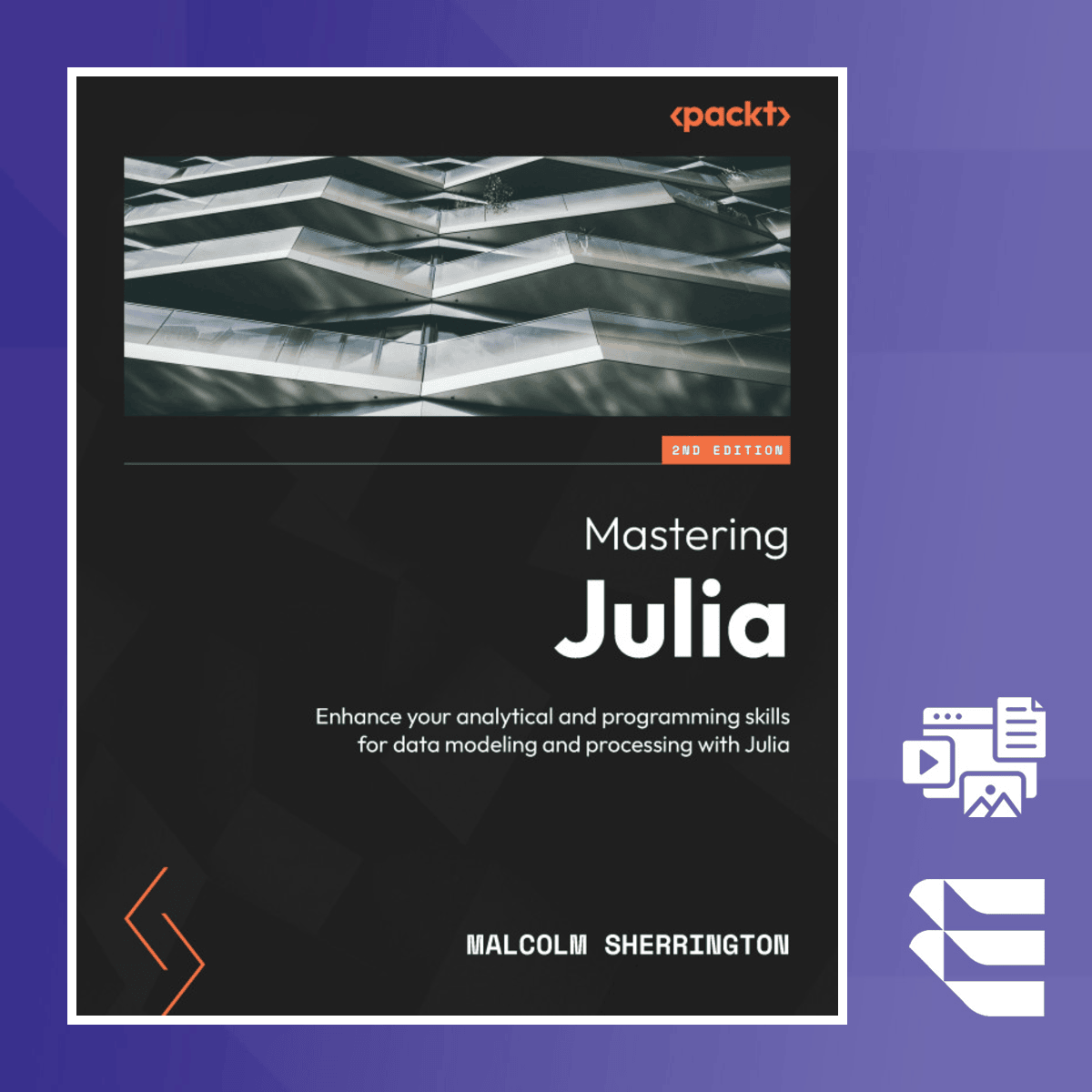
Julia Programming for Data Science and Machine Learning
This course covers the application of Julia v1.8.x in the areas of scientific computing and data science. The course will be of use to those with some previous knowledge of Julia or as a primer for programmers familiar with other scripting or compiled languages.
This resource provides a practical guide to mastering Julia, a high-performance programming language ideal for scientific computing, data analysis, and machine learning. It helps developers enhance their existing programming skills by introducing Julia’s powerful features and applications. The content is structured to support hands-on learning and real-world problem-solving.
After a brief introduction to code simple scripts, the next few sections introduce major topics in Julia such as the type system, meta-programming and modularisation. The remainder of the course continues with practical discussions by separate topics, concluding with a look at some of the fringe features in Julia, such as optimal coding techniques, debugging and creating packages
This resource is ideal for developers with experience in scripting or compiled languages like Python, R, C, or Java who want to expand their skill set with Julia. It assumes a basic understanding of programming concepts and focuses on practical application.
Watch on External: Coursera ↗
(saves to browser)
Sign in to unlock AI tutor explanation · ⚡30
More on: ML Maths Basics
View skill →




Related AI Lessons
⚡
⚡
⚡
⚡
The Boring Layers AI Still Cannot Fake
Medium · Machine Learning
Machine Learning: A fun beginner’s guide to how it works, types and real-world applications
Medium · Machine Learning
Deep Learning (Part-03): Basics of the Neural Network Training Process
Medium · LLM
Deep Learning (Part-03): Basics of the Neural Network Training Process
Medium · ChatGPT
🎓
Tutor Explanation

 DeepCamp AI