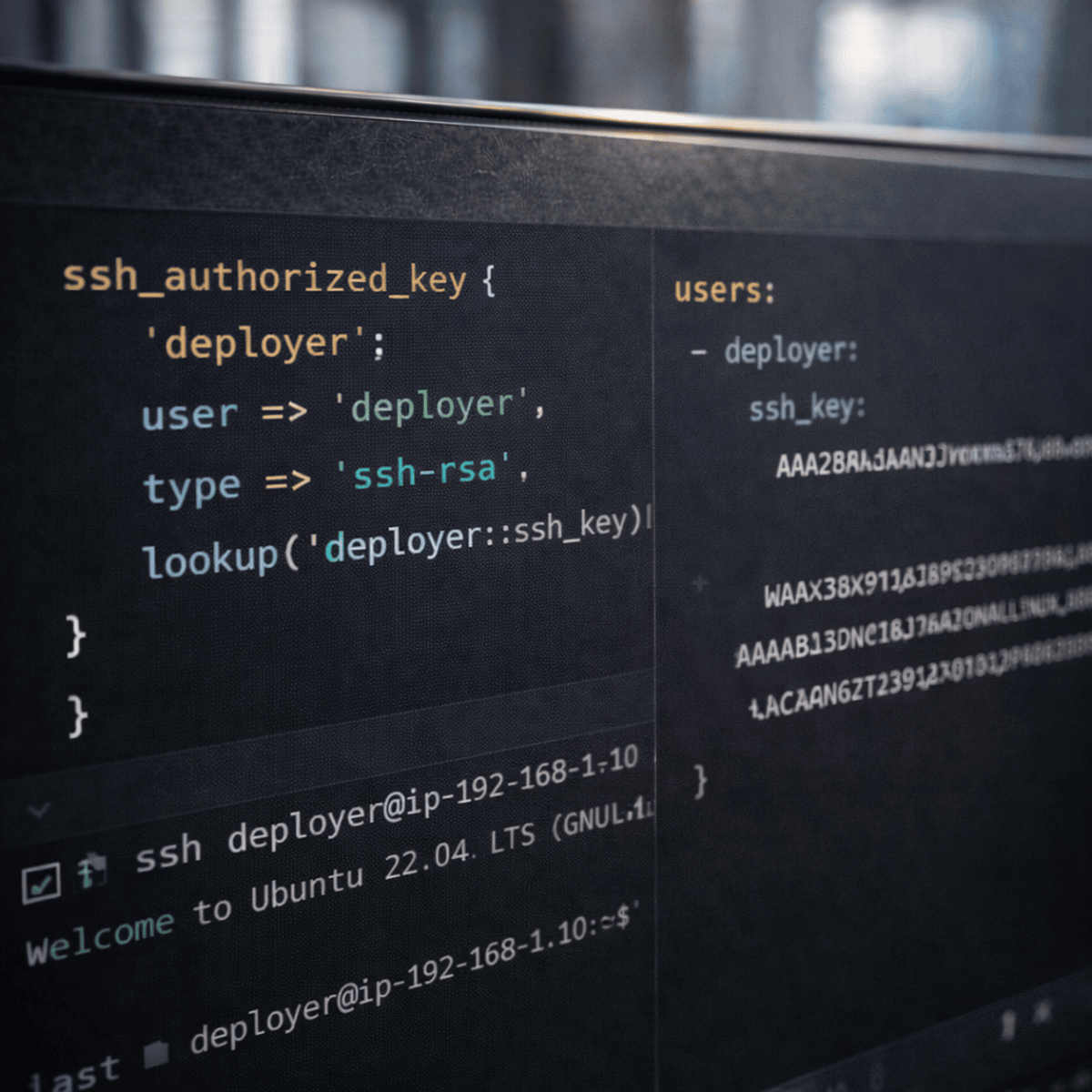
Implement Password-Less Infrastructure with Puppet
Key Takeaways
Configures password-less infrastructure with Puppet across Linux systems
Original Description
Learners will configure, automate, and manage a secure password-less infrastructure using Puppet across Linux systems. By the end of this course, learners will be able to set up foundational Puppet configurations, implement automated user management, apply Hiera for data-driven configuration, and design reusable Puppet modules for scalable infrastructure management.
This course provides hands-on, project-based learning focused on real-world infrastructure challenges. Learners will gain practical experience in configuring Linux environments for secure access, reducing manual administration, and preventing configuration drift through automation. The course walks step by step through a complete Puppet project, ensuring learners understand not only how to implement solutions but also why specific configuration and design decisions are made.
What makes this course unique is its end-to-end project approach that combines password-less authentication, Puppet automation, Hiera-based data separation, and modular design practices into a single cohesive workflow. Instead of isolated concepts, learners work through an integrated infrastructure scenario that mirrors industry practices.
This course is ideal for system administrators, DevOps engineers, and IT professionals seeking to apply, standardize, and scale secure configuration management using Puppet.
Watch on External: Coursera ↗
(saves to browser)
Sign in to unlock AI tutor explanation · ⚡30
Related Reads
📰
📰
📰
📰
CI Testing Management Tools Compared — A Hands-On Look at GitHub Actions
Dev.to · Mauricio Choqueña Choque
A practical guide to monitoring BullMQ queues with an agent-based approach that keeps Redis credentials inside your infrastructure.
Dev.to · Harsh
Why is your Docker image 2 GB?
Medium · DevOps
👁️ Stop Flying Blind: Implementing Observability Practices in Production (Python, Prometheus & Grafana)
Dev.to · ROBERTO CARLOS HUAMAN RIVERA
🎓
Tutor Explanation

 DeepCamp AI