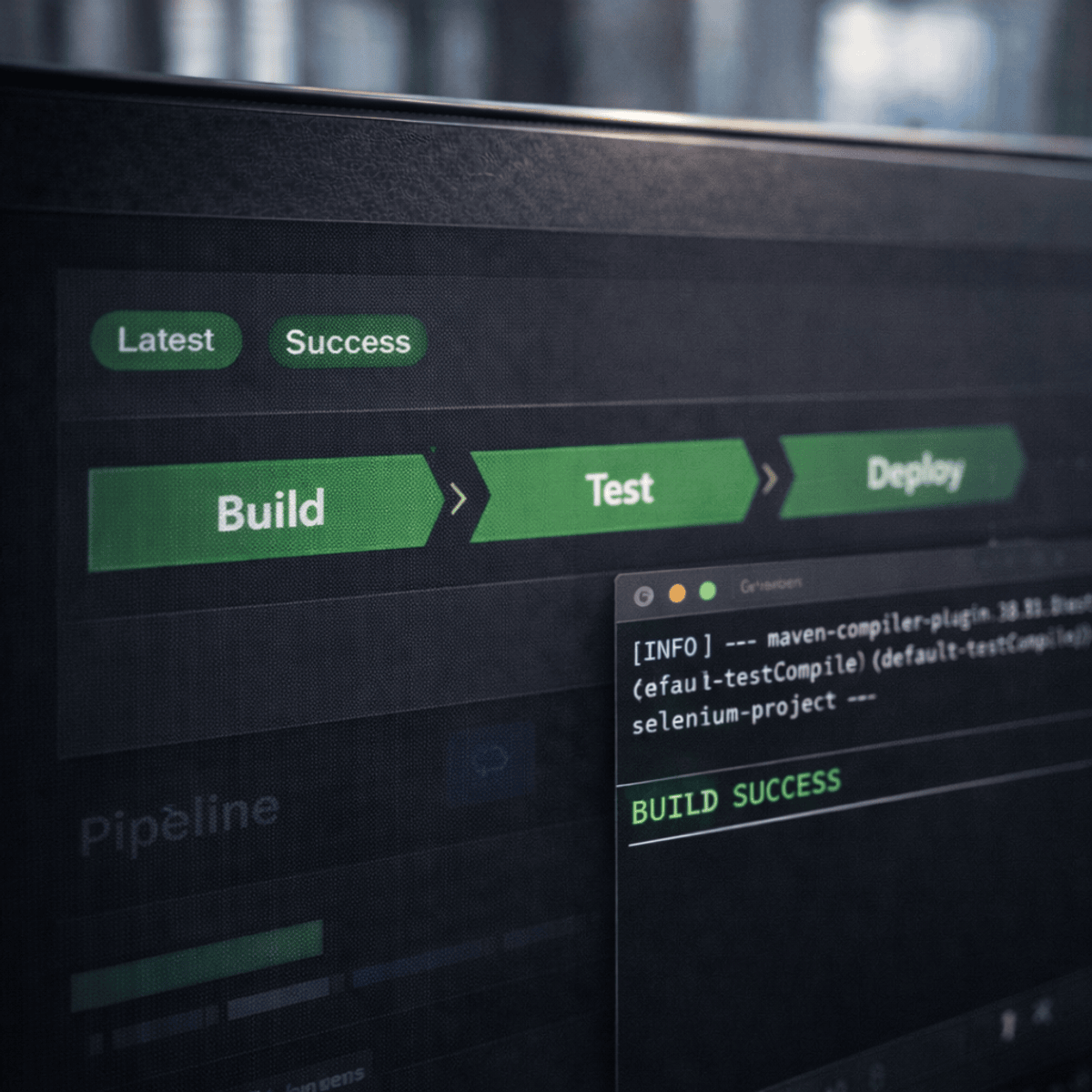
Implement Advanced Selenium CI/CD with Java
Key Takeaways
Implements advanced Selenium automation workflows using Java, Maven, and Jenkins for CI/CD pipelines
Original Description
Learners will be able to implement advanced Selenium automation workflows, configure CI/CD pipelines using Maven and Jenkins, execute tests in distributed and headless environments, and manage browser sessions effectively through advanced cookie handling techniques. By completing this course, learners will gain the skills required to design, run, and maintain scalable, enterprise-grade Selenium automation solutions aligned with modern DevOps practices.
This course benefits learners by bridging the gap between test automation and continuous integration, enabling faster feedback cycles, improved test reliability, and efficient execution across multiple environments. Participants will learn how to integrate Selenium projects into Jenkins pipelines, manage system configuration and security, and optimize execution using Selenium Grid and headless browsers—skills that are highly valued in real-world automation and QA engineering roles.
What makes this course unique is its strong focus on production-ready automation. Rather than limiting coverage to scripting alone, the course emphasizes CI/CD readiness, infrastructure awareness, and session management strategies that are critical in large-scale projects. Learners finish the course prepared to implement robust, maintainable, and performance-optimized Selenium automation solutions in professional environments.
Watch on External: Coursera ↗
(saves to browser)
Sign in to unlock AI tutor explanation · ⚡30
More on: CI/CD Pipelines
View skill →







Related Reads
📰
📰
📰
📰
Every Build Tells a Story: Integrating Harness CI with Splunk
Medium · DevOps
When ArgoCD Chokes: Targeted Syncs in Jenkins Pipelines
Medium · DevOps
Securing Your Terraform Infrastructure with Checkov and GitHub Actions
Dev.to · Cristhian Carlos MAMANI CORI
Title: The Signal Nobody Tells You About: Thread Dumps via SIGQUIT During a Production Outage in…
Medium · DevOps
🎓
Tutor Explanation
 DeepCamp AI