How I'd Learn AI Engineering in 2026 (Complete Roadmap)
Key Takeaways
The video provides a comprehensive roadmap for learning AI engineering in 2026, covering topics such as Python programming, AI engineering foundations, prompt engineering, and retrieval augmented generation (RAG), with a focus on building production-ready systems using pre-trained AI models and APIs. It highlights the importance of mastering Python syntax, functions, classes, error handling, and utilizing tools like OpenAI API, Python SDK, GitHub, Git, and Virtual environments.
Full Transcript
So, let me give you the road map that I would personally follow if I wanted to become an AI engineer and get hired fast in 2026 if I had to completely start over from scratch. And now, please bear with me. I'm just going to walk you through this document over here. This is not going to be some highly paced edited video. So, bear with me. I'm going to give your dopamine receptors a break. If you can't make it through this video, I can't help you to become an AI engineer. So, a little bit about my background to make sure you can check if you want to listen to my advice. I have over 10 years of experience in AI, both a bachelor's and a master's degree. Uh I worked for four years as a data scientist and for the past three years I've been all in on Genai. I currently run my own AI development company called Data Luminina and over the past 3 years or so we've done over 50 plus complete builds for all of our clients. So everything in this road map really directly comes from real world experience and what clients and companies are paying for right now. Let's get into the introduction and make sure we're all on the same page as to what it means to be an AI engineer because this name this role has changed a little bit over the past years. And for that I always like to refer to this article over here from latent space the rise of the AI engineer. I highly recommend to read through this but to give a summary right now I would say an AI engineer is pretty much a software engineer who builds production ready systems using pre-trained AI models and APIs. So they work on the right side of the API layer that we saw over here where on the left side you have machine learning researchers, data scientists, ML engineers who train custom machine learning models. On the right side we're using pre-trained models. This is what falls into the category of an AI engineer or a full stack engineer. So that means we are focusing on applied AI deploying systems using pre-trained models for example LLMs not training or fine-tuning models from scratch. All right. So with that out of the way, let's get into the six core kind of like pillars of this road map. And for every core pillar, there are a few like learning outcomes that I recommend to kind of like check off before you can continue to the next one. Now this document over here is available on my GitHub on this repository. I will link it in the description as well. But for the sake of this video, I exported it to a slide so we have a little bit more of a focus for us to go through this. So first of all, AI engineering foundations. This is all about starting and learning the Python programming languages. And while you can technically do AI engineering in any programming language, right now, Python just dominates the AI industry. So I would say it's it's a must if you want to become an AI engineer. I would focus on mastering this language. So that's where you start. If you don't know Python already and you want to become an AI engineer, make sure you learn the Python programming language, syntax, functions, classes, error handling. If you click on this link over here, you'll go to my 5hour free Python 4AI course on YouTube. So that would be a great starting point. Now, when you're learning a new language, you also need to understand the whole ecosystem around it. So your development environment, managing dependencies, virtual environments, of course, Git, GitHub, version control, understand Python project structure, basic testing, debugging, logging, and understanding how to uh work and configure environment variables. All this stuff over here that you see over here is explained in this video if any of these concepts are new to you. All right. And then once you understand the basics of Python, I recommend to go through the entire OpenAI API documentation. I also have a video on that. I recommend then going through the Python SDK and really learn how to authenticate, send requests, handle responses, and work with structured outputs. So, this is really the start of your AI engineering journey. And I recommend to start with OpenAI. They're the biggest model provider. And you'll learn how to work with these large language models. That's the starting point. Nowadays, we can also work with with beyond text. We can work with images. We can even work with videos. We can work with audio. All of these are described in the OpenAI uh documentation. And if you understand Python and use their SDK, you can start to build really cool applications around it. So that's the really the fundamental AI component that we start with. And then you need to understand the fundamental concept and techniques around prompt engineering. So this is how we instruct large language models to do stuff that we want. So by the end of this first core pillar, AI engineering foundations, you should uh be able to build and run small Python projects locally with clean code and structure. That's the checkbox to go to the next phase of this road map and it is AI system design principles. Here it's all about understanding how to think about and design AI systems before writing code. You need to learn what kinds of systems can be built with LLM. So you can do some research on this. Let literally ask Chad GPT document processing, personal assistant, content generation, backend automations, multi- aent workflows. You should understand where we can take these AI models and where we can put them into applications. Then you need to understand how effective AI systems are actually built behind the scenes. And what you'll often find is that the most effective AI products actually try to use as little AI as possible and that's what makes them effective. If you want to learn more about that, you can check out this video. So you want to combine deterministic logic with LLMs strategically. Then you should study the core building blocks of what makes up an LLMbased system. Inputs, prompts, context windows, output, feedback loops. Again, I have a video on that covering these seven uh core building blocks as well. So, if you're not familiar with that, make sure to check it out. And then you also need to be aware of some key software design patterns. These are really going to help you to take these building blocks of working with LLMs, of working with agents and chain them and combine them in a way to build your automations. So if you're new to design patterns, I would recommend starting with the chain of responsibility pattern, the facade and the strategy pattern. Okay, at that point you should now be ready to explore agent frameworks like lang chain, langraph, pidentici to understand how these frameworks orchestrate entire applications around large language models because that's pretty much all they're doing. We have these LLMs which are deployed by for example OpenAI or Entropic or Google or any other kind of provider and we want to build our application in such a way that we take incoming data we process that and through the prompts data and everything that we add to that we create a little package that we then send to the API and we get the answer back. The answer that we're getting back that's that's the AI part of our application and then typically generally you want to do something with that. So you want to reply to a user, you want to kick off a system, you want to update information in a CRM system, you want to create content, any thing you really want to do. That's the whole orchestration around the LLM layer. And these tools and frameworks can help you with that. Now, generally, if you watch some of my other videos, I always like mention that I am always very careful with these frameworks because most of them I feel like are way too abstract and by using them, you don't quite understand what's going on behind the scenes. But they're a good starting point to learn. But then we get to the second one. Once you get a feel for what you can do with these types of agent systems and agent ethnic frameworks, and if I had to pick one to dive into, I would recommend Pentic AI. After that, I want you to reimplement a simplified versions really of these frameworks in your own projects and learn how they work. So just take the core components uh and I explain that in this video over here. If you click on this how to do that so you understand not only like how you can use the frameworks but also how you can take the bits and pieces and build stuff from scratch on your own. This is really where you develop mastery and where you get a grip on the projects that you're working on. And then you also need to learn uh how to sketch cognitive architectures which means you can come to a whiteboard or a diagramming tool and you can create simple like block diagrams that shows the the how the data flows through your system and where you can strategically place large language models. That's what a cognitive architecture pretty much is. So the goal the end of this AI systems design principles uh pillar is that you can design an AI systems end to end and explain each step clearly. Okay, let's get to core pillar number three and that is the AI architecture and containerization. And here is all about turning your local prototypes into scalable backend services. So by now you should be familiar with Python. You know how to build around these language models and you should already be able to build some pretty cool things. but they're all local on your computer. So now we get into fast API and pyentic to build endpoints to actually create a backend. You should learn about asynchronous programming and background workers. You can use salary for this in the Python Python ecosystem. You should be familiar with how to containerize your application with Docker. You should understand how to work with databases. I recommend Postgress SQL to start with. Then you should also understand how to manage database migrations using you can use almic for that in the python ecosystem and oh sorry and understand uh what an eventdriven architecture is what that means and how so how jobs cues and APIs communicate and then finally on this uh part three understand MCP servers and how they can extend your AI applications. I also have an whole video on that. So the goal the end of this uh phase is you can run a small backend locally or in docker that connects database to a database and exposes clean API routes. And so as we go through this you see a lot of technical terms right really the checklist but for any of those terms you can take it for example if you let's say you have no idea what salary is you could literally take take salary go to chat GPT and say hey I'm trying to become an AI engineer um I know the fundamentals of Python I want to understand what salary is and how it works. can you create a beginner tutorial or course for me to understand it and it will give it to you. That's why I want to give this road map in such a way where I just like give to you in a very very minimal way like look here's what I think you need to know because this is the exact stack that we use to deliver and deploy all of our client projects so you can then fill in the gaps and continue learning on your own. All right, number three halfway let's get to number four. This is all about retrieval augmented generation. This is really a core part core skill that you need to master as an AI engineer. So you need to instruct your AI systems to access and use external information. So here when it comes to rack, you need to understand first of all like what rack is and how it will improve the reliability of your apps. Then how to chunk documents and create embeddings. How to work with factor databases for example chromob, lensb, weviate, pg factor. Build an ingestion pipeline to embed and store documents. I have an entire video on that as well covering everything that is in here if you watch this video. Then implement uh similarity search and hybrid search another video for free on YouTube that you can check out and learn techniques to improve the retrieval quality. So there there are advanced techniques like contextual retrieval, query expansion, selfquery or reranking all additional techniques that you can apply on top of a basic rag system. And then you should understand how to evaluate retrieval performance and identify failure cases so that at the end of this phase you can connect your AI system to custom data sources and retrieve relevant context at runtime. That's the goal of understanding rack. All right getting to core pillar number five that is LLM monitoring and evals. So now we're really at the point with our application where we can build pretty cool stuff. We through rack we can also bring in external information. We also know how to containerize our application. So now we're we're getting pretty serious. We're getting pretty dangerous with our application. But there is a very crucial component that we cannot forget and that is like monitoring everything around this because AI systems especially when you work with LLMs can be very tricky. They can hallucinate. They are they can introduce randomness. So what we want is we want an observability system or tool. I recommend starting with Langfuse for tracing and prompt management. I have an entire video also on how to use Langfuse. This is what we use for all of our uh production setups. You can use it in the cloud but you can also it's also open source. So you can also deploy this on your own uh hardware on your own server which is really cool. And the goal here is capture all the traces for all the LLM calls including inputs, output, latency and token cost. So with langfuse you get essentially a dashboard overview of everything that was sent to the LLM with cost, latency, the input prompts and the outputs. So you can use that to debug your system. Very important. All right. And then we have setting up evaluations. Now there are different levels to that. I have an entire crash course on how to properly do this. But there are levels in terms of like you can create simple unit tests, you can create human annotated data sets or you could go as far as creating LLM as a judges to uh automatically monitor and perform evaluations in the background when your system is running. So then you also need to learn on how to store uh data sets for regression tests. So everything that you create around evaluations, the system and the framework that you set up, you want to run that on custom data sets. Linefuse can help with that. This video teaches you how to think about it. And then you need to be able to capture data sets, store them, and run these experiments. So that pretty much what it comes down to, every time you make changes to your application, for example, you change the system prompt, you want to make sure that the problem you're trying to solve, maybe that works right now, but maybe downstream 10 other cases uh now don't work anymore. That's really where eval come in and why they are really important to build reliable applications. Okay. And then you need to be familiar with the concept of guardrails for safety and security. So these are guardrails for example to counter things like prompt injection, py filtering or simply just output validation to see if the output is in line with with the brand if the output is in line with the knowledge base or how it is instructed to uh reply. So a guardrail is pretty much uh a check to say okay this is this is good we can send this to the customer or to the system or this is not good and we block it and we do some some alternative uh processing whether that's flagging it escalating to a human or simply giving a default message. All right and then finally here on pillar number five tracking application errors and exceptions using for example a tool like sentry. This is also a tool that we use for all of our production environments. really cool tool so that by the end the goal is that you can uh you can quantify the performance catch regressions early and continuously improve your AI applications that what that's what this is all about. All right and then we get to the final one deploying your AI applications. So up until this point we've done everything right now we have a we have a serious application we know how we can monitoring and monitor it and improve it over time but it's useless unless we can deploy that somewhere and serve it to our customers. So I recommend picking at least one cloud provider to get familiar with. You could look into AWS, Azure, GCP, uh Hessner or Digital Ocean. I started out doing everything on Azure. Currently at Day Luminina, we deploy everything on Hner because it's way cheaper. Big companies, enterprises, they typically use the big cloud providers. The good thing is if you learn one of them, those skills really translate well to other uh platforms uh as well. So learn the basics and then what I recommend to start with all of these cloud platforms they have a [snorts] very big library of manage resources and surface that make it seem really easy to build and deploy stuff which in some cases it is but it also introduces a lot of abstractions and costs that you sometimes don't want. I recommend everyone to start with like a bare metal virtual machine or a at least like a container service and learn how to deploy your applications via docker directly. And I again I recommend doing this on a virtual machine. And then you need to configure uh https. You can use ketti for that. You need to be able to monitor the logs and monitoring manage environment variables and secrets securely now in the production environment. Set up health check and alerts. track performance, cost and reliability post deployment and understand CI/CD basics using GitHub actions. So that here really you understand look I'm working on something locally. I have my application. I have now set up a cloud platform and I know what I need to do whenever I want to deploy that to uh the production environment. I for example have a pipeline where I push it to to GitHub to a particular branch that either then manually or automatically triggers a deployment on the virtual machine. You can do that via scripts or you can get into the virtual machine via SSH and then like pull the changes and redeploy or restart the docker container. These are all things that you should be familiar with as an AI engineer so that by the end you understand how you can deploy, monitor and maintain your AI applications in a production like environment. So that by the end if you go through all of these six core pillars and cross off all the checkbox and understand what it means you have learned Python properly you've mastered LLM APIs prompt engineering and agent patterns you understand system design and backend architecture implementing rack and monitoring and you deploy a few realw world uh projects end to end if you do that you have everything you need to land your first AI engineer role in 2026 and with this you should really focus on building instead of theorizing. There are so much tutorials and courses that you could go through, but at some point you just need to build stuff. So yes, use courses, use tutorials, use YouTube, but don't get stuck in this loop of trying to like stay up to date on everything because there's like there's so much noise in the AI space. And actually when you look at the role of an AI engineer, pretty much not much has changed since function calling was introduced to LLM APIs. I know that sounds crazy to some people watching, but it really is the case. Most of our uh production builds that run in production right now, the code is almost like identical from 2 years ago, like how we set it up. Just the models just get better. But that's just like swapping out an endpoint and changing the prompts a little bit. The core like architecture around it, the software engineering around that doesn't change. So that's also a good thing. It's a really good skill uh to learn. So focus on building, ship small, iterate fast, and document everything and showcase at least three complete projects that prove you can build and deploy real systems. This is important because this is what what is literally the proof when you're at the hiring interview where you can for example show three GitHub repositories and maybe a deployed project where you can say look I built this and if you follow all of these six steps and you can show that you can build and deploy end to end and that is such an important skill to have. All right so that's my road map for you. Everything is in here. This is literally what I would follow if I had to start over from scratch today. And if you follow all of the links in here, there's probably over 10 hours of free videos and trainings that you can follow all on my YouTube channel to go through this. And then you can fill in the gaps with other courses or tutorials or use AI to literally create a course for you on the fly. And then I want to thank you for watching. Make sure you like this video and subscribe to the channel if you're serious about AI engineering. And then let's go crush it on this road
Original Description
Want to shortcut this roadmap? Go here: https://go.datalumina.com/ecPOtZu
Want to start freelancing? Let me help: https://go.datalumina.com/j2yOqrk
🔗 Link to Roadmap
https://github.com/daveebbelaar/ai-cookbook/blob/main/roadmaps/ai-engineer-2026.md
💼 Need help with a project?
Work with me: https://go.datalumina.com/TMGbUvO
⏱️ Timestamps
00:00 Roadmap to Becoming an AI Engineer
01:37 Understanding the AI Engineer Role
04:29 Step 1: AI Foundations
08:17 Step 2: AI System Design
10:18 Step 3: AI Architecture
10:21 Step 4: Retrieval Augmented Generation (RAG)
11:57 Step 5: Monitoring and Evaluation
15:17 Step 6: Deployment Strategies
17:57 Final Thoughts and Next Steps
📌 Description
Learn the exact tech stack and roadmap to become a production-ready AI Engineer in 2026. I’ll walk you through the essential tools, from Python, FastAPI, Docker, PostgreSQL, and Langfuse to working with OpenAI and real LLM APIs, so you can build and deploy end-to-end AI systems.
👋🏻 About Me
Hi! I'm Dave, AI Engineer and founder of Datalumina®. On this channel, I share practical tutorials that teach developers how to build production-ready AI systems that actually work in the real world. Beyond these tutorials, I also help people start successful freelancing careers. Check out the links above to learn more!
Watch on YouTube ↗
(saves to browser)
Sign in to unlock AI tutor explanation · ⚡30
Playlist
Uploads from Dave Ebbelaar · Dave Ebbelaar · 0 of 60
← Previous
Next →
1
 2
2
 3
3
 4
4
 5
5
 6
6
 7
7
 8
8
 9
9
 10
10
 11
11
 12
12
 13
13
 14
14
 15
15
 16
16
 17
17
 18
18
 19
19
 20
20
 21
21
 22
22
 23
23
 24
24
 25
25
 26
26
 27
27
 28
28
 29
29
 30
30
 31
31
 32
32
 33
33
 34
34
 35
35
 36
36
 37
37
 38
38
 39
39
 40
40
 41
41
 42
42
 43
43
 44
44
 45
45
 46
46
 47
47
 48
48
 49
49
 50
50
 51
51
 52
52
 53
53
 54
54
 55
55
 56
56
 57
57
 58
58
 59
59
 60
60
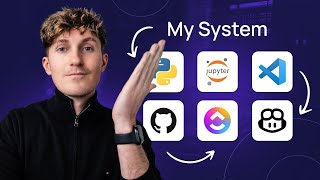
How to Install Homebrew on Mac (Getting Started)
Dave Ebbelaar
How to Install Python on Mac (Homebrew)
Dave Ebbelaar
How to Install Anaconda on Mac (Getting Started)
Dave Ebbelaar
How to Set up VS Code for Data Science & AI
Dave Ebbelaar
How to Use Git in VS Code for Data Science
Dave Ebbelaar
Data Science Desk Setup to Maximize Productivity
Dave Ebbelaar
THIS Is How I Write Clean Data Science Code EVERY TIME
Dave Ebbelaar
Data Science Tutorial - Project Structure
Dave Ebbelaar
Changing rcParams for Better Data Science Plots | Matplotlib Tutorial
Dave Ebbelaar
How to Read Excel Files with Python (Pandas Tutorial)
Dave Ebbelaar
My Data Science Journey (Zero to Freelance)
Dave Ebbelaar
How I Automate Data Visualization in Python
Dave Ebbelaar
16 Apps I Use Daily as a Data Scientist
Dave Ebbelaar
How to Manage Conda Environments for Data Science
Dave Ebbelaar
How to Export Machine Learning Models in Python
Dave Ebbelaar
VS Code Speed Hack for Data Science
Dave Ebbelaar
17 VS Code Tips That Will Change Your Data Science Workflow
Dave Ebbelaar
How to Predict the Future with Python (Forecasting Tutorial)
Dave Ebbelaar
How to Use Python Environment Variables
Dave Ebbelaar
7 Data Science Tips for Beginners in 2023
Dave Ebbelaar
How to Effectively Use the Data Science Lifecycle
Dave Ebbelaar
Full Machine Learning Project — Coding a Fitness Tracker with Python (Part 1)
Dave Ebbelaar
Full Machine Learning Project — Processing Raw Data (Part 2)
Dave Ebbelaar
Full Machine Learning Project — Data Visualization with Matplotlib (Part 3)
Dave Ebbelaar
This Will Change Data Science as We Know It (ChatGPT)
Dave Ebbelaar
Full Machine Learning Project — Detecting Outliers in Sensor Data (Part 4)
Dave Ebbelaar
Full Machine Learning Project — Low-pass Filter & Principal Component Analysis (Part 5a)
Dave Ebbelaar
Full Machine Learning Project — Fourier Transformation & Clustering (Part 5b)
Dave Ebbelaar
Full Machine Learning Project — Predictive Modelling (Part 6)
Dave Ebbelaar
Automate Machine Learning with ChatGPT
Dave Ebbelaar
Scraping Web Datasets for Data Science Projects
Dave Ebbelaar
Full Machine Learning Project — Counting Repetitions (Part 7)
Dave Ebbelaar
How to Use GitHub Copilot for Data Science (Python + VS Code)
Dave Ebbelaar
Every Beginner Data Scientist Should Understand This
Dave Ebbelaar
Revealing My New AI-Powered Data Science Workflow
Dave Ebbelaar
Auto-GPT Tutorial - Create Your Personal AI Assistant 🦾
Dave Ebbelaar
Build Your Own Auto-GPT Apps with LangChain (Python Tutorial)
Dave Ebbelaar
Building Slack AI Assistants with Python & LangChain
Dave Ebbelaar
ChatGPT Code Interpreter - Goodbye Data Analysts?
Dave Ebbelaar
How to Deploy AI Apps to the Cloud with Flask & Azure
Dave Ebbelaar
How to Build an AI Document Chatbot in 10 Minutes
Dave Ebbelaar
Is Falcon LLM the OpenAI Alternative? An Experimental Setup with LangChain
Dave Ebbelaar
GPT Engineer... Generate an entire codebase with one prompt
Dave Ebbelaar
Pandas DataFrame Agent... the future of data analysis?
Dave Ebbelaar
OpenAI Function Calling - Full Beginner Tutorial
Dave Ebbelaar
How to use ChatGPT's new “Code Interpreter” feature
Dave Ebbelaar
LangChain just launched their new "LangSmith" platform
Dave Ebbelaar
How I'd Learn AI (if I could start over)
Dave Ebbelaar
I Used AI To Scrape The Web & Write PDF Reports
Dave Ebbelaar
LangSmith Tutorial - LLM Evaluation for Beginners
Dave Ebbelaar
7 Lessons for New AI Engineers - Beginner’s Guide
Dave Ebbelaar
The Rise of the "New-Age" Machine Learning Engineer
Dave Ebbelaar
OpenAI Assistants Tutorial for Beginners
Dave Ebbelaar
How To Connect OpenAI To WhatsApp (Python Tutorial)
Dave Ebbelaar
How to Build Chatbot Interfaces with Python
Dave Ebbelaar
PostgreSQL as VectorDB - Beginner Tutorial
Dave Ebbelaar
My MacBook Setup (as a coder & business owner)
Dave Ebbelaar
Easiest Way to Connect AI Chatbots to WhatsApp
Dave Ebbelaar
ClickUp Tutorial - What Is ClickUp Brain? 🧠
Dave Ebbelaar
My Development Workflow for Data & AI Projects
Dave Ebbelaar
More on: LLM Engineering
View skill →
![FULLY LOCAL Mistral AI PDF Processing [Hands-on Tutorial]](https://i.ytimg.com/vi/wZDVgy_14PE/mqdefault.jpg)





Related Reads
📰
📰
📰
📰
RAG for Financial Docs Is Different. Here’s the Chunking Strategy That Finally Worked.
Medium · RAG
RAG: Every Data Type You'll Actually Run Into (Part 2)
Medium · LLM
RAG: Every Data Type You'll Actually Run Into (Part 2)
Medium · RAG
What Makes an AI System Production-Ready? Part 2: Designing a RAG Ingestion Pipeline
Dev.to · Mohit Bajaj
Chapters (9)
Roadmap to Becoming an AI Engineer
1:37
Understanding the AI Engineer Role
4:29
Step 1: AI Foundations
8:17
Step 2: AI System Design
10:18
Step 3: AI Architecture
10:21
Step 4: Retrieval Augmented Generation (RAG)
11:57
Step 5: Monitoring and Evaluation
15:17
Step 6: Deployment Strategies
17:57
Final Thoughts and Next Steps
🎓
Tutor Explanation

 DeepCamp AI