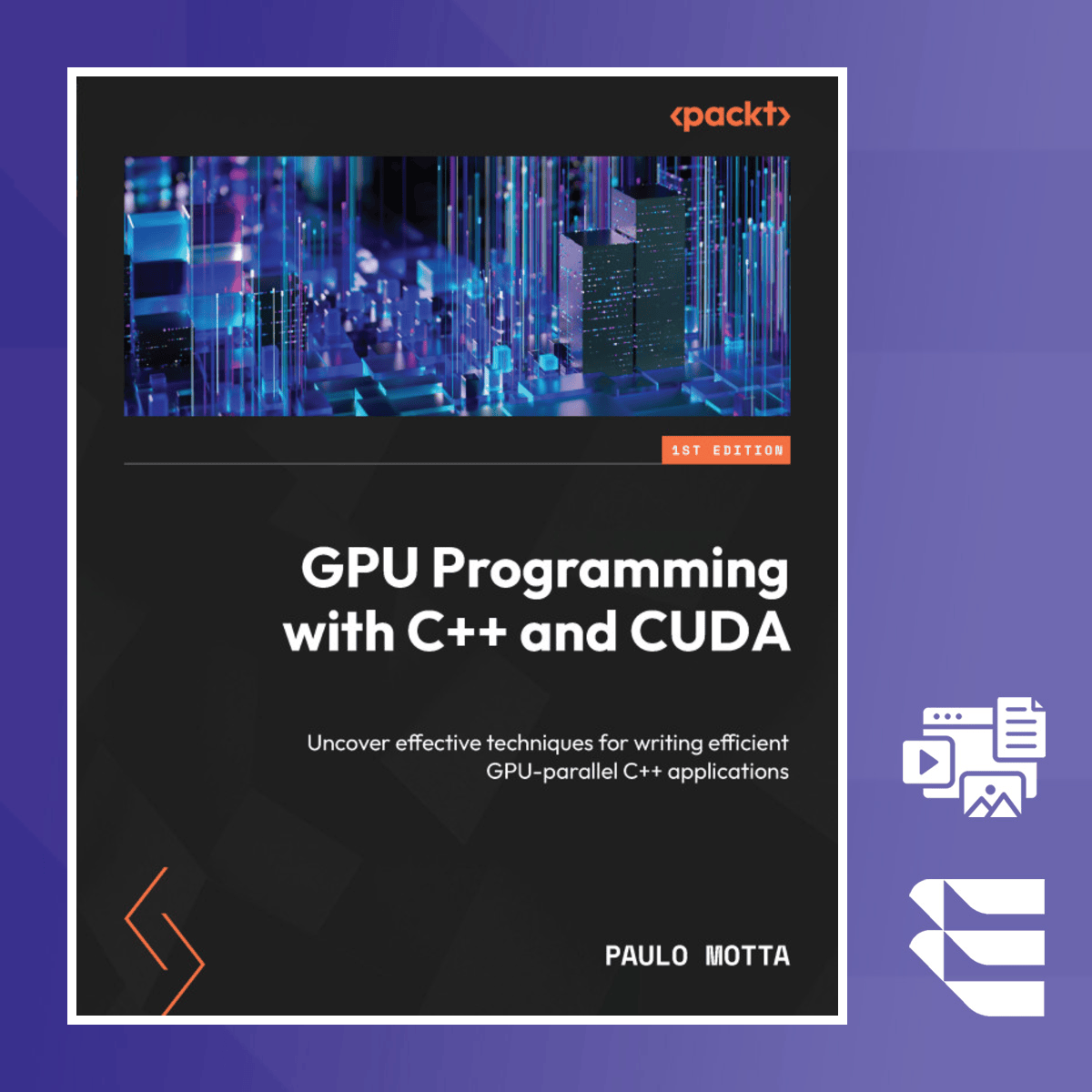
GPU Programming with C++ and CUDA
Key Takeaways
Covers GPU programming using C++ and CUDA for high-performance computing applications
Original Description
In this course, you’ll master GPU programming using C++ and CUDA to significantly enhance your software's performance. By focusing on parallelism, you’ll learn to leverage the full power of GPUs for high-performance computing applications.
You will acquire practical knowledge on managing GPU devices, optimizing GPU resource usage, and integrating GPU code with Python to build scalable and efficient applications. This course emphasizes real-world strategies for optimizing performance and building reusable libraries.
This course combines fundamental theory with hands-on applications to help you solve complex performance challenges. You'll not only understand the core concepts but also implement them in real-world projects, such as creating libraries for Python integration.
Ideal for C++ developers with experience in basic programming concepts, this course will take you through advanced topics, from parallel algorithms to multi-GPU usage. A background in operating systems is recommended for tackling more complex concepts.
Based on the book, GPU Programming with C++ and CUDA, by Paulo Motta.
Watch on External: Coursera ↗
(saves to browser)
Sign in to unlock AI tutor explanation · ⚡30
More on: Backend Performance
View skill →







Related Reads
📰
📰
📰
📰
Morris Pre Order Traversal
Dev.to · Jaspreet singh
Advanced Stack ApplicationsData Structures and Algorithms Deep‑Dive — Advanced Stack Applications…
Medium · Programming
The Minecraft anvil is a tree-cost optimization problem in disguise
Dev.to · Mark
KMP Algorithm (Knuth-Morris-Pratt): The Smart Way to Perform String Matching in O(N)
Dev.to · Jaspreet singh
🎓
Tutor Explanation
 DeepCamp AI