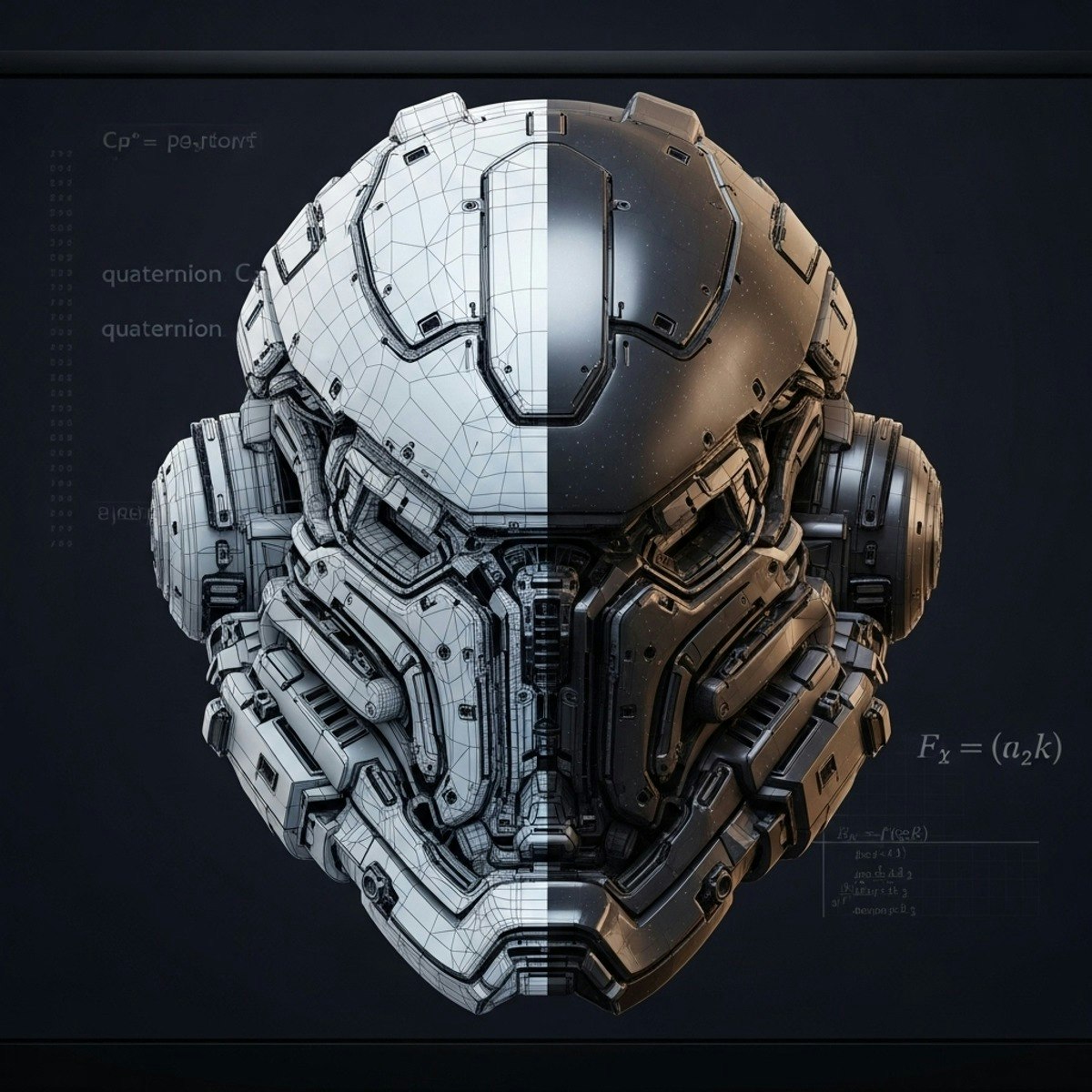
DirectX: Implement & Optimize 3D Rendering
Key Takeaways
Implements and optimizes 3D rendering using DirectX
Original Description
By the end of this course, learners will be able to implement rasterizer customization, apply blend states for transparency, configure depth buffers for accurate occlusion, manage textures for realism, design shaders for optimized sampling, and apply quaternion and complex number mathematics to 3D graphics.
This course equips learners with advanced DirectX rendering skills essential for building high-performance 3D applications and games. You will gain hands-on experience customizing rasterizers, implementing scissor tests, blending pixels, and mastering alpha relations. Moving deeper, you will implement depth rendering, optimize textures with mip maps, and design shaders for advanced sampling techniques. The final module integrates mathematics and coding, where you will apply quaternions and hyper complex numbers for smooth rotations and leverage C++/CX with ref class for Windows Runtime development.
What makes this course unique is its combination of practical DirectX coding and essential mathematical foundations, ensuring learners not only know how to code but also why rendering techniques work. Whether you’re advancing your game engine development or exploring professional graphics programming, this course provides the structured pathway to mastering DirectX at an advanced level.
Watch on External: Coursera ↗
(saves to browser)
Sign in to unlock AI tutor explanation · ⚡30
Related AI Lessons
⚡
⚡
⚡
⚡
Had my Frontend Developer interview with Capgemini (Application Developer) today, and I wanted to…
Medium · JavaScript
10 Frontend Developer Tools to Boost Productivity in 2026
Medium · Programming
10 Frontend Developer Tools to Boost Productivity in 2026
Medium · JavaScript
The US Frontend Engineer Market in 2026: A Data-Driven Reality Check (and the Bias That Stops Us Seeing It)
Dev.to AI
🎓
Tutor Explanation

 DeepCamp AI