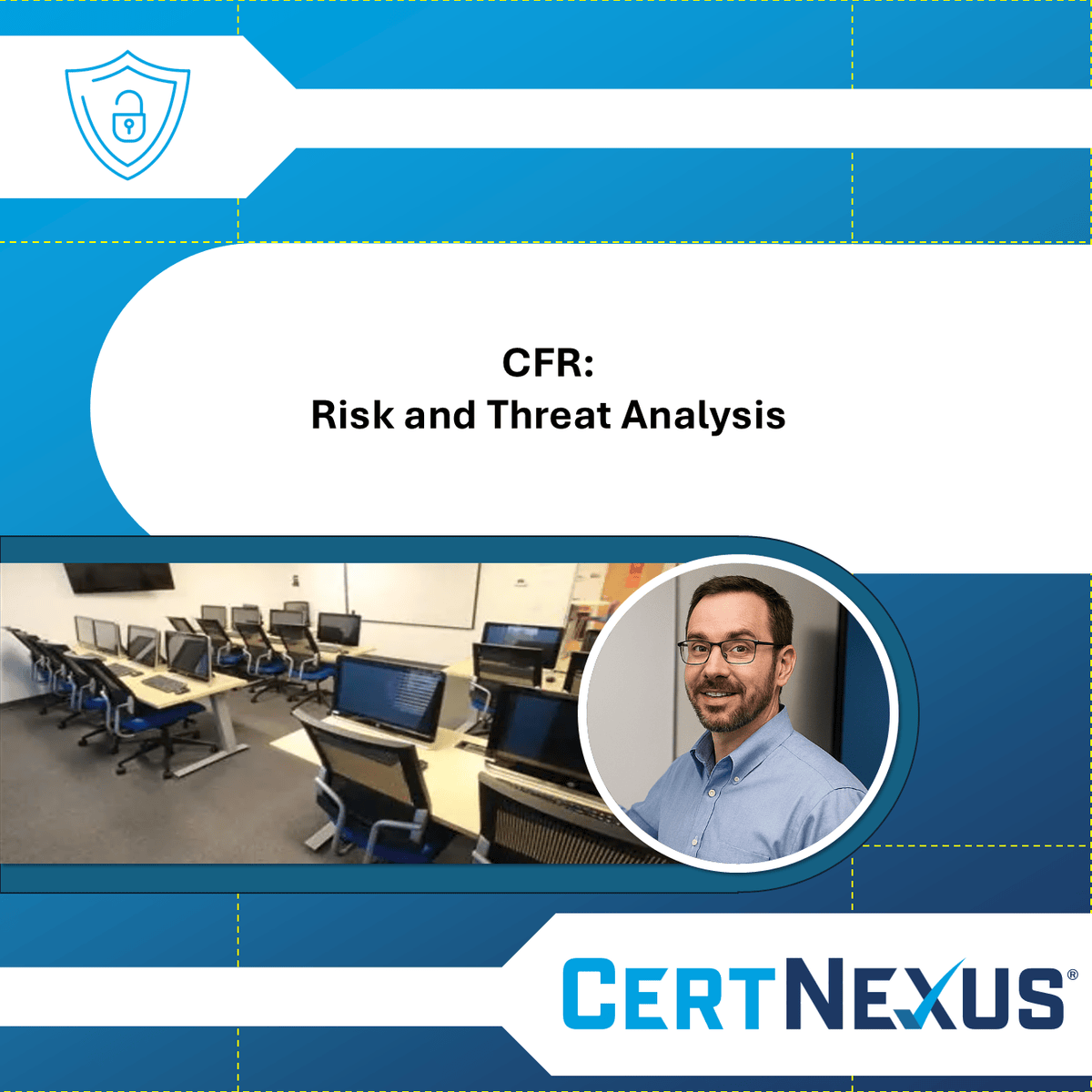
CFR: Risk and Threat Analysis
This course will be useful to cybersecurity practitioners who are preparing for or who currently perform job functions related to protecting information systems by ensuring their availability, integrity, authentication, confidentiality, and non-repudiation. You will begin by identifying the importance of risk management and assessing and mitigating risk to the organization. You'll also analyze the threat landscape by classifying threats and identifying trends that affect the organization's security posture.
This is the first course in a multi-course Specialization.
All of the courses in this Specialization require that you purchase the CFR-410 LogicalLABS, which are interactive, browser-based virtual labs that simulate the activity environment. These labs are already set up with the data files, networking, and system configurations required to perform the activities. With the coupon code provided in this course for 25% off, the labs cost approximately $60.
Watch on Coursera ↗
(saves to browser)
Sign in to unlock AI tutor explanation · ⚡30
More on: Security Basics
View skill →






Related AI Lessons
⚡
⚡
⚡
⚡
Stop Storing JWTs in localStorage: A Security Guide for Web Developers
Dev.to · Damilola Owolabi
Inside Consumer DVRs — Hardware, Firmware & Network Security Evaluation
Medium · Cybersecurity
Cómo construimos un SOC con honeypot e IA local
Dev.to · Yoandy Ramirez Delgado
Credentials in web applications: how to store them properly
Dev.to · Ian Johnson
🎓
Tutor Explanation
 DeepCamp AI