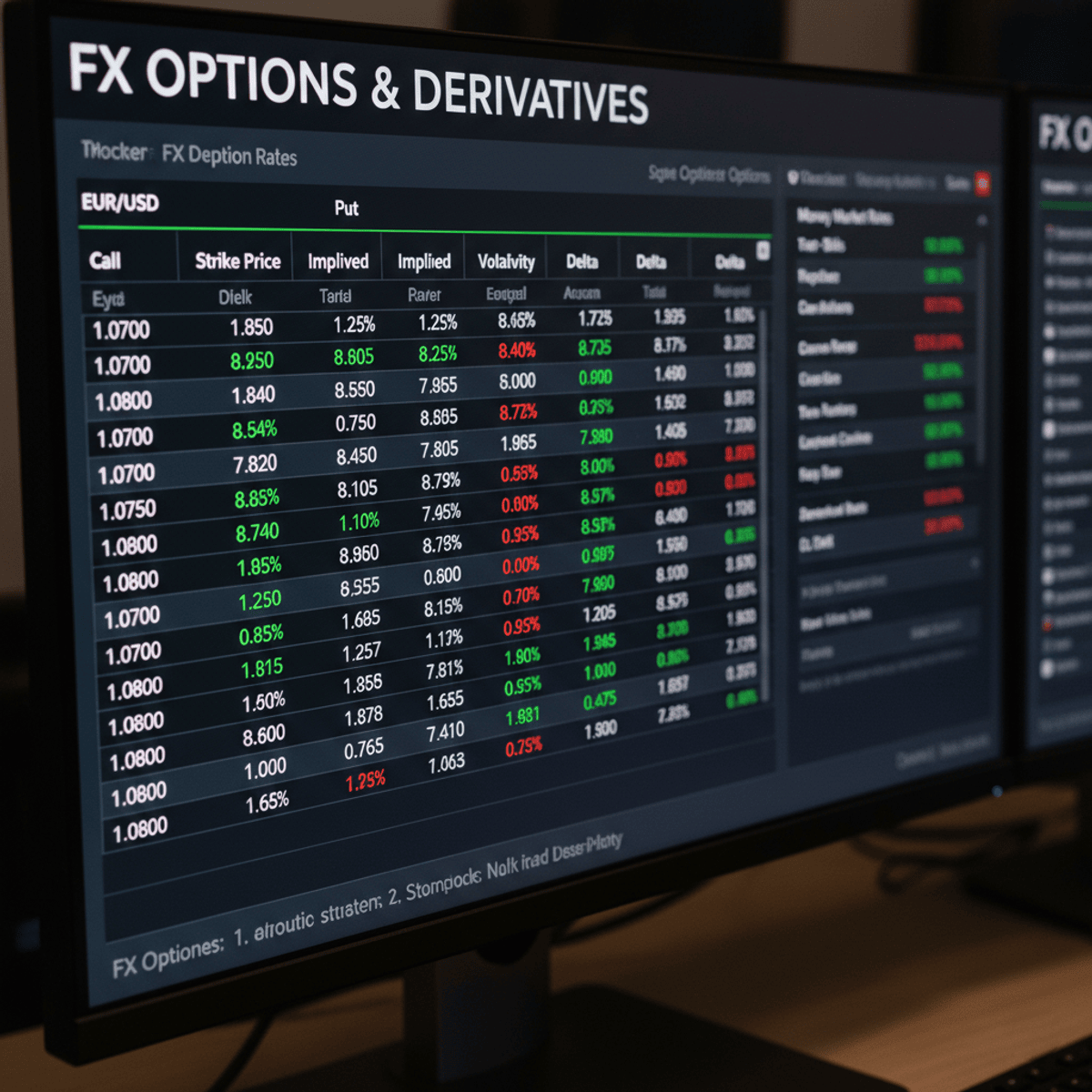
Analyze Fixed Income, FX Markets, and Asset Management
Learners will analyze foreign exchange markets, evaluate money market instruments, apply asset management principles, and assess derivative strategies used to manage financial risk. By the end of this course, learners will be able to interpret FX transactions, compare fixed income and money market instruments, explain mutual fund and hedge fund structures, and evaluate the use of swaps, futures, options, and credit derivatives in real-world financial contexts.
This course equips learners with practical, market-relevant knowledge of FX markets, fixed income instruments, asset management vehicles, and derivatives, building a strong foundation for roles in banking, treasury, risk management, and investment operations. Learners gain clarity on how global financial markets function, how institutions manage liquidity and risk, and how derivative products are structured and settled.
What makes this course unique is its end-to-end coverage of financial markets, moving from FX spot and money markets to asset management, hedge funds, and complex derivatives—all explained through applied examples and market conventions rather than abstract theory. The course is especially valuable for finance students, early-career professionals, and risk or operations specialists seeking a structured, practical understanding of modern financial markets.
Watch on Coursera ↗
(saves to browser)
Sign in to unlock AI tutor explanation · ⚡30
Related AI Lessons
⚡
⚡
⚡
⚡
The ABCs of reading medical research and review papers these days
Medium · LLM
#1 DevLog Meta-research: I Got Tired of Tab Chaos While Reading Research Papers.
Dev.to AI
How to Set Up a Karpathy-Style Wiki for Your Research Field
Medium · AI
The Non-Optimality of Scientific Knowledge: Path Dependence, Lock-In, and The Local Minimum Trap
ArXiv cs.AI
🎓
Tutor Explanation

 DeepCamp AI