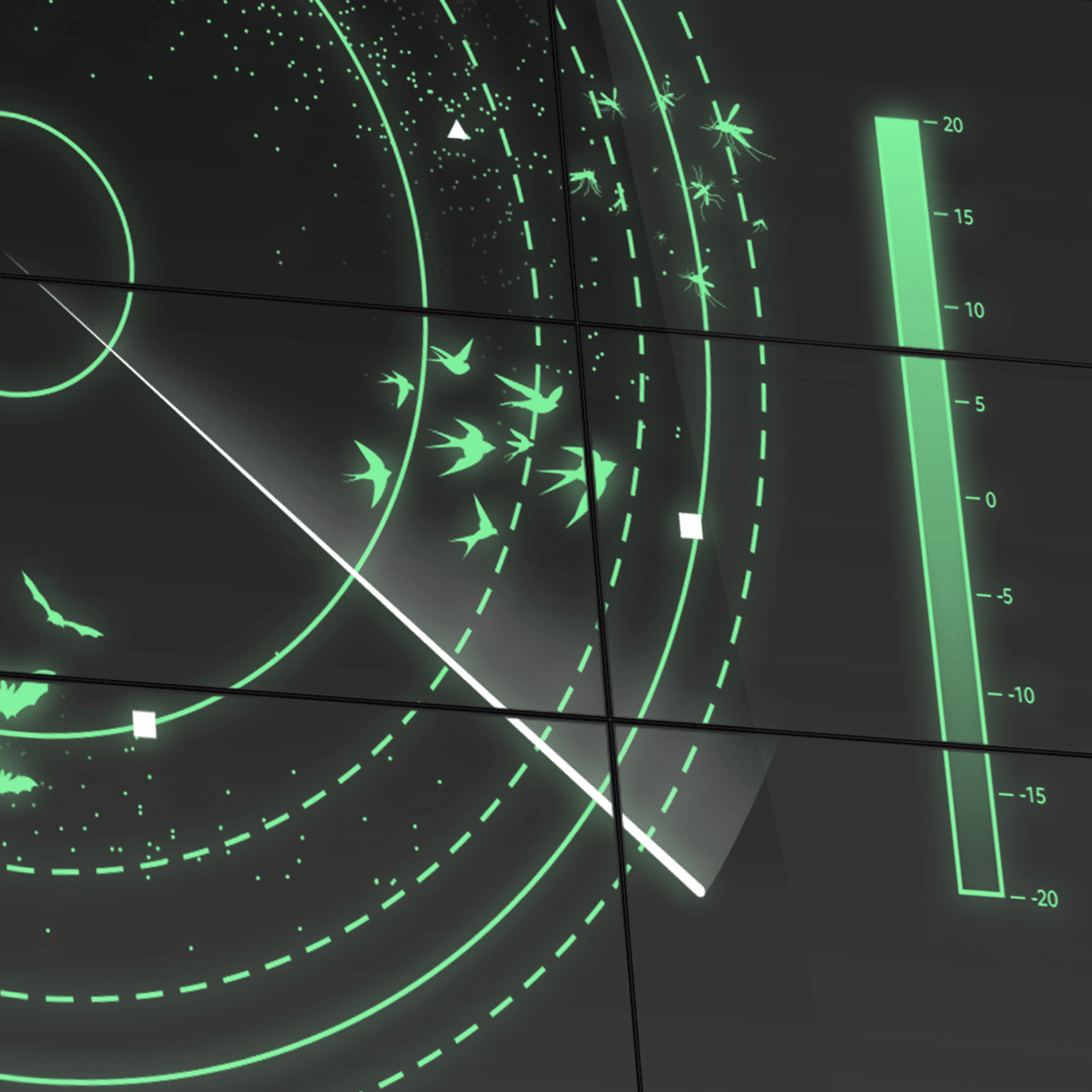
Aeroecology: Exploring Biodiversity with Radar
Learn how aeroecology, a discipline that studies airborne life forms, has been revolutionised with the use of radar with this unique course. This course is designed to help scientists, researchers as well as ecology enthusiasts to develop skills in using radar to explore biodiversity.
You will explore the origins and evolution of radar from a military technology to a powerful tool with multiple scientific applications, including aeroecology. You will then be introduced to studying global biodiversity trends and learn how to evaluate traditional methods and emerging technologies used by scientists to monitor the natural world.
You will then delve deeper to understand how radar science can be used to measure and monitor biodiversity and evaluate its advantages over existing methods of biodiversity measurement.
Through real life case studies, you will learn how to interpret data visualisations and radar data output, how to quantify the biomass of species, and you will discover the taxonomic limits of the technology.
By the end of the course, you will have explored how this new field of study can be used to transform biological and agricultural research as well as inform environmental regulation and policy.
Watch on Coursera ↗
(saves to browser)
Sign in to unlock AI tutor explanation · ⚡30
Related AI Lessons
⚡
⚡
⚡
⚡
The ABCs of reading medical research and review papers these days
Medium · LLM
#1 DevLog Meta-research: I Got Tired of Tab Chaos While Reading Research Papers.
Dev.to AI
How to Set Up a Karpathy-Style Wiki for Your Research Field
Medium · AI
The Non-Optimality of Scientific Knowledge: Path Dependence, Lock-In, and The Local Minimum Trap
ArXiv cs.AI
🎓
Tutor Explanation

 DeepCamp AI