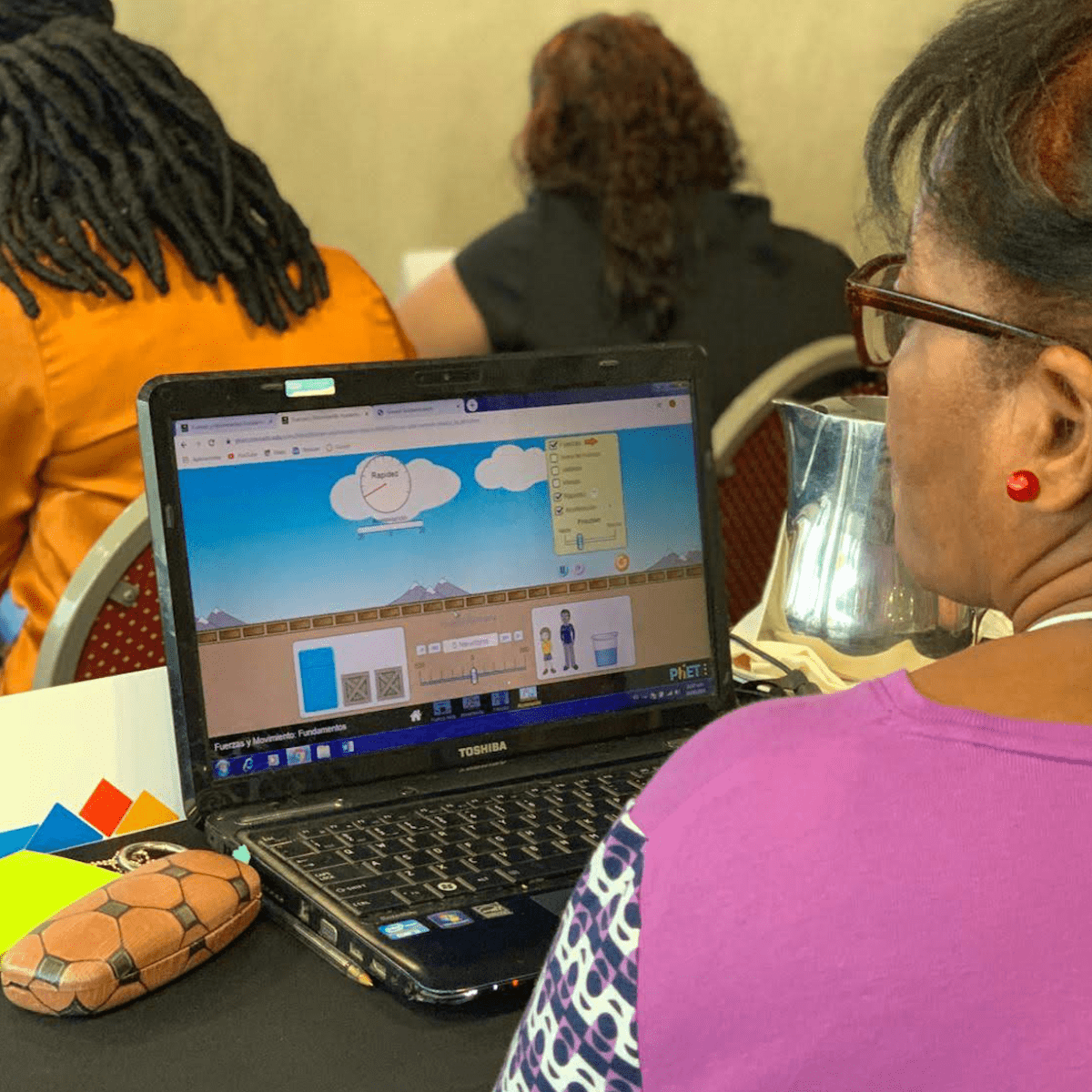
Activity Design with PhET Simulations for STEM Education
Skills:
UX Research60%
Key Takeaways
Explores activity design using PhET simulations for STEM education, including interactive science and mathematics simulations
Original Description
PhET Interactive Simulations ( https://phet.colorado.edu/ ), a project of the University of Colorado Boulder, provides fun, free, interactive, research-based science and mathematics simulations for use across, primary, secondary, and higher education levels. We extensively test and evaluate each simulation to ensure educational effectiveness. All simulations are open source and free to all students and teachers.
In this course, we will review strategies for how to use PhET to create simulation-based active learning activities for math or science classes, including activity sheets that students can use as they work independently or in small groups while they have direct access to simulations on their own devices.
To finish this course, you need to complete two assignments with Peer Review: 1) Select and evaluate an Activity Sheet and 2) Create your own Activity Sheet for science or math that integrate PhET simulations.
This course is the third of four courses that make up the specialization “Active Learning in STEM with PhET Interactive Simulations”.
This course is also available in Spanish as “Diseño de Actividades con Simulaciones PhET para la Educación STEM” and in Portuguese as "Desenho de Atividades com PhET para Educação STEM".
Watch on External: Coursera ↗
(saves to browser)
Sign in to unlock AI tutor explanation · ⚡30
More on: UX Research
View skill →





![Brutally Honest UI/UX Reviews [LIVE]](https://i.ytimg.com/vi/-Rr2J16orfA/mqdefault.jpg)

![Refactoring YOUR Designs [LIVE]](https://i.ytimg.com/vi/NG_NgSDCOi8/mqdefault.jpg)
Related Reads
📰
📰
📰
📰
EdTech Blogs vs. Vlogs: Which Helps People Learn Better?
Medium · Deep Learning
The Mission Behind Anitha Rises: Empowering Students, Women, and Lifelong Learners
Dev.to · Anitha
Why Marks Alone Are a Terrible Measure of Progress
Dev.to · jahnavi sharma
2–2–1: On Student Accountability and Punctuality.
Medium · Deep Learning
🎓
Tutor Explanation

 DeepCamp AI