8. Diffusion Models Explained: How They Generate High-Quality Data | In Hindi

AI SayI · Beginner ·📐 ML Fundamentals ·6mo ago

About this lesson

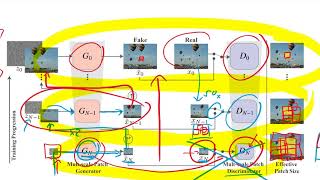
In this video, we break down the mechanics of Diffusion Models, the powerhouse technology behind modern generative AI. You will learn exactly how these models transform random noise into structured, high-quality data. Key Concepts Covered: The Noising Process: Understanding how data becomes corrupted by noise during the training phase. Reverse Diffusion: How the model reconstructs realistic data by progressively removing randomness. Pattern Prediction: How the model predicts clearer versions of an image at each step to build structure. Output Quality: Why this specific architecture is so effective at producing detailed and diverse outputs compared to other generative models. Whether you're a student of machine learning or just curious about how AI creates images, this guide simplifies the complex process of data generation through diffusion.

Original Description

In this video, we break down the mechanics of Diffusion Models, the powerhouse technology behind modern generative AI. You will learn exactly how these models transform random noise into structured, high-quality data. Key Concepts Covered: The Noising Process: Understanding how data becomes corrupted by noise during the training phase. Reverse Diffusion: How the model reconstructs realistic data by progressively removing randomness. Pattern Prediction: How the model predicts clearer versions of an image at each step to build structure. Output Quality: Why this specific architecture is so effective at producing detailed and diverse outputs compared to other generative models. Whether you're a student of machine learning or just curious about how AI creates images, this guide simplifies the complex process of data generation through diffusion.

Watch on YouTube ↗ (saves to browser)
Sign in to unlock AI tutor explanation · ⚡30

Related Reads

📰
A diagram is data, not a drawing
Learn to think of diagrams as data, not just drawings, and explore the implications for architecture and modeling
Dev.to · Siva Teja
📰
Monitor Amazon SageMaker Pipelines cross-account with custom Amazon CloudWatch dashboards
Monitor SageMaker Pipelines across AWS accounts with custom CloudWatch dashboards and learn how to centralize monitoring for improved visibility and control
AWS Machine Learning
📰
🛠️ Day 3 – Python Functions & Functional Power
Learn to create reusable and modular Python functions with flexible parameters and variable scope
Dev.to AI
📰
Your SAE Passed the Cosine Similarity Bar. That Doesn't Mean It
Learn why passing the cosine similarity bar doesn't guarantee a good sparse autoencoder (SAE) and how to audit its features
Dev.to · Mohamed Bal
Up next
Arrays vs Lists: What AI Actually Prefers | Common Tech Interview Questions
SCALER
Watch →