Your harness, your memory
📰 LangChain Blog
Learn how agent harnesses are crucial for building agentic systems and why owning your agent's memory is essential for creating good user experiences
Action Steps
- Explore the concept of agent harnesses and their role in building agentic systems using LangChain's resources
- Evaluate the trade-offs of using closed versus open harnesses and their impact on agent memory
- Build a simple agent harness using LangChain's tools, such as LangGraph or Deep Agents, to understand the scaffolding needed for LLM interactions
- Analyze the example of Claude Code's leaked source code to understand the complexity of agent harnesses
- Design an open harness to own your agent's memory and create a better user experience
Who Needs to Know This
Developers and product managers building agentic systems can benefit from understanding the importance of agent harnesses and memory ownership to create sticky user experiences
Key Insight
💡 Owning your agent's memory through open harnesses is crucial for creating good and sticky agentic experiences
Share This
Agent harnesses are key to building agentic systems! Own your agent's memory for better user experiences #LangChain #AgenticSystems
Key Takeaways
Learn how agent harnesses are crucial for building agentic systems and why owning your agent's memory is essential for creating good user experiences
Full Article
Title: Your harness, your memory
URL Source: https://blog.langchain.com/your-harness-your-memory/
Published Time: 2026-04-11T14:52:02.000Z
Markdown Content:
# Your harness, your memory
[Skip to content](https://blog.langchain.com/your-harness-your-memory/#main)
[](https://blog.langchain.com/)
* [Website](https://www.langchain.com/)
* [Docs](https://docs.langchain.com/)
* [Case Studies](https://blog.langchain.com/tag/case-studies/)
* [Harrison's In the Loop Series](https://blog.langchain.com/tag/in-the-loop/)
* [Try LangSmith](https://smith.langchain.com/)
[Sign in](https://blog.langchain.com/your-harness-your-memory/#/portal/signin)[Subscribe](https://blog.langchain.com/your-harness-your-memory/#/portal/signup)
# Your harness, your memory
[Harrison's In the Loop Series](https://blog.langchain.com/tag/in-the-loop/)7 min read Apr 11, 2026
Agent harnesses are becoming the dominant way to build agents, and they are not going anywhere. These harnesses are intimately tied to agent memory. If you used a closed harness - especially if it’s behind a proprietary API - you are choosing to yield control of your agent’s memory to a third party. Memory is incredibly important to creating good and sticky agentic experiences. This creates incredible lock in. Memory - and therefor harnesses - should be open, so that you own your own memory
## Agent Harnesses are how you build agents, and they’re not going anywhere
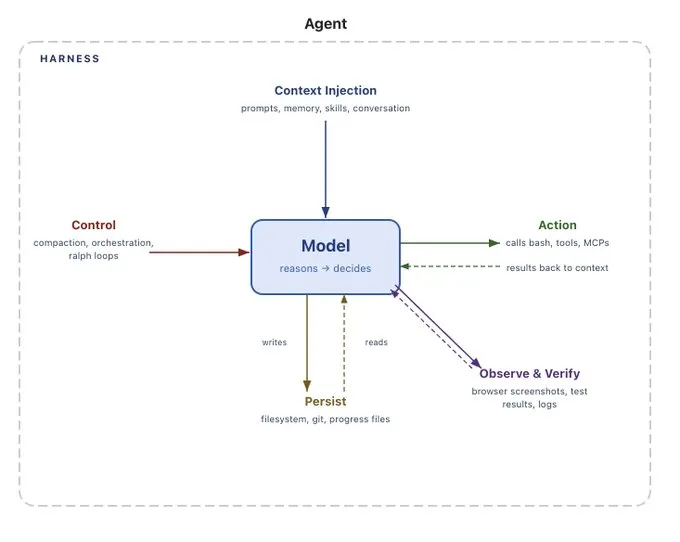
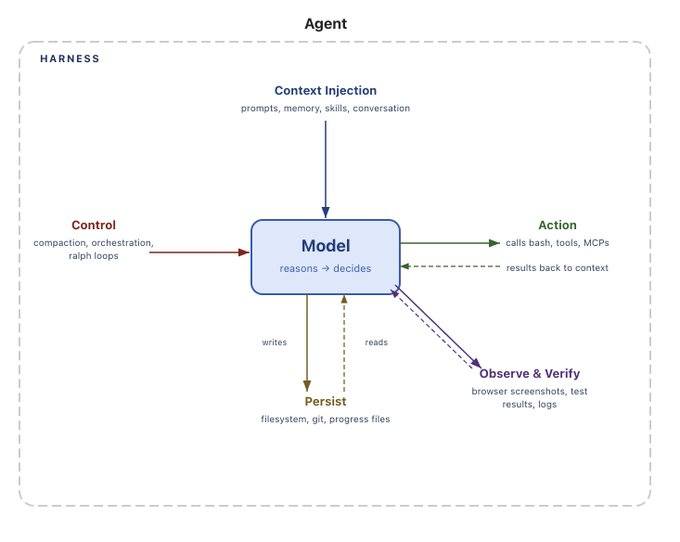
The “best” way to build agentic systems has changed dramatically over the past three years. When ChatGPT came out, all you could do were simple RAG chains ([LangChain](https://github.com/langchain-ai/langchain?ref=blog.langchain.com)). Then the models got a little better, and could create more complex flows ([LangGraph](https://github.com/langchain-ai/langgraph?ref=blog.langchain.com)). Then they got a lot better, and that gave rise to a new type of scaffolding - [agent harnesses](https://blog.langchain.com/the-anatomy-of-an-agent-harness/).
Examples of agent harnesses include [Claude Code](https://code.claude.com/docs/en/overview?ref=blog.langchain.com), [Deep Agents](https://github.com/langchain-ai/deepagents?ref=blog.langchain.com), [Pi](https://github.com/badlogic/pi-mono?ref=blog.langchain.com) (powers [OpenClaw](https://docs.openclaw.ai/?ref=blog.langchain.com)), [OpenCode](https://opencode.ai/?ref=blog.langchain.com), [Codex](https://openai.com/codex/?ref=blog.langchain.com), [Letta Code](https://www.letta.com/blog/letta-code?ref=blog.langchain.com), and many more.
**Agent harnesses are not going away.**
There is sometimes sentiment that models will absorb more and more of the scaffolding. This is not true. What has happened (and will continue to happen) is that a lot of the scaffolding needed in 2023 is no longer needed. But this has been replaced by other types of scaffolding. An agent, by definition, is an LLM interacting with tools and other sources of data. There will always be a system around the LLM to facilitate that type of interaction. Need evidence? When Claude Code’s source code was leaked, there was [512k lines of code](https://www.reddit.com/r/technology/comments/1scyuod/anthropic_leaked_512k_lines_of_claude_codebut/?ref=blog.langchain.com). That code is the harness. Even the makers of the best model in the world are investing heavily in harnesses.
When things like web search are built into OpenAI and Anthropic’s APIs - they are not “part of the model”. Rather, they are part of a lightweight harness that sits behind their APIs and orchestrates the model with
URL Source: https://blog.langchain.com/your-harness-your-memory/
Published Time: 2026-04-11T14:52:02.000Z
Markdown Content:
# Your harness, your memory
[Skip to content](https://blog.langchain.com/your-harness-your-memory/#main)
[](https://blog.langchain.com/)
* [Website](https://www.langchain.com/)
* [Docs](https://docs.langchain.com/)
* [Case Studies](https://blog.langchain.com/tag/case-studies/)
* [Harrison's In the Loop Series](https://blog.langchain.com/tag/in-the-loop/)
* [Try LangSmith](https://smith.langchain.com/)
[Sign in](https://blog.langchain.com/your-harness-your-memory/#/portal/signin)[Subscribe](https://blog.langchain.com/your-harness-your-memory/#/portal/signup)

# Your harness, your memory
[Harrison's In the Loop Series](https://blog.langchain.com/tag/in-the-loop/)7 min read Apr 11, 2026
Agent harnesses are becoming the dominant way to build agents, and they are not going anywhere. These harnesses are intimately tied to agent memory. If you used a closed harness - especially if it’s behind a proprietary API - you are choosing to yield control of your agent’s memory to a third party. Memory is incredibly important to creating good and sticky agentic experiences. This creates incredible lock in. Memory - and therefor harnesses - should be open, so that you own your own memory
## Agent Harnesses are how you build agents, and they’re not going anywhere
The “best” way to build agentic systems has changed dramatically over the past three years. When ChatGPT came out, all you could do were simple RAG chains ([LangChain](https://github.com/langchain-ai/langchain?ref=blog.langchain.com)). Then the models got a little better, and could create more complex flows ([LangGraph](https://github.com/langchain-ai/langgraph?ref=blog.langchain.com)). Then they got a lot better, and that gave rise to a new type of scaffolding - [agent harnesses](https://blog.langchain.com/the-anatomy-of-an-agent-harness/).
Examples of agent harnesses include [Claude Code](https://code.claude.com/docs/en/overview?ref=blog.langchain.com), [Deep Agents](https://github.com/langchain-ai/deepagents?ref=blog.langchain.com), [Pi](https://github.com/badlogic/pi-mono?ref=blog.langchain.com) (powers [OpenClaw](https://docs.openclaw.ai/?ref=blog.langchain.com)), [OpenCode](https://opencode.ai/?ref=blog.langchain.com), [Codex](https://openai.com/codex/?ref=blog.langchain.com), [Letta Code](https://www.letta.com/blog/letta-code?ref=blog.langchain.com), and many more.

**Agent harnesses are not going away.**
There is sometimes sentiment that models will absorb more and more of the scaffolding. This is not true. What has happened (and will continue to happen) is that a lot of the scaffolding needed in 2023 is no longer needed. But this has been replaced by other types of scaffolding. An agent, by definition, is an LLM interacting with tools and other sources of data. There will always be a system around the LLM to facilitate that type of interaction. Need evidence? When Claude Code’s source code was leaked, there was [512k lines of code](https://www.reddit.com/r/technology/comments/1scyuod/anthropic_leaked_512k_lines_of_claude_codebut/?ref=blog.langchain.com). That code is the harness. Even the makers of the best model in the world are investing heavily in harnesses.
When things like web search are built into OpenAI and Anthropic’s APIs - they are not “part of the model”. Rather, they are part of a lightweight harness that sits behind their APIs and orchestrates the model with






 DeepCamp AI