The Lever, Not the Engine
📰 Medium · LLM
LLMs are making vendor lock-in a bad business decision by reducing integration costs and increasing flexibility
Action Steps
- Analyze your current technology stack to identify potential integration points where LLMs can add value
- Research LLM-based integration tools and platforms to determine which ones can help reduce costs and increase flexibility
- Develop a strategy to leverage LLMs to reduce vendor lock-in and increase interoperability between systems
- Evaluate the economic benefits of using LLMs for integration, including reduced costs and increased revenue opportunities
- Implement LLM-based integration solutions and monitor their impact on your business
Who Needs to Know This
Product managers and software engineers can benefit from understanding how LLMs are changing the economics of integration and vendor lock-in, allowing them to make more informed decisions about their technology stack and partnerships
Key Insight
💡 LLMs are reducing the costs and complexity of integration, making it more feasible for companies to avoid vendor lock-in and increase flexibility
Share This
💡 LLMs are quietly disrupting vendor lock-in by making integration easier and more cost-effective #LLMs #integration #vendorlockin
Key Takeaways
LLMs are making vendor lock-in a bad business decision by reducing integration costs and increasing flexibility
Full Article
Title: The Lever, Not the Engine
URL Source: https://medium.com/@ingmmo/the-lever-not-the-engine-3a81be2eea0b?source=rss------llm-5
Published Time: 2026-06-18T15:57:53Z
Markdown Content:
# The Lever, Not the Engine. Why LLMs are quietly making vendor… | by Marco Montanari | Jun, 2026 | Medium
[Sitemap](https://medium.com/sitemap/sitemap.xml)
[Open in app](https://play.google.com/store/apps/details?id=com.medium.reader&referrer=utm_source%3DmobileNavBar&source=post_page---top_nav_layout_nav-----------------------------------------)
Sign up
[Sign in](https://medium.com/m/signin?operation=login&redirect=https%3A%2F%2Fmedium.com%2F%40ingmmo%2Fthe-lever-not-the-engine-3a81be2eea0b&source=post_page---top_nav_layout_nav-----------------------global_nav------------------)
[](https://medium.com/?source=post_page---top_nav_layout_nav-----------------------------------------)
Get app
[Write](https://medium.com/m/signin?operation=register&redirect=https%3A%2F%2Fmedium.com%2Fnew-story&source=---top_nav_layout_nav-----------------------new_post_topnav------------------)
[Search](https://medium.com/search?source=post_page---top_nav_layout_nav-----------------------------------------)
Sign up
[Sign in](https://medium.com/m/signin?operation=login&redirect=https%3A%2F%2Fmedium.com%2F%40ingmmo%2Fthe-lever-not-the-engine-3a81be2eea0b&source=post_page---top_nav_layout_nav-----------------------global_nav------------------)

[Mastodon](https://me.dm/@ingmmo)
# The Lever, Not the Engine
[](https://medium.com/@ingmmo?source=post_page---byline--3a81be2eea0b---------------------------------------)
[Marco Montanari](https://medium.com/@ingmmo?source=post_page---byline--3a81be2eea0b---------------------------------------)
Follow
5 min read
·
Just now
[](https://medium.com/m/signin?actionUrl=https%3A%2F%2Fmedium.com%2F_%2Fvote%2Fp%2F3a81be2eea0b&operation=register&redirect=https%3A%2F%2Fmedium.com%2F%40ingmmo%2Fthe-lever-not-the-engine-3a81be2eea0b&user=Marco+Montanari&userId=6ce43d757f9&source=---header_actions--3a81be2eea0b---------------------clap_footer------------------)
[](https://medium.com/m/signin?actionUrl=https%3A%2F%2Fmedium.com%2F_%2Frepost%2Fp%2F3a81be2eea0b&operation=register&redirect=https%3A%2F%2Fmedium.com%2F%40ingmmo%2Fthe-lever-not-the-engine-3a81be2eea0b&user=Marco+Montanari&userId=6ce43d757f9&source=---header_actions--3a81be2eea0b---------------------repost_header------------------)
[](https://medium.com/m/signin?actionUrl=https%3A%2F%2Fmedium.com%2F_%2Fbookmark%2Fp%2F3a81be2eea0b&operation=register&redirect=https%3A%2F%2Fmedium.com%2F%40ingmmo%2Fthe-lever-not-the-engine-3a81be2eea0b&source=---header_actions--3a81be2eea0b---------------------bookmark_footer------------------)
[Listen](https://medium.com/m/signin?actionUrl=https%3A%2F%2Fmedium.com%2Fplans%3Fdimension%3Dpost_audio_button%26postId%3D3a81be2eea0b&operation=register&redirect=https%3A%2F%2Fmedium.com%2F%40ingmmo%2Fthe-lever-not-the-engine-3a81be2eea0b&source=---header_actions--3a81be2eea0b---------------------post_audio_button------------------)
Share
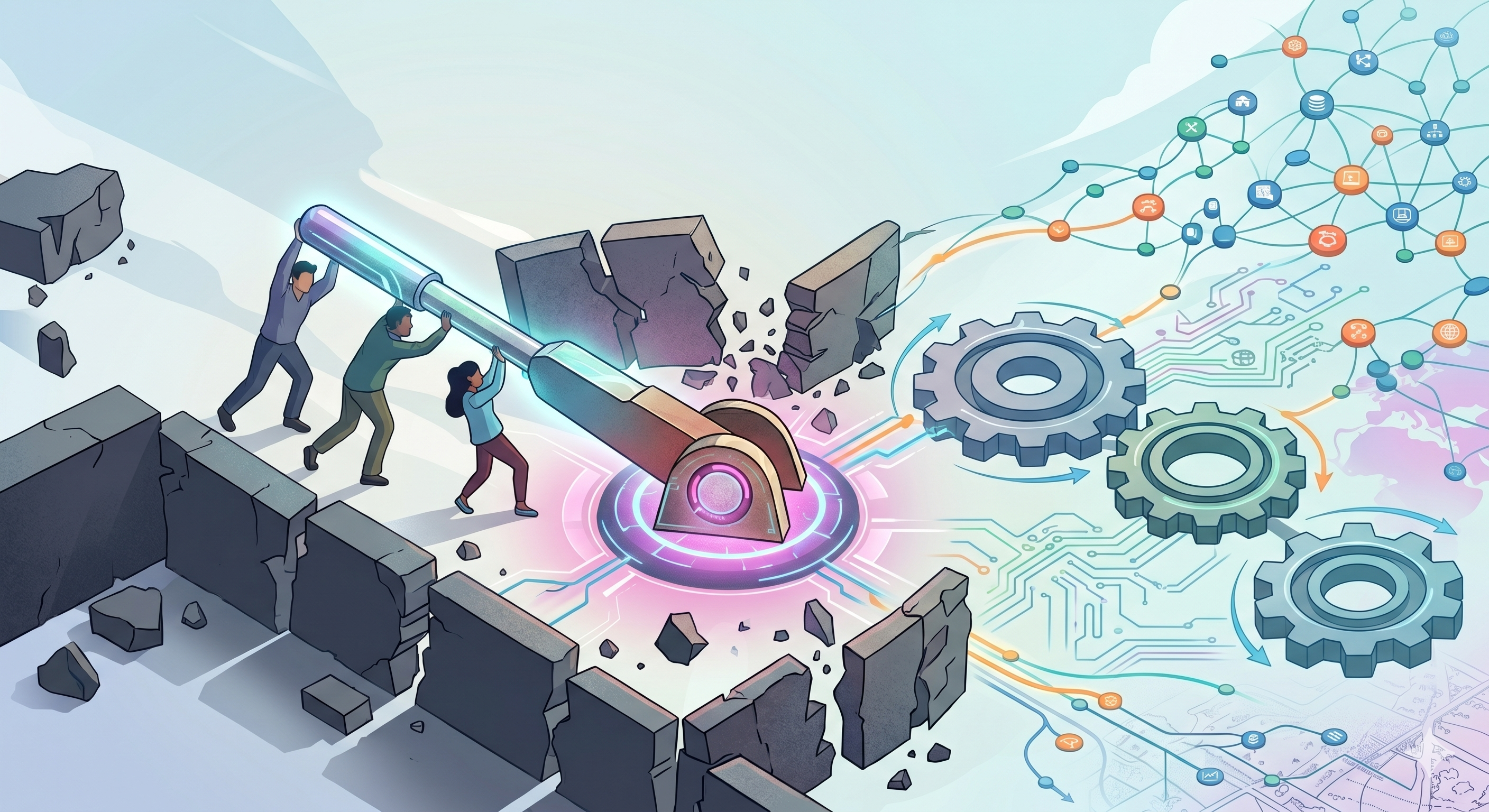
## Why LLMs are quietly making vendor lock-in a bad business decision
For thirty years, “integration” meant pain. If two systems needed to talk, somebody had to sit down, read two sets of documentation, agree on a schema, write an adapter, and maintain it forever. Every connection was a project. Every project had a cost. And because connections were expensive, the rational move — for any company that wanted to keep you — was to build a wall around its data and make leaving more expensive than staying.
That was the economic logic of the walled garden. Not malice. Math. Connecting was costly, so hoarding paid.
Large langua
URL Source: https://medium.com/@ingmmo/the-lever-not-the-engine-3a81be2eea0b?source=rss------llm-5
Published Time: 2026-06-18T15:57:53Z
Markdown Content:
# The Lever, Not the Engine. Why LLMs are quietly making vendor… | by Marco Montanari | Jun, 2026 | Medium
[Sitemap](https://medium.com/sitemap/sitemap.xml)
[Open in app](https://play.google.com/store/apps/details?id=com.medium.reader&referrer=utm_source%3DmobileNavBar&source=post_page---top_nav_layout_nav-----------------------------------------)
Sign up
[Sign in](https://medium.com/m/signin?operation=login&redirect=https%3A%2F%2Fmedium.com%2F%40ingmmo%2Fthe-lever-not-the-engine-3a81be2eea0b&source=post_page---top_nav_layout_nav-----------------------global_nav------------------)
[](https://medium.com/?source=post_page---top_nav_layout_nav-----------------------------------------)
Get app
[Write](https://medium.com/m/signin?operation=register&redirect=https%3A%2F%2Fmedium.com%2Fnew-story&source=---top_nav_layout_nav-----------------------new_post_topnav------------------)
[Search](https://medium.com/search?source=post_page---top_nav_layout_nav-----------------------------------------)
Sign up
[Sign in](https://medium.com/m/signin?operation=login&redirect=https%3A%2F%2Fmedium.com%2F%40ingmmo%2Fthe-lever-not-the-engine-3a81be2eea0b&source=post_page---top_nav_layout_nav-----------------------global_nav------------------)

[Mastodon](https://me.dm/@ingmmo)
# The Lever, Not the Engine
[](https://medium.com/@ingmmo?source=post_page---byline--3a81be2eea0b---------------------------------------)
[Marco Montanari](https://medium.com/@ingmmo?source=post_page---byline--3a81be2eea0b---------------------------------------)
Follow
5 min read
·
Just now
[](https://medium.com/m/signin?actionUrl=https%3A%2F%2Fmedium.com%2F_%2Fvote%2Fp%2F3a81be2eea0b&operation=register&redirect=https%3A%2F%2Fmedium.com%2F%40ingmmo%2Fthe-lever-not-the-engine-3a81be2eea0b&user=Marco+Montanari&userId=6ce43d757f9&source=---header_actions--3a81be2eea0b---------------------clap_footer------------------)
[](https://medium.com/m/signin?actionUrl=https%3A%2F%2Fmedium.com%2F_%2Frepost%2Fp%2F3a81be2eea0b&operation=register&redirect=https%3A%2F%2Fmedium.com%2F%40ingmmo%2Fthe-lever-not-the-engine-3a81be2eea0b&user=Marco+Montanari&userId=6ce43d757f9&source=---header_actions--3a81be2eea0b---------------------repost_header------------------)
[](https://medium.com/m/signin?actionUrl=https%3A%2F%2Fmedium.com%2F_%2Fbookmark%2Fp%2F3a81be2eea0b&operation=register&redirect=https%3A%2F%2Fmedium.com%2F%40ingmmo%2Fthe-lever-not-the-engine-3a81be2eea0b&source=---header_actions--3a81be2eea0b---------------------bookmark_footer------------------)
[Listen](https://medium.com/m/signin?actionUrl=https%3A%2F%2Fmedium.com%2Fplans%3Fdimension%3Dpost_audio_button%26postId%3D3a81be2eea0b&operation=register&redirect=https%3A%2F%2Fmedium.com%2F%40ingmmo%2Fthe-lever-not-the-engine-3a81be2eea0b&source=---header_actions--3a81be2eea0b---------------------post_audio_button------------------)
Share

## Why LLMs are quietly making vendor lock-in a bad business decision
For thirty years, “integration” meant pain. If two systems needed to talk, somebody had to sit down, read two sets of documentation, agree on a schema, write an adapter, and maintain it forever. Every connection was a project. Every project had a cost. And because connections were expensive, the rational move — for any company that wanted to keep you — was to build a wall around its data and make leaving more expensive than staying.
That was the economic logic of the walled garden. Not malice. Math. Connecting was costly, so hoarding paid.
Large langua
 DeepCamp AI